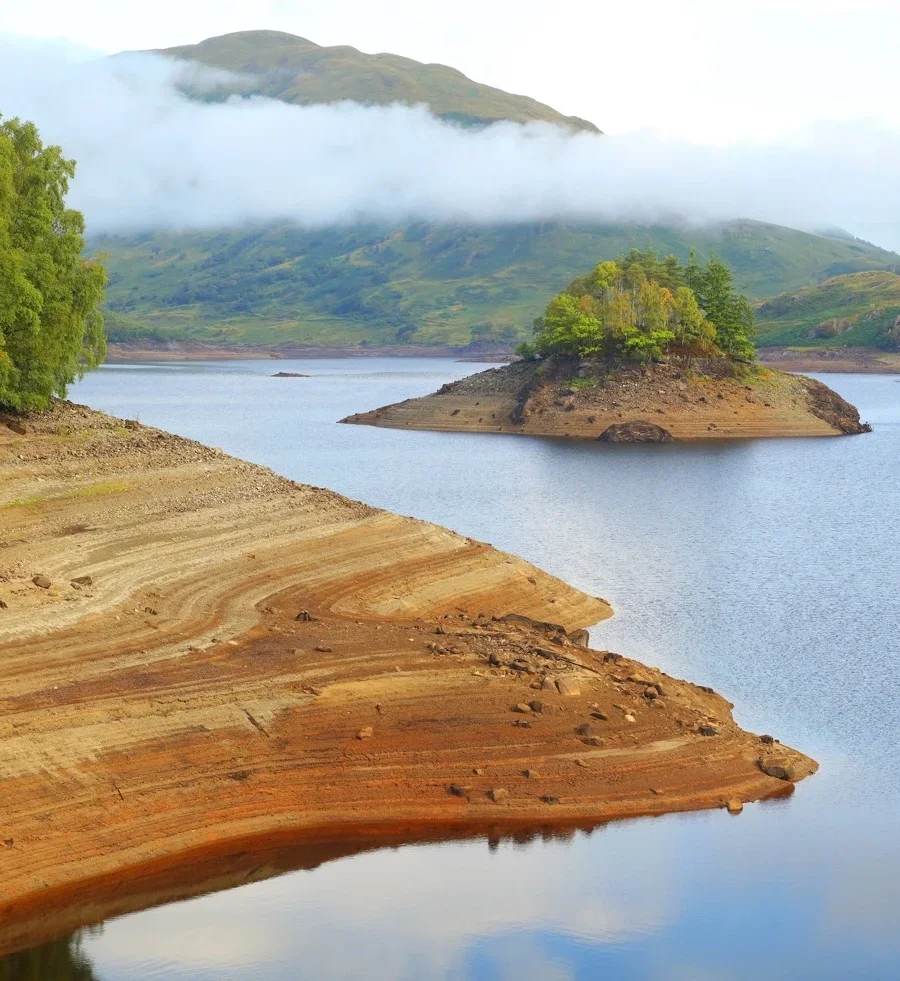
In July of last year, the Scottish Parliament issued an executive summary acknowledging that annual temperatures across the country were expected to rise more than 1.1°C by 2050, or 2°F.
But the effects of that shift are already obvious to most people who spend even a moment outdoors. And while record amounts of sunshine might make for an unexpectedly pleasant holiday in this part of the world, the historic droughts accompanying them should be especially worrisome to any whisky maker who values water. Which is to say, all of them.
Whisky is of course only composed of water, grain and yeast. It’s a recipe as simple as it is traditional. For the first 600-or-so years of its existence, the conditions under which these base ingredients persisted had been remarkably consistent. Not anymore.
However outlandish the prospect of water scarcity in Scotland might seem, it’s hardly science fiction. It has prompted several prominent distilleries to pause stills in recent years. Following a particularly arid spring in 2018, Glenfarclas lost an entire month’s worth of production — or roughly 300,000 liters of whisky. Those same conditions resulted in the temporary halting of half of Islay’s malt makers.
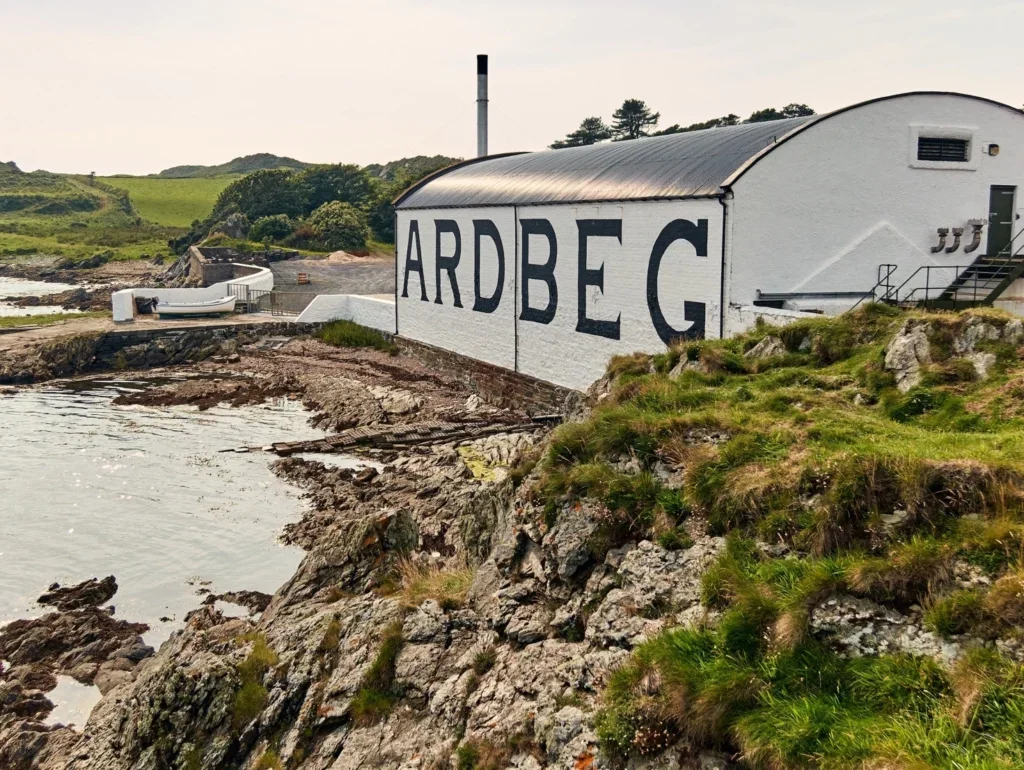
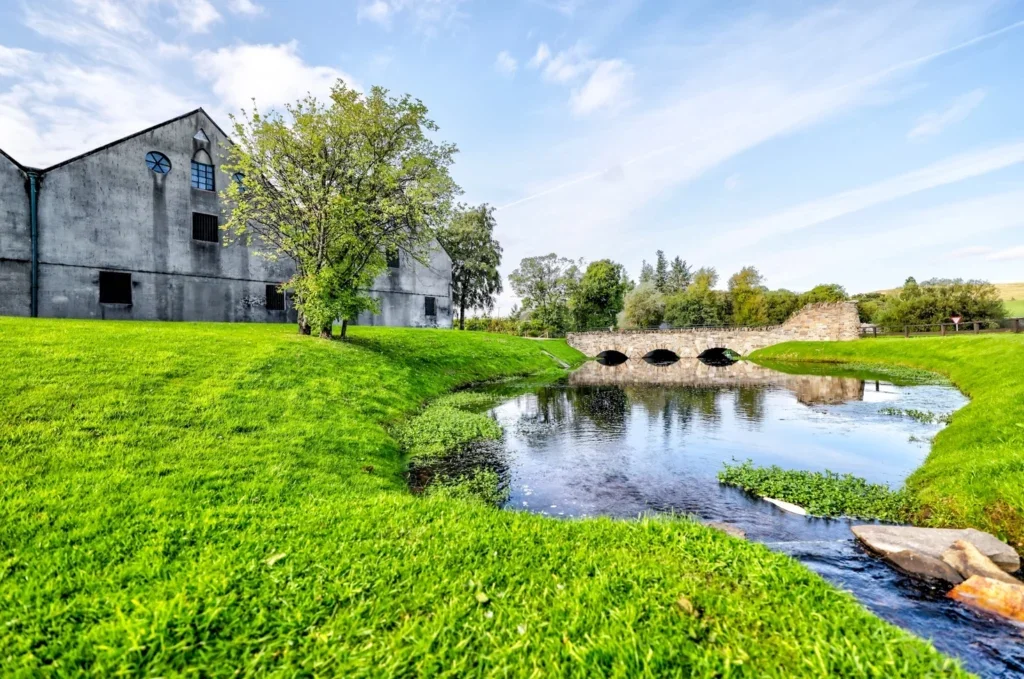
“Climate change has had a massive effect here. You can see the seasons have shifted so much,” says Sharon McHarrie, Ardbeg visitor center manager, referring to her (and her distillery’s) Islay home. “It’s damper now in the summer than it used to be, and instead we’re getting drier, warmer weather earlier in spring.”
Thankfully for Ardbeg, it’s guaranteed ample supply of pristine water on account of auspicious positioning, downstream of the legendary Loch Uigeadail. So, it’s not overall dryness that’s a problem here so much as when that dryness occurs. And that’s of less concern to a distiller as it is to a farmer.
“It’s a problem for a lot of people who grow barley on the island because we plant it around April and you want the rain to fall directly after,” McHarrie explains. “So it does put pressure on the way we farm the island. And we can’t just plant earlier because we have between 30,000 and 60,000 geese that come down every year from Greenland and they’ll eat absolutely everything. They’re voracious.”
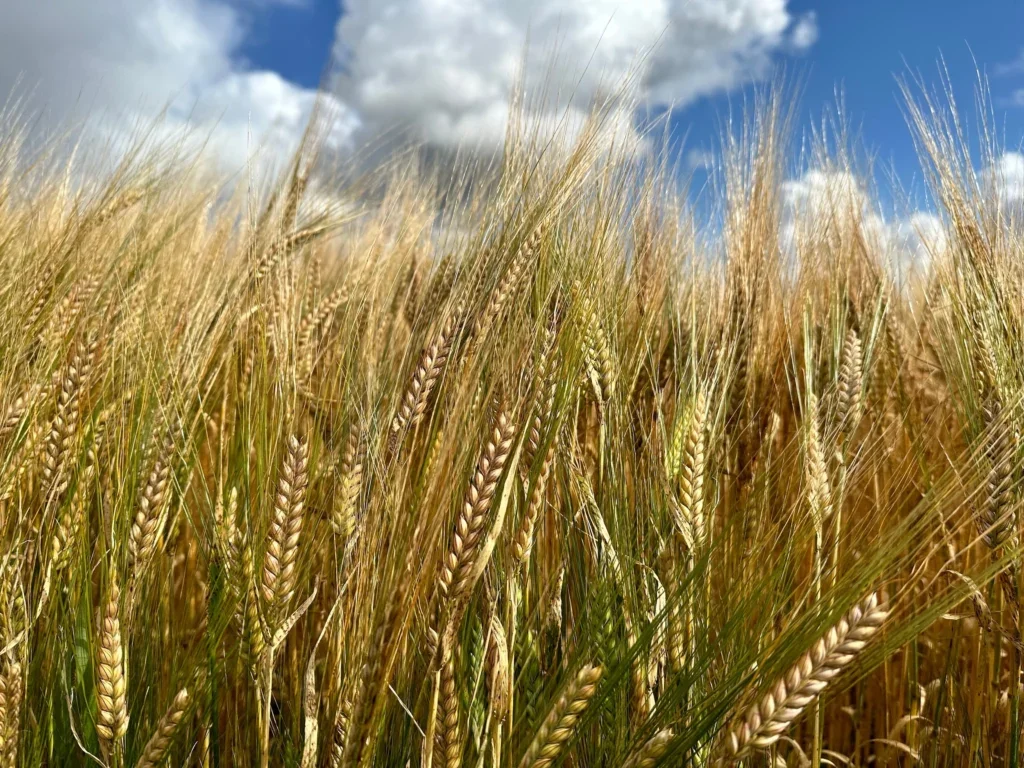
To be clear, the Scotch Whisky Association does not require Scottish-grown barley for production — though the overwhelming majority of it is native crop. Indeed, most major Scotch makers source at least some of their base ingredient from England or mainland Europe. Nevertheless, faltering agriculture on Islay could have an immediate impact on brands like Bruichladdich and Kilchoman, which leverage locally grown grain for flavor separation on shelf.
The SWA, for its part, has been commendably proactive in planning for these contingencies. Not just on Islay, but across all major regions of Scotch production. Back in 2014, the organization partnered with researchers at Heriot-Watt University in Edinburgh to help fund a quest for drought-resistant barley.
Five years later, they discovered a key gene, HvMYB1, which acts as a master switch. When it’s “on,” the switch tells the plant to tighten its pores, retaining moisture and allowing it to thrive in drought-like conditions. Some of the biggest beverage conglomerates on the planet are following suit with these costly science experiments. Since 2020, ABI and Diageo have both invested sizable sums to develop wheat and barley varieties that are uniquely adapted to extreme heat and drought.
Meanwhile, across the pond, American whiskey makers have been routinely experimenting with perennial grains. As opposed to their traditional counterparts, which must be replanted annually — and tilled in a manner that depletes precious moisture in the soil — year-round grains grow bigger root systems, trap water deeper underground, and for longer. In 2023, Tattersall Distilling in Minneapolis released its first whiskey made from Kernza, a cousin of traditional wheat that doesn’t require replanting every season. There is a pronounced nuttiness apparent in the three-year-old liquid’s texture. It also holds a fresh grape-like note that many tasters have compared favorably to brandy.
But at the end of the day, it exists as a worthwhile whiskey; evidenced by the crop of American craft distillers that are now taking it to their fermenters, including Smoky Valley in Kansas and Bear Creek in Colorado. The latter of the two fuses Kernza alongside corn and malted barley to form a mash bill with a more traditionally bourbon-like profile.
Alas, even effective water management and agricultural advancements won’t fully fend off the myriad challenges of climate change. This is a multi-headed beast, and some of its most ferocious fangs are brandished in fermentation rooms and still houses. This isn’t just true in whisky but with all categories of spirits, across all corners of the globe.
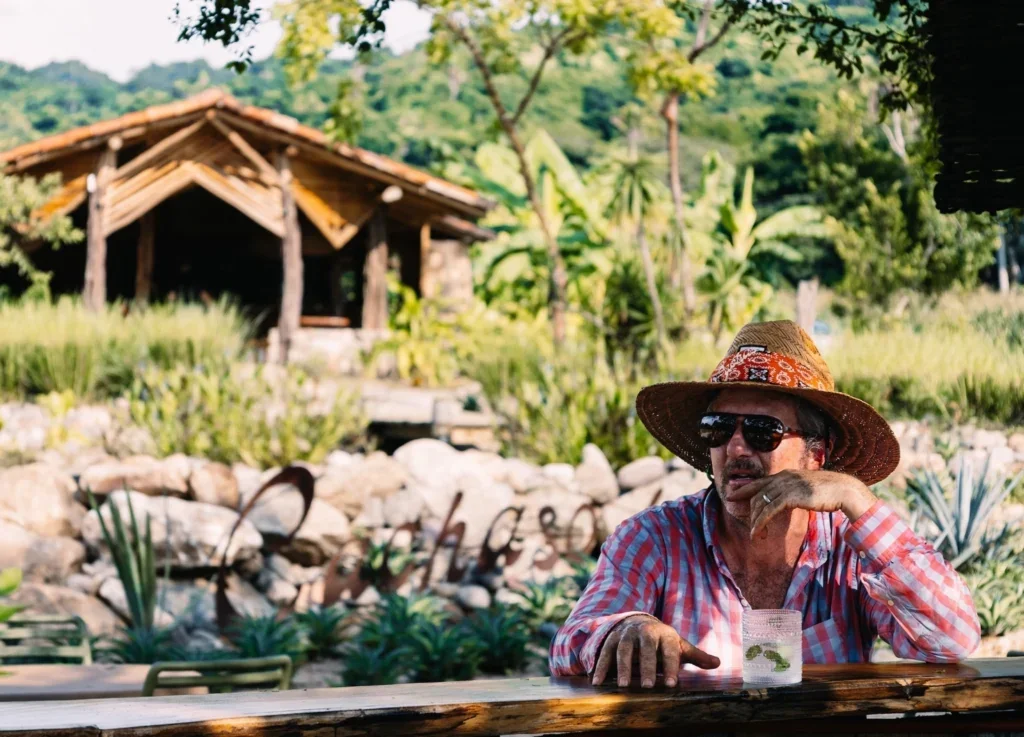
Take tequila for example. In the Mexican state of Jalisco, where virtually all this enduringly popular liquor is crafted, there has been a marked spike in the number of extreme heatwaves over the last decade. They’ve been spilling out beyond the customary summer months. James “Monty” Montero, founder of Cachasol Tequila & Raicilla, is increasingly worried about how these circumstances could adversely affect the liquid he puts into bottle.
“Fermenters are not typically temperature-controlled vessels,” he points out. “When the weather is too hot, it’s a suboptimal environment for the yeast, and you could have problems during one of the most critical steps in flavor creation. Unhappy yeast can create off flavors.”
He also echoes the refrain of an impending water crisis. “We need good clean water in many steps of the production process,” adds Montero. “So, if one impact of climate change is less rain and more heat, that means less water in the water table, and that is a major concern.”
One with no silver bullet solution. Anything he points to as a short-term countermeasure inevitably creates a negative feedback loop. One which, at scale, exacerbates the very issue he’s trying to combat. “We could invest in cooling equipment, but that would draw more electricity, which is more detrimental to the environment,” he says. “We could truck in water, but that also has a negative footprint on the environment.”
Back in Scotland, it’s not all doom and gloom…For now. “At the moment I don’t see [any impact],” observes Kevin Balmforth, master blender for The Glenlivet. “If we had a long period of drought, that would be a big issue, but so far I haven’t seen it.”
When it comes to increasingly hot summers in the realm of whisky, it’s reasonable to suspect an eventual modulation in the maturation process. But so far, Balmforth hasn’t observed that either.
“Our warehouses have like 30,000 casks in them,” he says. “There’s so much cold liquid in there, they act like a fridge. It could be around 25 degrees [centigrade] outside but still really cold when you walk in there. Near the outside of the warehouse, you might get more water loss, but we get that anyway. It would just accelerate that.”

At least one brazenly forthright whiskeymaker isn’t exactly angry at that last bit. “Best thing that ever happened,” says Raj Bhakta, the original founder of WhistlePig, who now runs an eponymous brand specializing in ultra-aged armagnac and American whiskey. “Hotter weather makes good whiskey taste better.”
Certainly a hot take, for lack of a better term. The urgency with which multibillion-dollar corporate entities are pursuing remediation measures, however, ought to be enough to give even the most adamant climate change deniers pause. This is really happening. Right now. And for the vast majority of folks who understand this reality, well, the ways in which it threatens whisky are admittedly trivial.
Then again, given the severity of the crisis, not to mention the daunting nature of its size and scope, we’re all going to need a stiff pour of something.