When it comes to whisky, a small bottle, it seems, is an enduring ideal.
In simple terms, at a lower price and in a pocket-sized bottle, it’s easy to see why it has remained a readily available format for blends and single malts since the late 1800s.
But calling the miniature simply a small bottle misses the point. Its appeal – to the first generation of business travelers, to collectors at the turn of the century and, now, to a new breed of enthusiasts in the modern day – is clearly based on more than just its physical form. What began as a functional choice morphed into a format with an appeal all of its own – one that’s beguiled the whisky world for more than a century.
In the 1960s, the miniature reached its 20th-century heyday. The success of commercial aviation, by then mainstream but generally still the domain of the elite, gave rise to two things: the airplane trolley and the hotel minibar. The debonair businesspeople of the era could have a few drams on their flight from New York to California, and a nightcap in their hotel room after dinner.
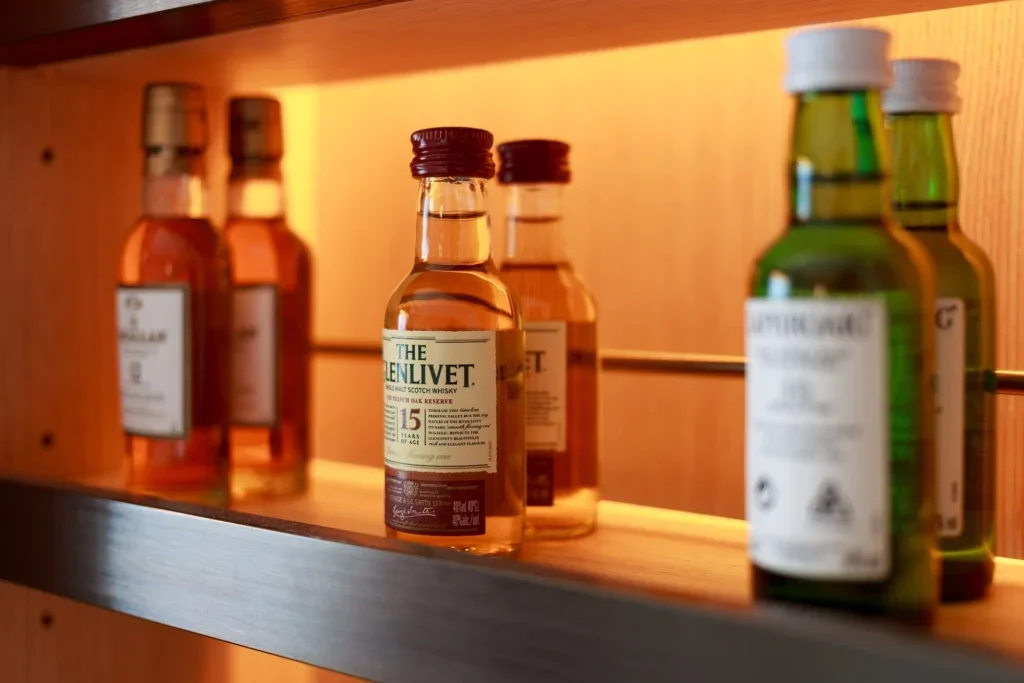
On the less salubrious side of the scale, the format also reached the off-licences of the UK, where a shift worker could spend a mere couple of shillings on a bottle containing two drams to have that night (or possibly on the way home).
With this came a boom in the format, with brands like Johnnie Walker and Dimple releasing miniatures for the mainstream market, and Gordon & MacPhail bottling them for enthusiasts in the early days of single malt. Its origins, though, go back much further.
Whisky in Miniature
A full-size whisky bottle has its roots in an international directive in 1980 to standardize the volume of bottles into metric measurements. The size that pre-dated this ruling was the 26 ⅔ fluid ounces (around 757ml) mandated by the British government. This clunky measurement can reportedly be traced back, rather brilliantly, to the average lung capacity of glassblowers in the 17th century. In the US today it’s 750ml; Europe, meanwhile, standardized at 700ml in 1990.
A century before that, though, Irish whiskey blender John Power & Sons had an idea. With its whiskey often sold by traveling salespeople, the company introduced the Baby Power in 1889, a bottling of its spirit in a small bottle measuring just over 70ml.
Thought to be the first miniature produced in the mainstream whisky industry, it was successful for Powers, but remained still something of a curio. It would take that wave of overseas travel in the mid-century to truly popularize the format – bottlings of 1.5-2 fluid ounces (depending on US or UK measurements) that later became standardized as the 50cl miniature we know today.
In the 1980s, a few decades on from their mid-century insurgence as the size de rigueur for the jet-setting crowd, a young Sukhinder Singh was forging a keen eye for collecting miniatures from past and present, and assembling a collection while he was still a teenager from his parents’ Hanwell store. “My parents were in the drinks trade, and they bought some fun miniatures and put them in a cupboard in our living room. For me, that was quite interesting. And we sold a lot of miniatures in the shop.”
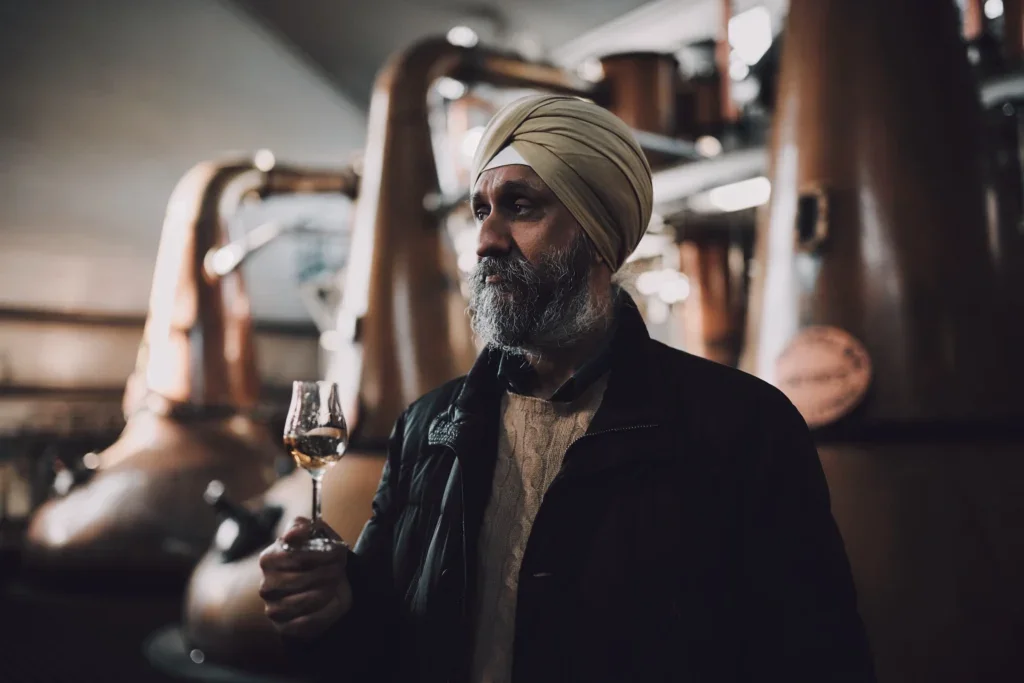
At the time, the whisky scene was incomparable to the present day, with only a few single malt brands bottling and marketing their own spirit, and blends dominating the market. Miniatures stayed their course, reaching a boom in the 1960s and 1970s, and offering a taste of the whiskies of the day at a wallet-friendly price. “Whatever brands that were available at the time did a miniature,” says Singh. “Glenmorangie did one, so did Macallan. It was that dozen or so single malt brands that were around then.”
They may have been a niche product and had a more functional use for many (Singh recalls the bus drivers of west London often popping in mid-route for a miniature that may or may not have made it home unopened).
But Singh also highlights a proto-use case for them based on collecting and sampling different whiskies, even back then. “There was a chap who used to come to the shop to buy miniatures,” Singh says. “Any supplier that had miniatures, we’d take a box, put them out, and people would look for different things and say, ‘OK, I’ll try that. I’ll try that. I’ve never seen this one before, I’ll try this.’”
Before long, Singh himself was picking out the most interesting from his family’s shop and elsewhere, and trading them with like-minded collectors. Over the next decade or so – as the whisky industry developed in real time, single malt became a viable, marketable product, and the miniature stayed a favorite format for brands, bottlers, and consumers – he amassed a collection of almost 6,000 of them.
“If you wanted to try something that was newly launched, you’d usually have to buy a bottle. But if whiskies were available in miniature, a lot of people would buy one to try it.”
Sukhinder Singh
The appeal of collecting miniatures, to Singh and others, wasn’t just in standard whiskies from core collections; there were miniatures from closed distilleries, limited editions never to be repeated, niche bottlings for foreign markets, and more.
When he set up The Whisky Exchange in 1999, the format was still strong. “I was still quite an active collector at the time; I loved them, and we sold a lot of them because I had a following for them,” Singh says.
Most buyers were collectors like him looking to build static collections at an affordable price. “But some people wanted to try the whisky, so it was an easy option to buy a miniature rather than a large bottle,” he continues.
“In those days there were hardly any whisky bars. There were no whisky shows, no whisky clubs. What choice did you have? If you wanted to try something that was newly launched, you’d usually have to buy a bottle. But if whiskies were available in miniature, a lot of people would buy one to try it.”
Modern Revival
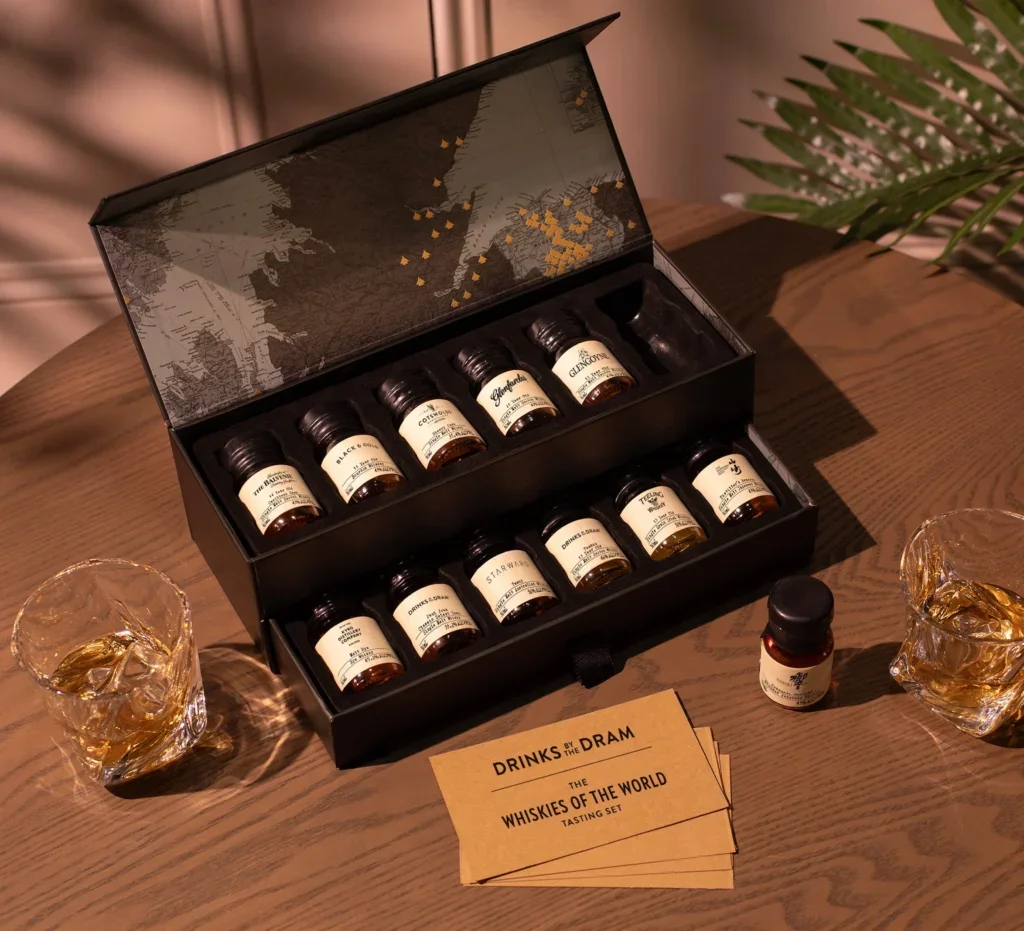
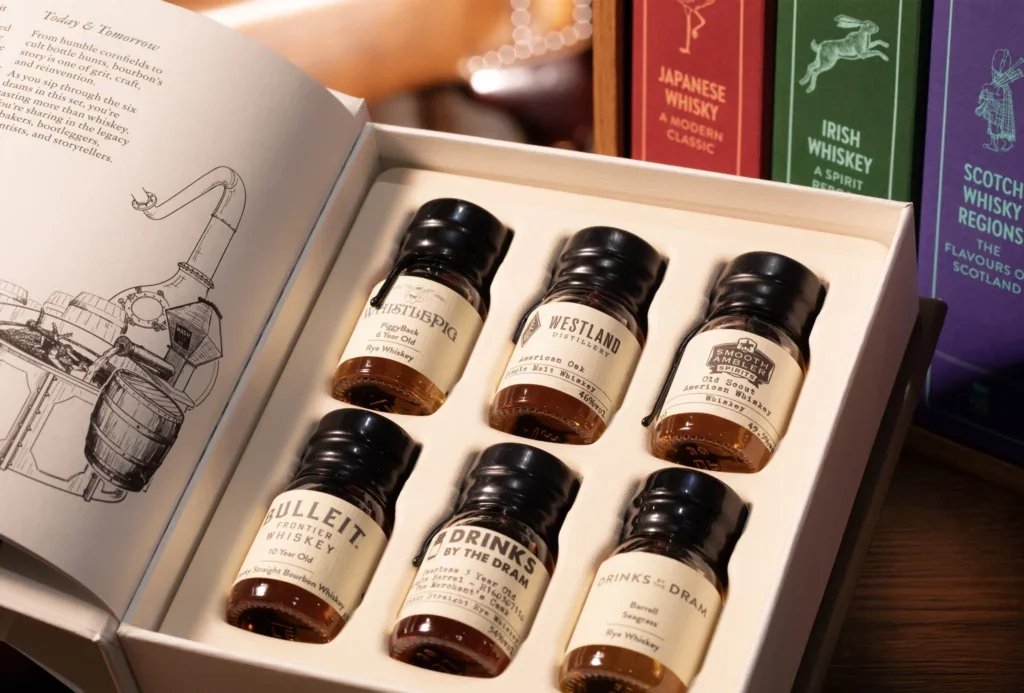
This emphasis on trying a small measure before buying a bottle was what had convinced fellow specialist whisky retailer Master of Malt to launch its Drinks by the Dram brand in 2010; Singh himself launched The Perfect Measure six years later at The Whisky Exchange.
Both are collections of 30ml pours – 20ml shy of the standardized miniature that brands were selling, and more often thought of as a sample to open and drink. They were available to buy individually or as tasting sets and built for curious drinkers looking to expand their palates.
“Our founder, Justin, wanted everyone to be able to try the whiskies we sold, and he knew that not everyone was going to be able to afford full bottles,” says Giovana Petry, head of physical product at Master of Malt. Through Drinks by the Dram’s product range, including the runaway success of its advent calendars and gifting sets, it’s had remarkable longevity throughout the last 16 years, but more specifically there’s been a noticeable upturn in the last three. “It’s changed massively for us in terms of demand,” Petry says.
Like The Perfect Measure, Drinks by the Dram has become a product in its own right. There’s so much demand for the miniatures that the company is now bottling Drams for every one of its own-label bottlings.
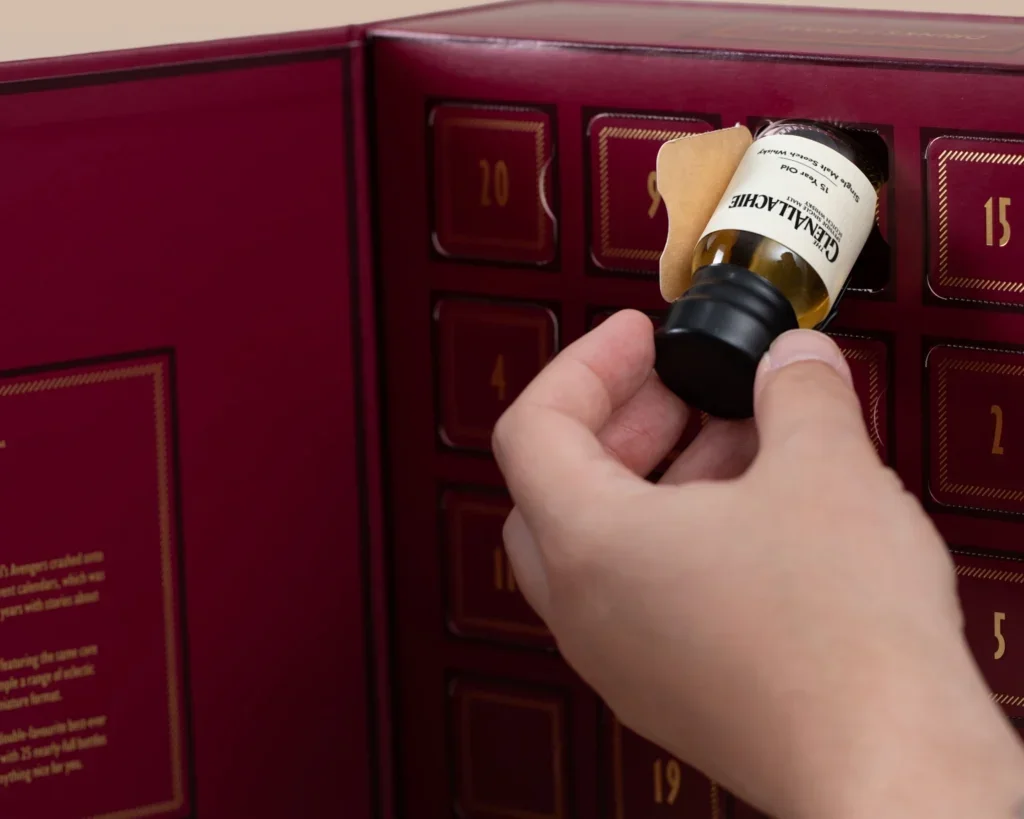
“There’s nothing we’re doing now that doesn’t have that format included,” Petry says. “When we launched a gift pack for a collection recently, we sold all of them out. And then a couple of weeks ago, I went to see how many people went to buy a bottle within that set. It was more than 10%.”
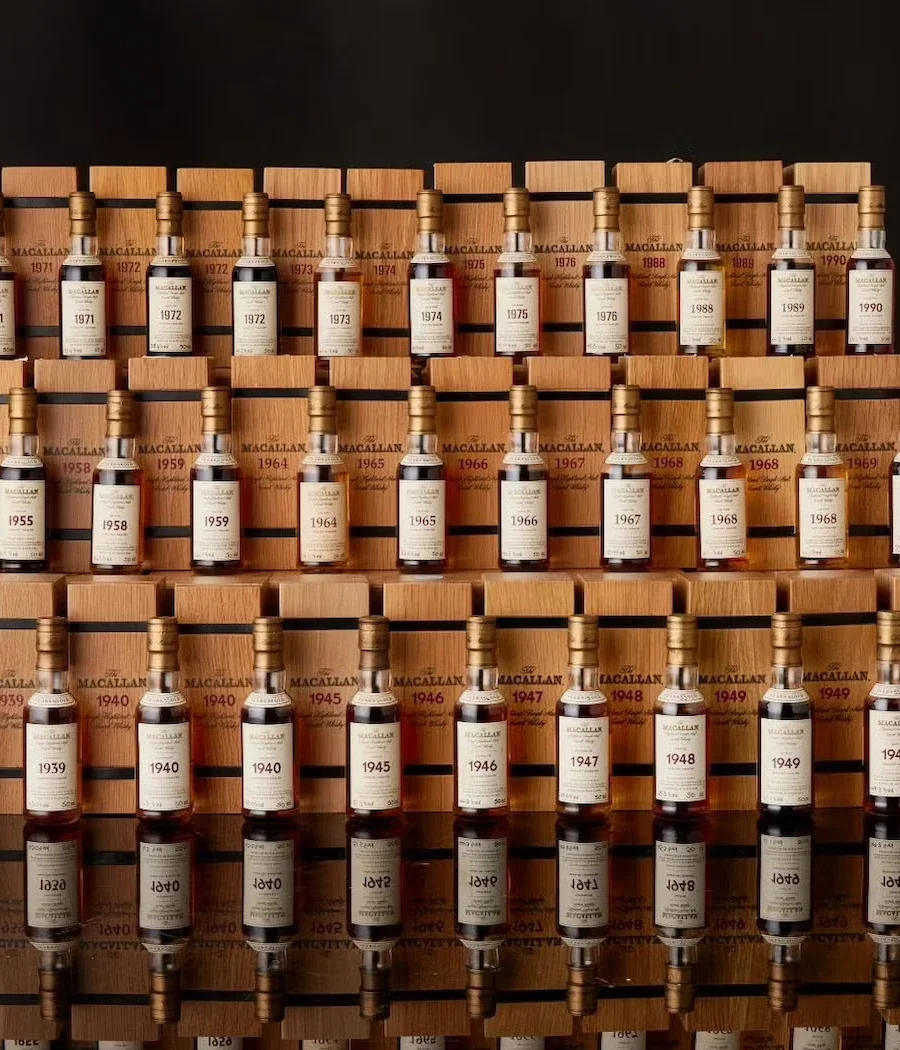
Complete collections of distillery or brand-bottled miniatures amassed through the ages – sometimes including some very rare whiskies – often come up at auction, which Singh puts down to people collecting these tiny bottles at the cost of actually drinking their contents. Trying before buying, though, is still the name of the game for most contemporary miniatures.
It’s not without its problems, though, as Singh knows, as an independent bottler and now a distillery owner with Tormore. “To bottle miniatures today is a logistical nightmare,” he says. “There are very few bottling companies in Scotland now that want to do it, and the cost of bottling them has doubled or tripled in six or seven years. When you see prices of miniatures, some of the really big brands are really cheap. Everybody else is three times the price. And that’s because the big brands have their own bottling lines.”
A solution? To do away with glass and usher in different formats entirely. Whisky Me, a new-school whisky discovery club launched by whisky-industry luminaries Thomas Aske and Tristan Stephenson in 2016, has had success with plastic pouches of 60ml pours, put together from hundreds of brands and distilleries for gifting or for the curious enthusiast.
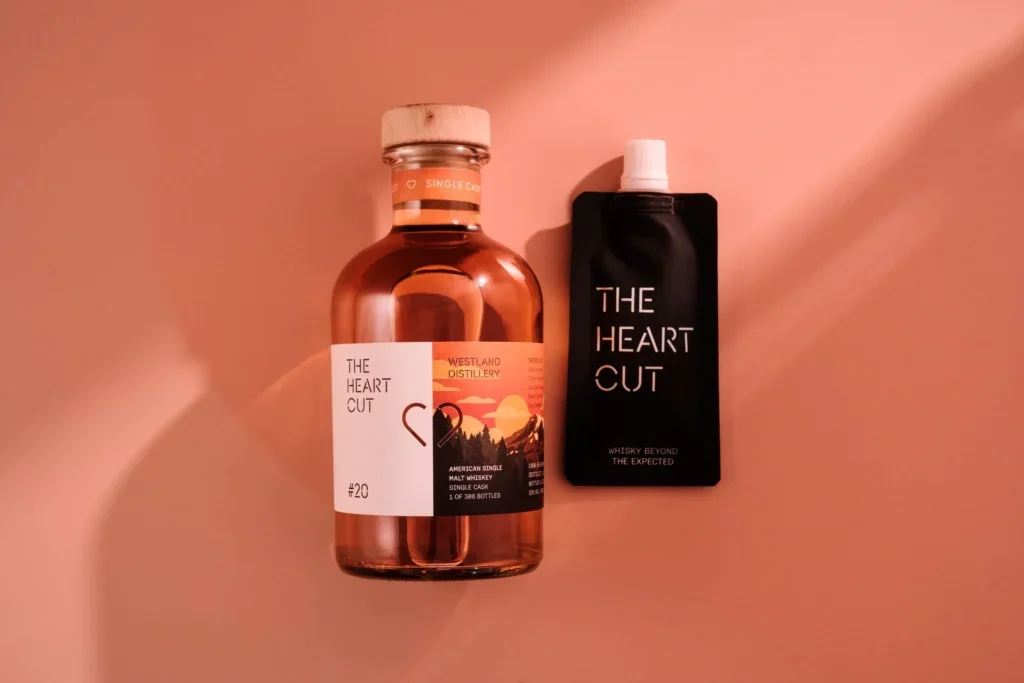
Independent bottler The Heart Cut, meanwhile, somewhat stumbled into the format, before realizing its potential as a way for its fans to taste its range affordably.
“We were sending our whisky to our partners and journalists in little glass bottles that cost as much as a small parcel,” says founder Georgie Bell. “We started looking at alternative ways of sampling, and we realized that Pocket Pours, our little 3cl pouches, enabled us to send them as a large letter. It was a massive cost saving, but it was also a real point of difference from a lot of other brands.”
At a consumer event, Bell asked The Heart Cut customers what they liked and wanted to see more of from the brand. To her surprise, they asked for her 3cl pouches to be available for them, not just the trade.
She says: “They said, ‘We really want to try them before we commit to a full bottle.’ So we started selling them. This was just under a year ago today and they flew. It’s such a great way to be able to host your own tasting night at home without committing to, say, six full bottles of each whisky. You can just buy six tasters and have a full exploration.”
Other Small Formats
The sweet spot between the miniature and the full bottle – the small format – is not, of course, a new invention. And for those looking to collect and taste more than a dram or two from a single product, there are other sizes that have always been present in the whisky landscape, but not necessarily a size attributed to the kind of whiskies enthusiasts are interested in.
The standardization of arguably the most popular, 200ml, came in that same 1980 ruling, which used the only imperial half-pint – 237ml – as a jumping-off point. In the UK, newsagents since Singh’s parents’ time have always sold 200ml bottles or half bottles of blended whisky, vodka and gin behind the counter. Further afield, a “flask” (200 or 350ml) is the bottle size of choice in Barbados’s rum shacks, where you buy a bottle and a mixer to take to your table.
Attempting to engage younger audiences, drinks conglomerates Diageo and Suntory Global Spirits have recently released a range of 350ml bottlings. These carry with them a connotation of immediate consumption for the social occasion, rather than collecting or contemplative tasting.
But the format remains underused by brands aiming to showcase their spirits and allow customers to balance curiosity against budget. Look at whisky retailers now for smaller formats and you’ll likely see gifting packs featuring 100ml or 200ml bottles, or the occasional half bottle, from brands’ core collections.
“Personally, I really love 20cl,” says Singh. “With a miniature you get maybe two drams, which is just about enough to get a taste of it. But to really get to know a whisky – and to know if you like it – you need more than that. 20cl is a lovely size because it’s just enough to try it three or four times, or share a bottle between two or three people. You’ve got auctions now where people are selling bottles of whisky they want to get rid of. One thing you never see come up is 20cl. That says to me people drink them.”
Petry says Master of Malt has started to see excitement in smaller formats that speak to a new, potentially younger and more brand-agnostic audience, or one that’s newer to whisky and wants to explore mainstream brands to build their knowledge.
“It needs to have its own value, its own story, so it’s not just a smaller version of the same product. I think that’s where we’re going to start seeing a shift.”
Giovanna Petry
“Pricing is massive now,” says Petry. “I think you can launch a brand or a new product in a smaller format to get people to buy into your brand. But I don’t think brands see it in that way just yet. They might see that smaller formats are working, but they use them for products they already have in their collections.”
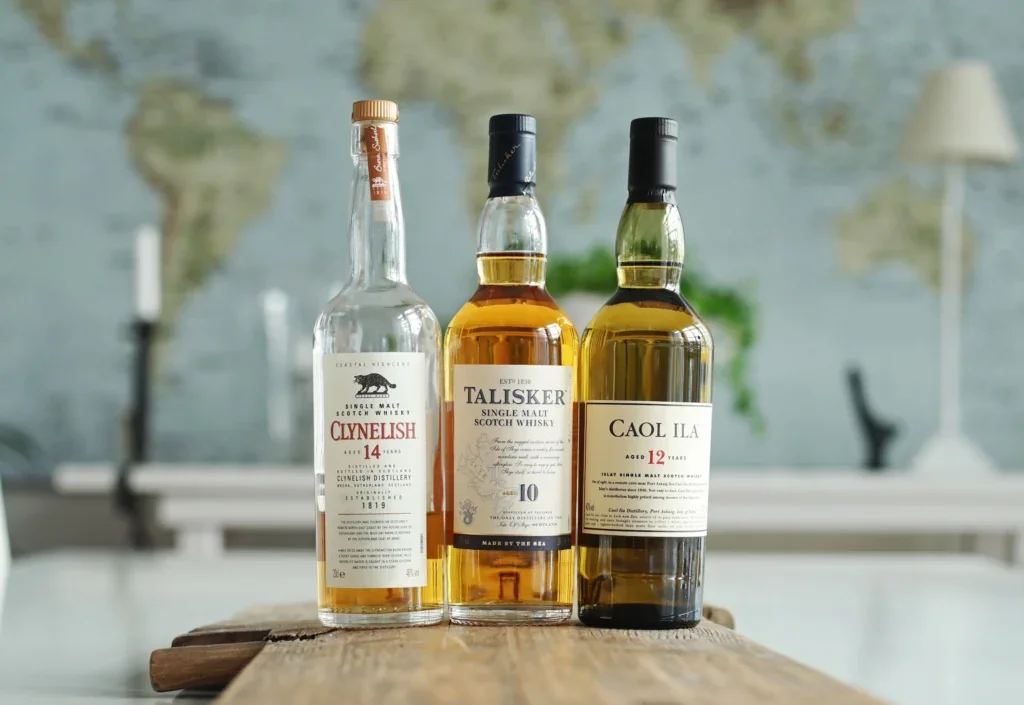
“At The Whisky Exchange, we sold so many 20cl bottles you wouldn’t believe it,” Singh continues. “Gift packs often came with three 20cls. Diageo did the Classic Malts range – Glenkinchie, Talisker, and Cragganmore – in one pack. It was brilliant. We sold hundreds of cases. I think more companies should do it.”
Singh is heeding his own advice, and making 20cls available for the range at Tormore. “It’s nice for people to see the evolution of the brand, or the hierarchy. Some people may like [non-age-statement expression] Timeless and say, ‘I want to try the 12 Year Old. I really want to try the 16, but I’ll save it for a special occasion.’ Tasting sets like that are really interesting, but then if you do some limited editions and single casks, you could do a little pack with three different expressions, to show something different from the core range.”
“It needs to have its own value, its own story, so it’s not just a smaller version of the same product,” says Petry. “I think that’s where we’re going to start seeing a shift. They are not yet creating something just for that specific buyer. But I think that is obviously where the gap is, and where we’re going to start seeing a lot more excitement.”
Whatever the case, since the full-size whisky bottle was first standardized – first by glassblowers, then by governments – it seems there’s always been space to play in the space underneath them.
John Power & Sons’ idea for a smaller and more affordable measure of its whisky may have been a gamble, but it kickstarted a significant part of whisky’s customer base that remains today. With more choice than ever before in the world of whisky, this current groundswell of drinkers may yet power the small format into a big resurgence.