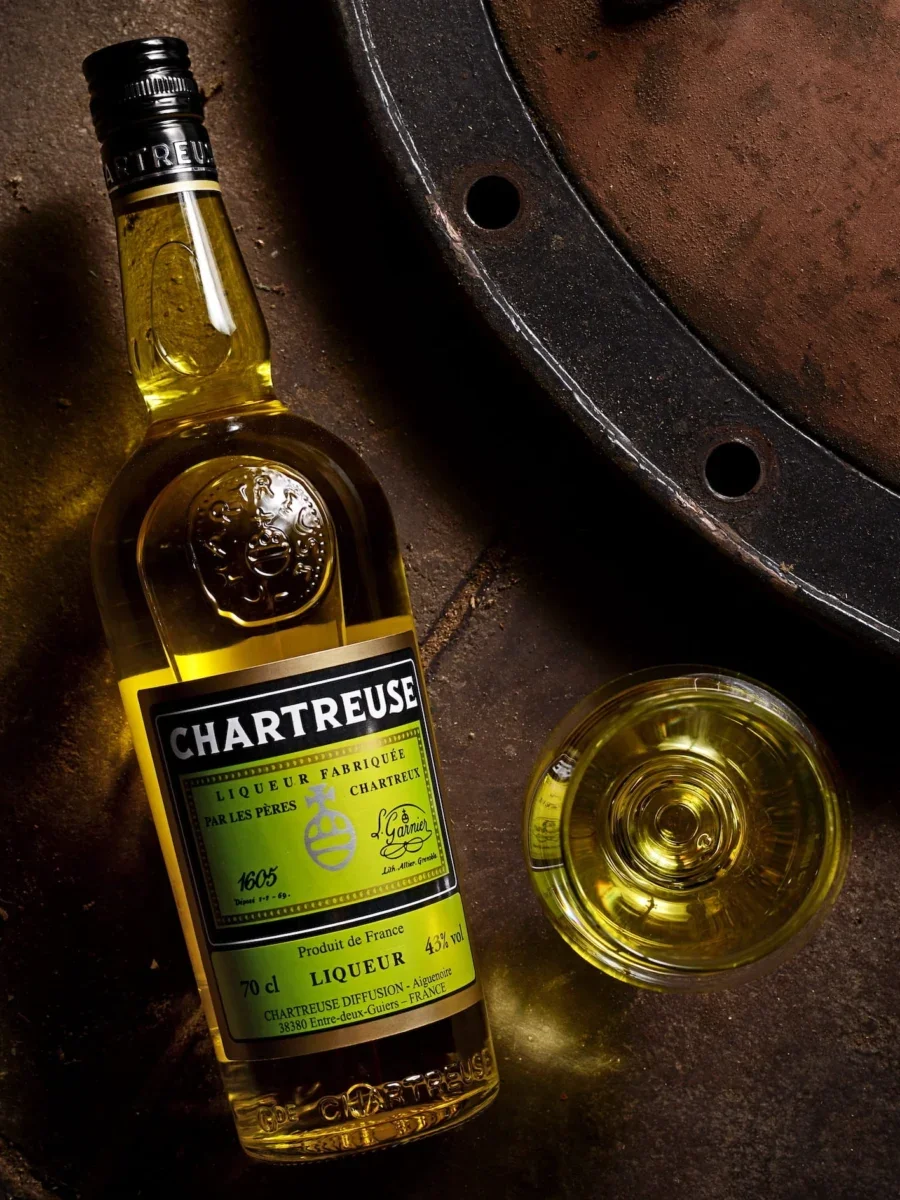
There was a time when a bottle of green Chartreuse sat at the back of your parents’ drinks cupboard.
A forgotten bottle picked up on a ski holiday that didn’t quite taste the same back at home. But Chartreuse’s popularity has always come in waves.
By the late 19th century, Chartreuse was appearing in cocktail recipes in the US. The 1876 edition of Jerry Thomas’s Bartender’s Guide includes, under “Fancy Drinks,” a layered Pousse-Café recipe – curaçao, kirsch, and Chartreuse – which is described as a “celebrated Parisian drink,” even though it’s suspiciously like a student-night shooter. By the 1890s, Harry Johnson had devised the Bijou (with gin, sweet red vermouth, green Chartreuse, and orange bitters).
Popularity had faded by the early 20th century, partly because of the monks’ itinerant existence (see Part 1 and Part 2). But in 1916, what is now the definitive Chartreuse cocktail, the Last Word, was born at the Detroit Athletic Club. The liqueur’s status as one of the spirits of the Jazz Age was ensured when F. Scott Fitzgerald made it the drink the great Jay Gatsby poured for Daisy and Nick in the 1925 novel.
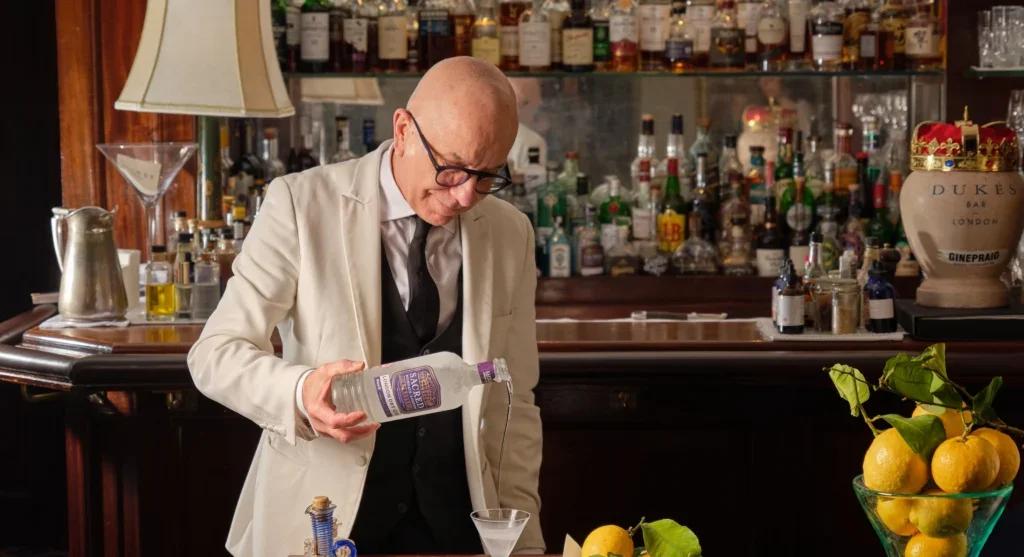
For the rest of the 20th century, it was just there on the shelf, with many admirers, but less fanfare. A genuine slump came in the 1980s. Alessandro “The Bartender” Palazzi, who heads up Dukes Bar in London, remembers: “In those days, we used to make some pretty and – please excuse my language – some pretty shitty cocktails.
“Everybody forgot about using the best ingredients. And then came a revolution in New York and London: cocktail bars outside of hotels, with young bartenders wanting to make classic cocktails, and to use unusual ingredients.”
That shift in cocktail culture in the late 1990s and early 2000s, away from fauxtinis and towards rediscovered classics, precipitated the latest wave of Chartreuse popularity. The Last Word, revived in 2003 by Murray Stenson in Seattle, became and remains one of those if-you-know-you-know shorthands between customers and bartenders.
Shaken with matching measures of gin, green Chartreuse, maraschino, and lime juice, the cocktail’s cult status is equal parts trend-led and favored for flavor. Aurélie Panhelleux, bar operations manager at the CopperBay Bar at the Hotel Lancaster in Paris, says: “The Last Word is an ideal cocktail to showcase everything Chartreuse can bring to the table. In this cocktail, it contributes both its herbal and spicy notes, balances the acidity of the lime with its sweetness, and blends beautifully with the almond notes of the maraschino liqueur.”
“On paper,” says Maroje Milosevic, head bartender of The Sidecar at Dublin’s Westbury Hotel, “there are four very distinctive ingredients competing, and you might expect the drink to be too intense. Somehow, they find a balance.”
With one unique ingredient and one with only a couple of brands, the gin makes a difference. Palazzi favors a good, simple, juniper-led London Dry gin: “Number Three works well, and also Sacred, from Highgate in London. And some people turn their nose up, but Beefeater is a very good gin for The Last Word.”
Beyond The Last Word
Palazzi has turned to Chartreuse for one-off recipes for special occasions. For a dinner at the Hong Kong Club, he created a version of another turn-of-the-20th-century cocktail, the Alaska.
The original recipe, first written down in 1913 by Jacques Straub, is simply two parts gin to one part yellow Chartreuse, plus orange bitters. Palazzi says: “I was making it in the Dukes martini trolley-style, with frozen gin and an Amalfi lemon twist, expressed. It took me a few attempts to get the right ratio. Both the yellow and the green Chartreuse, they are not the easiest liqueurs to work with, but they are among the best.”
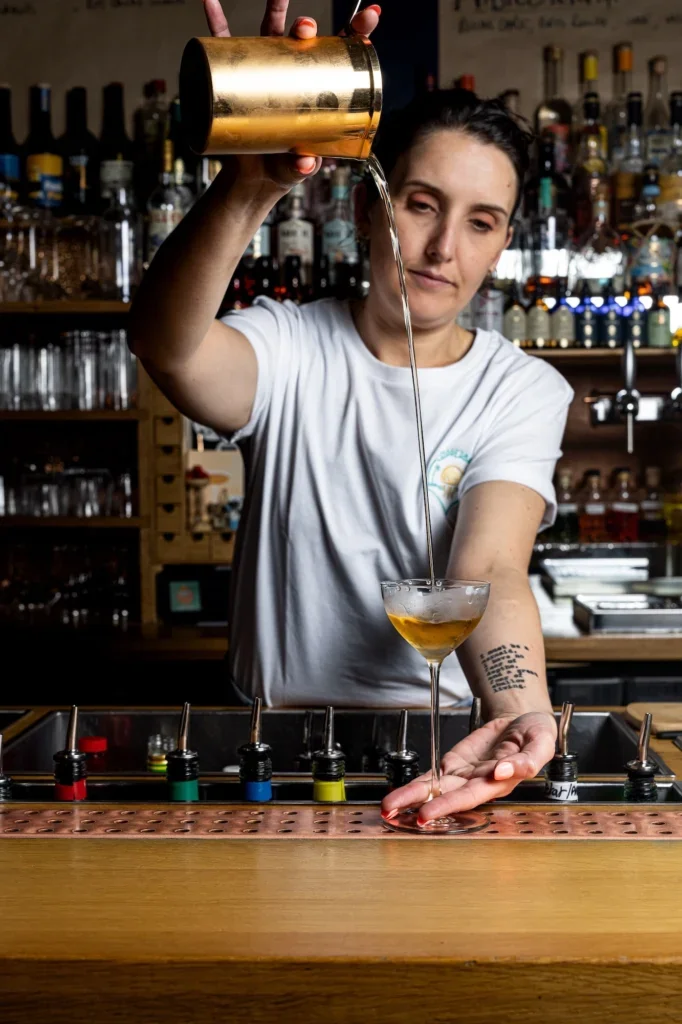
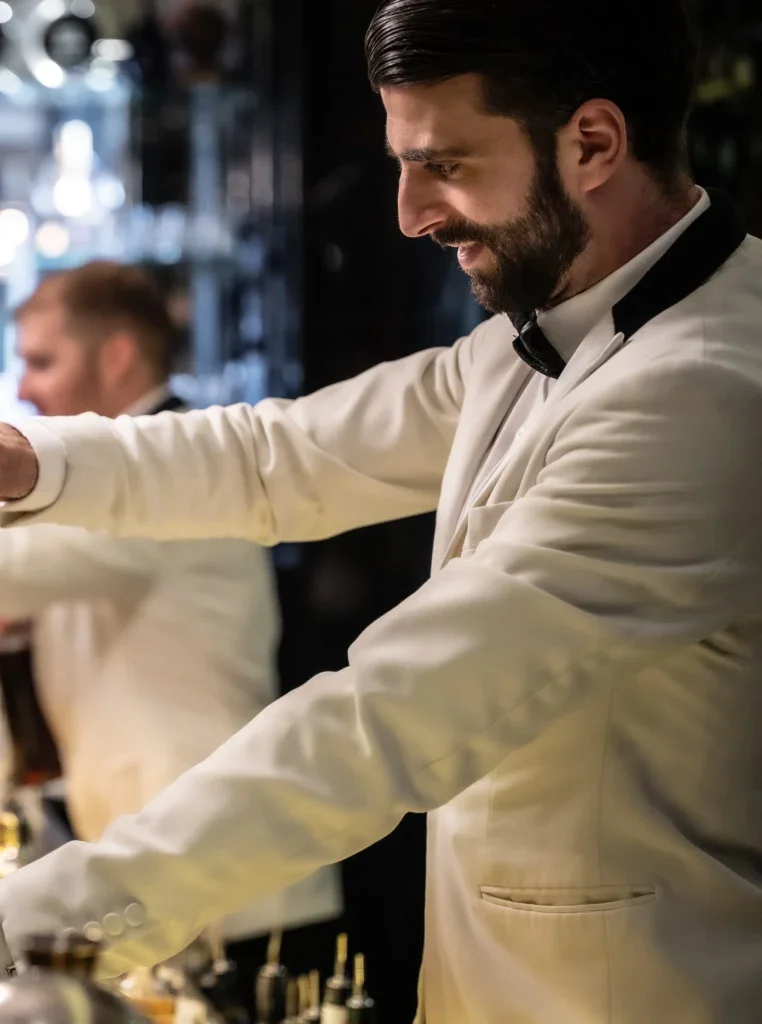
A whole generation of bartenders has taken up the challenge of working with Chartreuse. Ironically, The Last Word is definitively not the end of that discussion. Difford’s Guide lists over 50 variations on the classic. Panhelleux says: “We actually have a French version of the Last Word on our current menu. It’s made with Sab’s ratafia de Bourgogne, green Chartreuse, génépi, Combier guignolet d’Anjou cherry liqueur, and lemon.”
There are modern classics, too. “Just like the Last Word, the Naked and Famous is another one where you absolutely need Chartreuse,” says Pedro Montero, bar manager at Archive & Myth in London. “These are the cocktails that show you exactly why Chartreuse is so important. You can’t substitute it, you can’t skip it. It’s essential.”
The Naked and Famous has a mezcal base, and Maroje Milosevic agrees Chartreuse is surprisingly versatile. “It can also work with whiskey, cognac… you can keep discovering new combinations. A favorite of mine is the Tipperary – Irish whiskey, sweet vermouth, and green Chartreuse work extremely well together.”
“These are the cocktails that show you exactly why Chartreuse is so important. You can’t substitute it, you can’t skip it. It’s essential.”
Pedro Montero
Benjamin Nolf, director of Bar Les Ambassadeurs at the Hôtel de Crillon in Paris, is a fan of the Bijou, but also uses it as a flavor modifier in new cocktails: “As bartenders, we work with hundreds of liqueurs, but many of them have quite a defined function: bringing sweetness, bitterness, fruit, spice or a particular aroma.
“Chartreuse is different. It can bring all of those things at the same time. It is herbal, floral, spicy, fresh, powerful and sweet, and depending on how you use it, completely different parts of the liquid can come forward. Sometimes a barspoon is enough to completely change the drink and give it another dimension.”
For Nolf, the legend and the flavor of Chartreuse go hand in hand: “I think Chartreuse holds a special place for bartenders because it is much more than just a flavor modifier. It is one of those rare products that has a real identity, a history, a sense of mystery, but also an incredible complexity in the glass.”
The Scarcity Factor
Palazzi says that he’s noticed more American guests at Dukes asking for a cocktail containing Chartreuse in recent years – specifically since 2023, just as demand for Chartreuse was hitting unprecedented heights following the company’s decision to cap production at 1.2 million bottles a year. It was a surprising response to sales of Chartreuse doubling in 2020, as home cocktail culture boomed.
The stated reason was so that the monks could “protect their monastic life and devote their time to solitude and prayer,” i.e., they would not chase profit by increasing output. Palazzi doesn’t fully accept that the idea was to increase output of Hail Marys: “I think it’s a very good marketing position.”
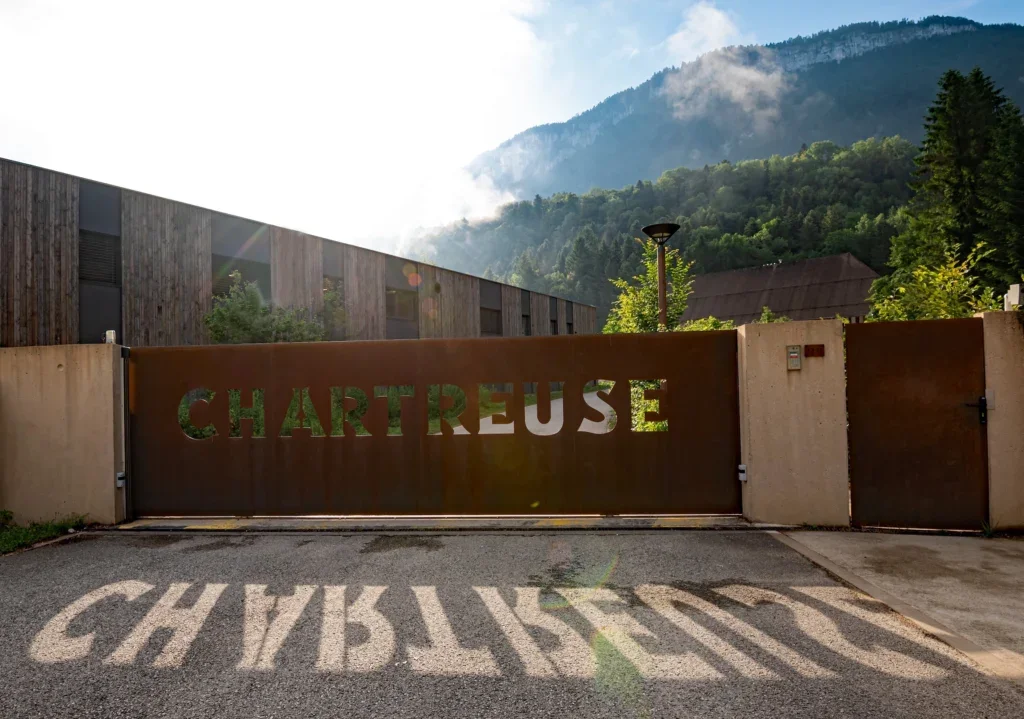
In the previous part of this series, I mentioned that I was allowed to explore the distillery site back in 2022 (after the limit was decided on, but before it was announced), and walked into newly built warehouses, where they were still installing racks.
The detail of the announcement was that the monks had decided “not to increase their volumes of production” or “grow the liqueur beyond what they need to sustain their order.” That is not the same as what is often written about the decision – that they reduced production. Putting Chartreuse on allocation has meant it has only gained a reputation for quality and worth, and been immune to a more general downturn in drinks sales since the pandemic bubble burst.
Chartreuse Diffusion said it would not raise the price, but scarcity in the face of increased demand has meant that, in reality, at the point of sale to consumers, the price of a standard 700ml bottle has gone up by around a third in the UK, and by more for the 750ml bottles in the US. Additionally, on sites such as Master of Malt, there is a strict “one bottle per customer” limit.
“Vintage Chartreuse tastes genuinely astonishing. The difference between a bottle produced recently and one from 50 years ago to now is profound, with substantial, structured, deep flavors.”
Isabel Graham-Yooll
Back in 2022, the one-liter bottles of green and yellow Vieillissement Exceptionnellement Prolongé (VEP), aged for eight years instead of three, cost about €160 in the Chartreuse shop in Voiron. In the UK, they now retail somewhere between £350 and £500, with similar prices in the US. Oddly, some of the limited editions I tasted at the distillery such as 1605 Liqueur d’Elixir, released in 2005 to celebrate the quatercentenary, are currently available at less inflated prices. Though that’s not the whole story when it comes to collecting Chartreuse.
A Collector’s Market
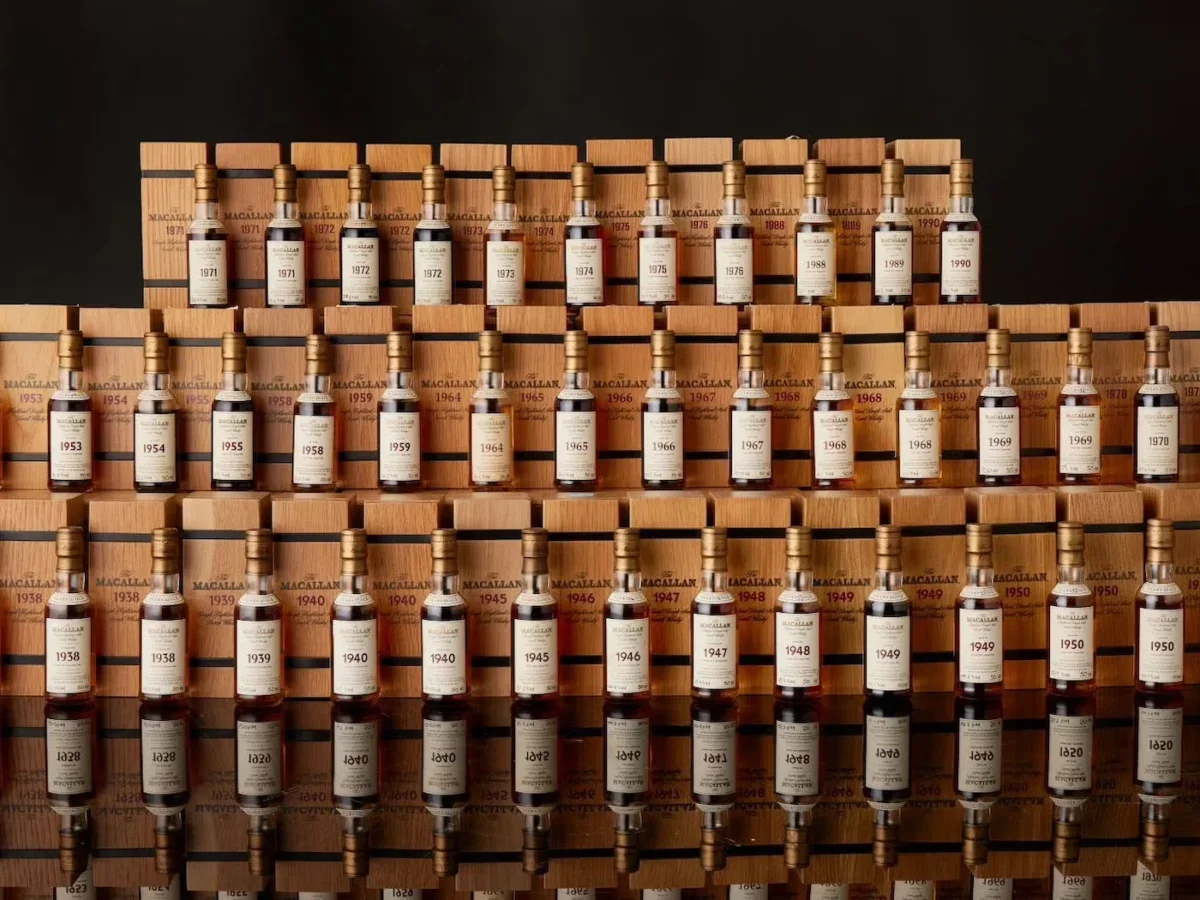
If you do happen to be rummaging around in the back of a drinks cupboard in 2026, and find a bottle of the green stuff, you’d better hope it is unopened, because in a secondary market dominated by whisky, vintage Chartreuse stands out. Old Chartreuse is not past its sell-by date; it’s vintage.
“You can have a £10,000 bottle of Chartreuse,” says Isabel Graham-Yooll, former director of Whisky.Auction and founder of spirits authentication and valuation service Wisgy. What would make a bottle of Chartreuse worth five figures?
“Well, it would need to be around 100 years old to fetch that price, but with any 1970s and especially pre-1970s bottle, the value to collectors rises sharply. Chartreuse is made with natural botanicals, and those evolve in the bottle. So, vintage Chartreuse tastes genuinely astonishing. The difference between a bottle produced recently and one from 50 years ago to now is profound, with substantial, structured, deep flavors.”
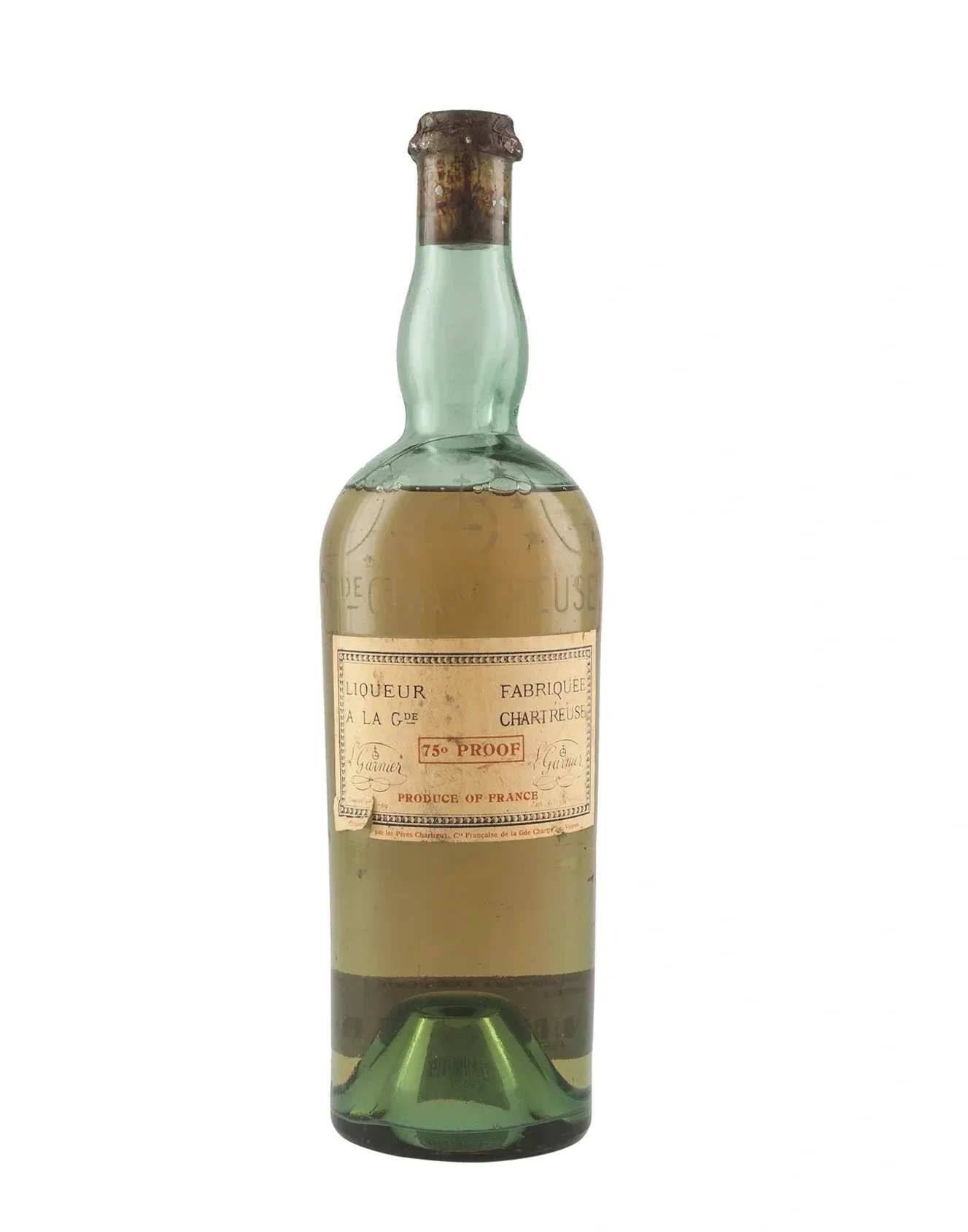
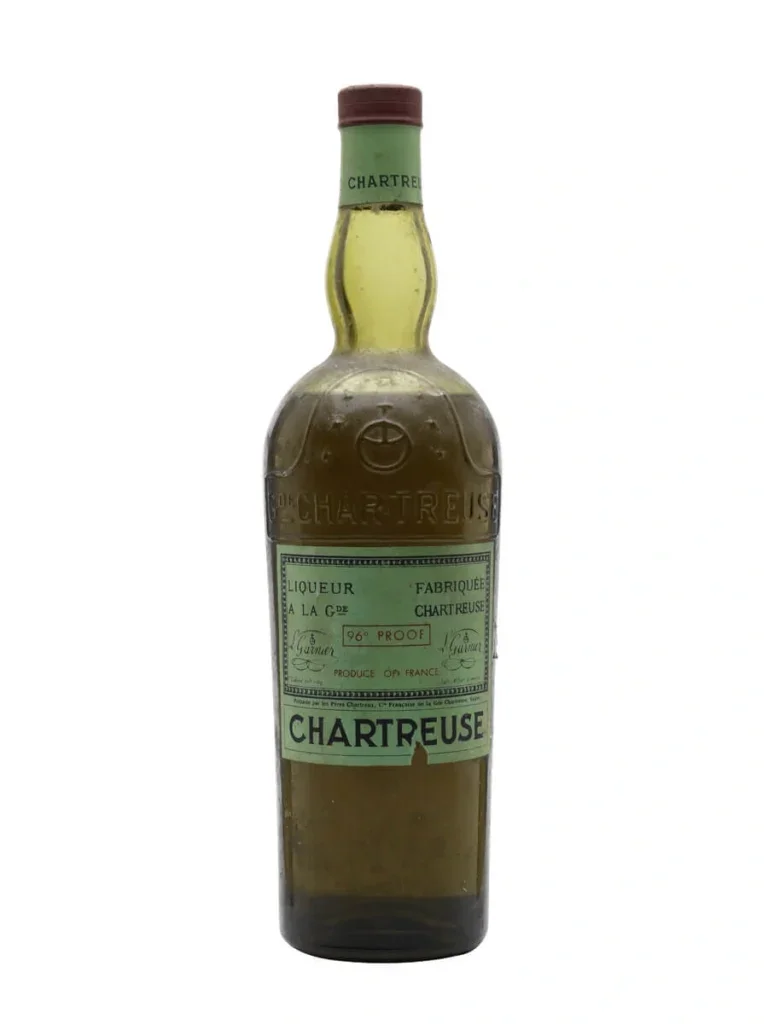
Of course, just as with any commodity that goes up in value, the collector has to be careful of fakes. Wisgy supports reputable auctioneers to improve their own authentication processes, as well as advising private clients. “We are able to accurately date and value a bottle of Chartreuse just like a whisky or cognac, just by looking at different details on the bottle.”
As long as bartenders keep chasing vintage bottles at auction, the allocation remains, and the “reduced production” myth persists, Chartreuse is unlikely to slip to the back of the cupboard again.
The day I visited in 2022, demi-muids (the 600-liter casks best known from Rhône wines) of VEP were being rolled into one of the new warehouses. I was told it had capacity for 540 of the casks, and there was more space in other warehouses.
With a growing stock, there really shouldn’t ever be a shortage of Chartreuse. But a sip of the liqueur made by monks is a fleeting taste of paradise, so perhaps they are wise to ensure we never take it for granted.