For relaxing times, make it Suntory time.
With that now-iconic line, Bill Murray’s character from Lost in Translation helped catapult Japanese whisky onto the global stage. Though the scene depicted a fictional commercial, the brand mentioned and the bottle of Hibiki brandished were both very much real. As was the high-altitude hotel bar that the lead actors kept returning to throughout the film.
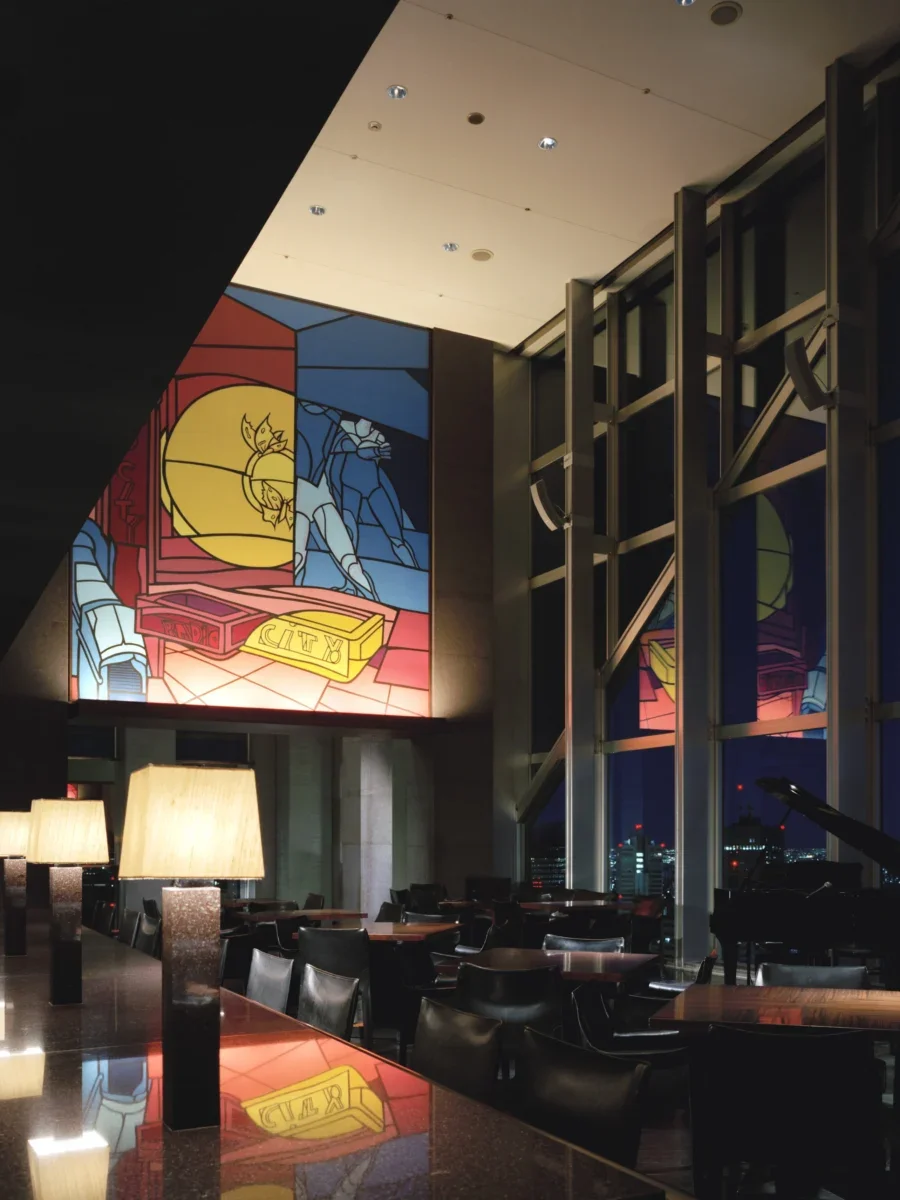
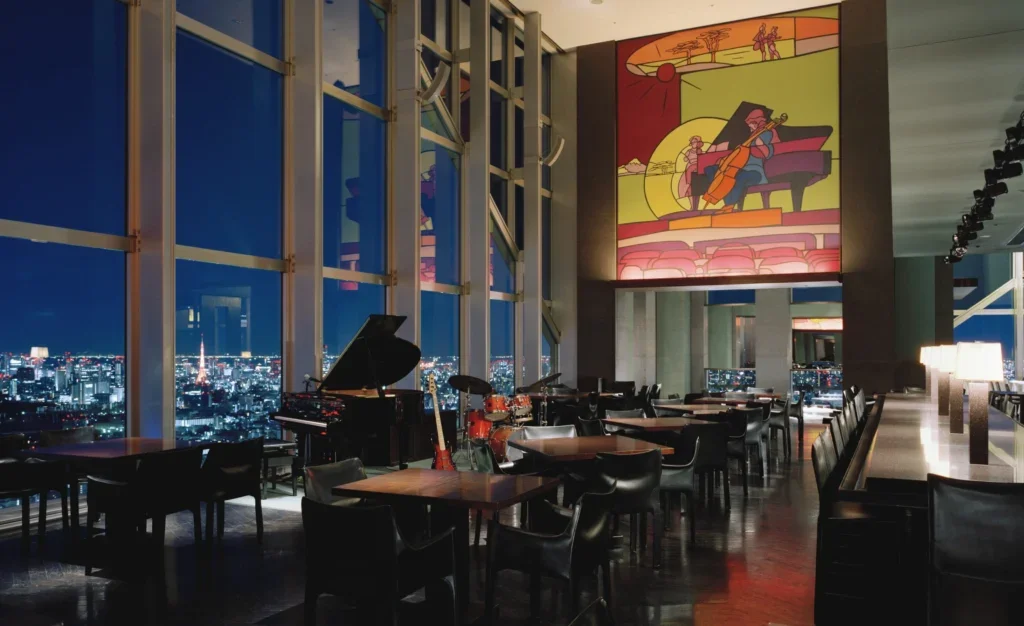
In real life, it’s known as the New York Bar, a cavernous jazz and cocktail hall occupying the 52nd floor of the Park Hyatt Tokyo. It remains every bit as relevant today as it did 23 years ago when that movie was released. In fact, when the hotel reopened in late 2025 – after a 19-month renovation – its flagship watering hole returned with more whisky selections than ever before.
“Many of our guests are interested in understanding what makes established producers such as Yamazaki and Hibiki so highly regarded,” says Benoit Boissarie, director of food and beverage for the five-star property. “But they are increasingly exploring the distinctive characteristics of newer and lesser-known distilleries.”
Beyond the Big Names
Kuju is at the top of that list. Founded in 2020 in Oita Prefecture, the brown spirit from here is already demonstrating an elegant fruitiness, reminiscent of Speyside Scotch. New York Bar peddles plenty of the brand’s Green Dram, a floral and approachable world blend that typically retails for around $100 a bottle. But it also boasts something you can’t find anywhere else: Park Hyatt Tokyo Private Cask No. C19, bottled exclusively for the hotel.
Brimming with green melon, sun-ripened grapes, and jasmine tea, it offers a gentler approach into the Japanese whisky category. It is an entry point without an age statement or overt oak tones. It’s also relatively obscure, a response to what guests have been asking for in increasing numbers.
“They appreciate the opportunity to discover producers beyond the more established names,” Boissarie confirms. “And so our Japanese whisky collection now includes emerging distilleries such as Akkeshi, Kuju, Kanosuke, and Sakurao.”
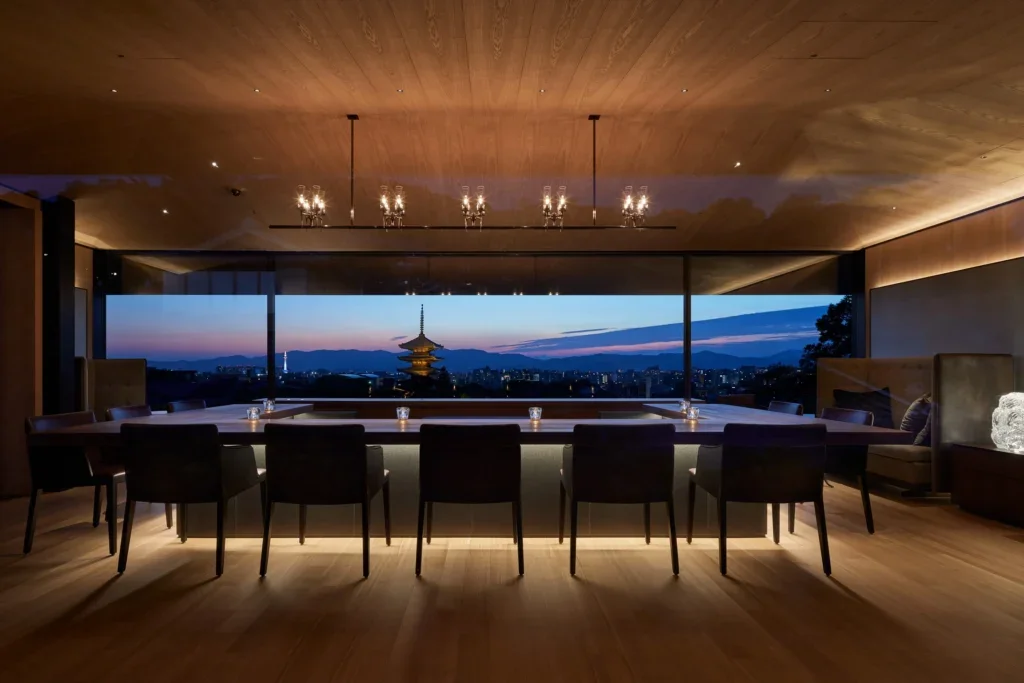
This purposeful strategy is shared by the hotel’s sister property in Kyoto – now ranked 37th on the most recent list of the World’s 50 Best Hotels. From a design standpoint, Kohaku stands in stark contrast to its counterpart in Tokyo: a sleek and intimate drinks parlor overlooking the iconic Yasaka Pagoda.
Drinkers here are bellying up to the bar with a high level of knowledge in tow. They’ve already tasted the popular stuff, perhaps even from the source, as Yamazaki Distillery is less than a 30-minute drive south. They’ve been read in on the mythology: the historic rifts between Shinjiro Torii and his erstwhile protégé, Masataka Taketsuru, who went on to found Yoichi. They’re eager to be poured new tipples and told new tales.
“The current trend reflects a shift from simply ordering famous brands toward seeking authentic and localized drinking experiences,” echoes Gherardo Vivarelli, beverage director at Kohaku. “Guests today are far more curious about where a spirit is made, the ingredients used, and the story behind the producer.”
Most specifically, Vivarelli observes this movement crystallizing around craft gin, where creativity, local traditions, and seasonal ingredients all converge. “While Japanese whisky often represents broader national excellence, a Kyoto-made gin can tell a more specific story,” he adds.
Underscoring the assertion, he partnered with Kyoto’s own KI NO BI Gin to formulate a Blue Dragon expression. It’s crafted with well water from Higashiyama, the exact site upon which the Park Hyatt Kyoto sits. “The spirit captures the character of Kyoto through local botanicals such as yuzu, sansho pepper, and red shiso leaves. It offers a distinctly Japanese perspective while remaining approachable to guests from around the world.”
A Case for Shochu
For Mario La Pietra of YOI, the future is shochu. It’s an ironic notion considering that the koji-fermented spirit has been distilled in Japan for nearly 500 years. But according to the drink expert, who oversees a venerable stable of luxury spirits within the newly opened Capella Kyoto, shochu is deserving of far more global praise.
He believes the movement toward lower-ABV consumption will help correct this oversight. Indeed, single-distilled expressions (traditionally known as otsurui shochu) typically sit at around 25% ABV, while retaining the rich grain and starch tonalities of their base ingredients.
“There’s so much variety within the category, and it works well both in cocktails and alongside food,” says La Pietra. “At YOI, we use shochu in several drinks, particularly mugi shochu [barley-derived], exploring its character in different styles of cocktail. A low-ABV serve with a small measure of barley shochu gently prepares the palate for the next course.”
“There’s so much variety within the category, and it works well both in cocktails and alongside food,”
Mario La Pietra
Within the dimly lit confines of this polished kappo-style bar and restaurant, cocktails are intended to be more revelatory than de rigueur. “We put our own spin on them, drawing on flavors and ingredients from Japan and beyond,” he says. And that means that some drinks are garnished with Japanese sweet beans or masago, or misted with melon foam.
They can also be built around conversations La Pietra has with his patrons and how they intend to have a drink fit into their evening, which often equates to just spirit and soda. “Nevertheless, a carefully prepared highball deserves as much attention as anything else. Temperature, carbonation, and dilution are fundamental to the experience. Recognizable [brand] names still matter, but the conversation is increasingly extending toward flavor.”
Mud, Masks, and Awamori
And it’s increasingly extending to all corners of the country. In the southerly island of Miyakojima, for example – far closer to Taiwan than Tokyo – Utaro Izaki is championing regionally specific flavors. Through menu and mythology.
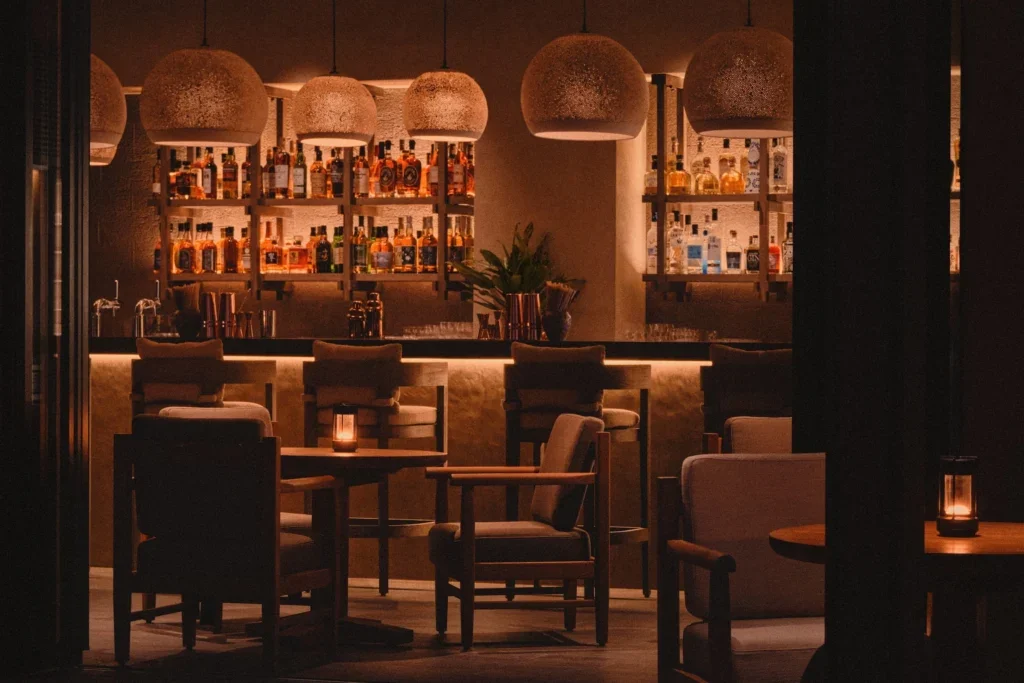
He holds a prime perch from which to preach the gospel: Choma is a stunning beachfront bar at the heart of the Rosewood Miyakojima resort. The surrounding terrain is steeped in both its own distinct style of spirit, awamori, and unique cultural rituals. He weaves them together without a seam to be seen.
“Choma’s approach is not simply to use local ingredients, but to express the stories behind them,” says Izaki. “Ingredients such as sugarcane, black sugar, sea salt, shikuwasa, pipatsu, and sanpin tea help us reflect the culture and traditions of the Miyako Islands.”
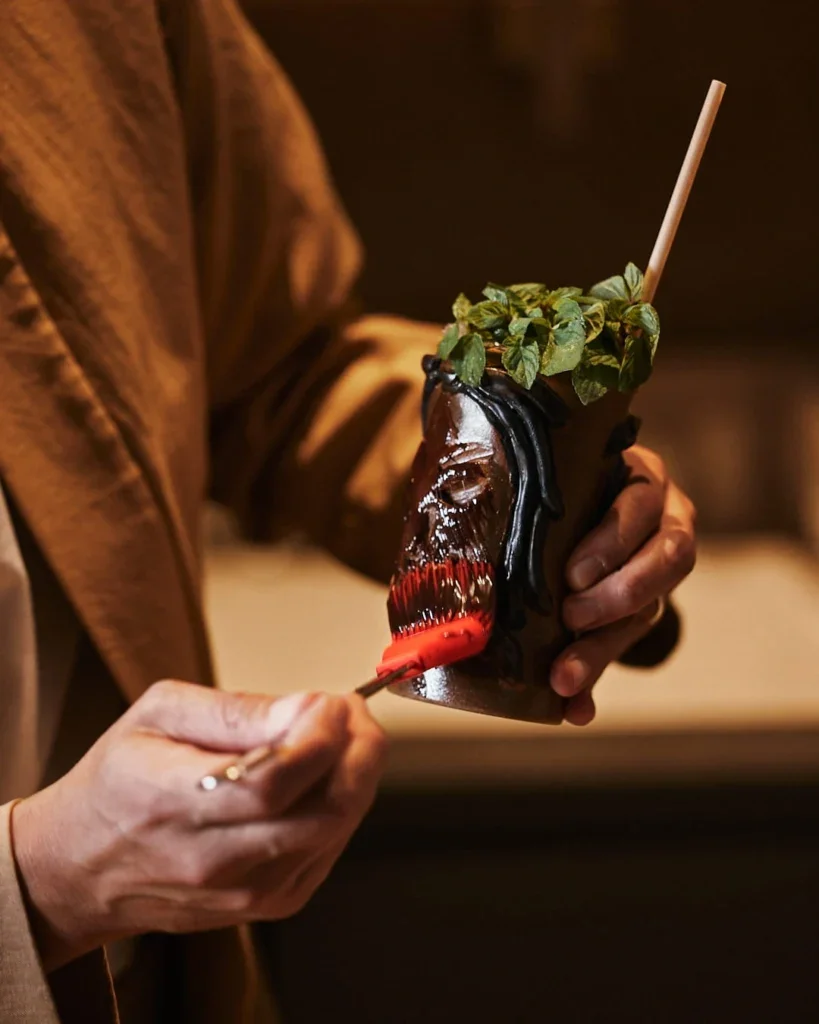
None more so than his signature cocktail, the Paantu. It’s inspired by the eponymous harvest festival of the island, in which locals mask and muddy their faces to resemble supernatural beasts. They wander local villages, smearing all that mud to spread blessings – and terrify children.
Izaki builds his potion using awamori, rye, coconut, and fresh-pressed cane juice, sourced from the island. It’s served in bespoke ceramic crafted by a local artisan to mimic the masks of the festival. And of course there’s a chocolate rim to resemble the hallowed mud.
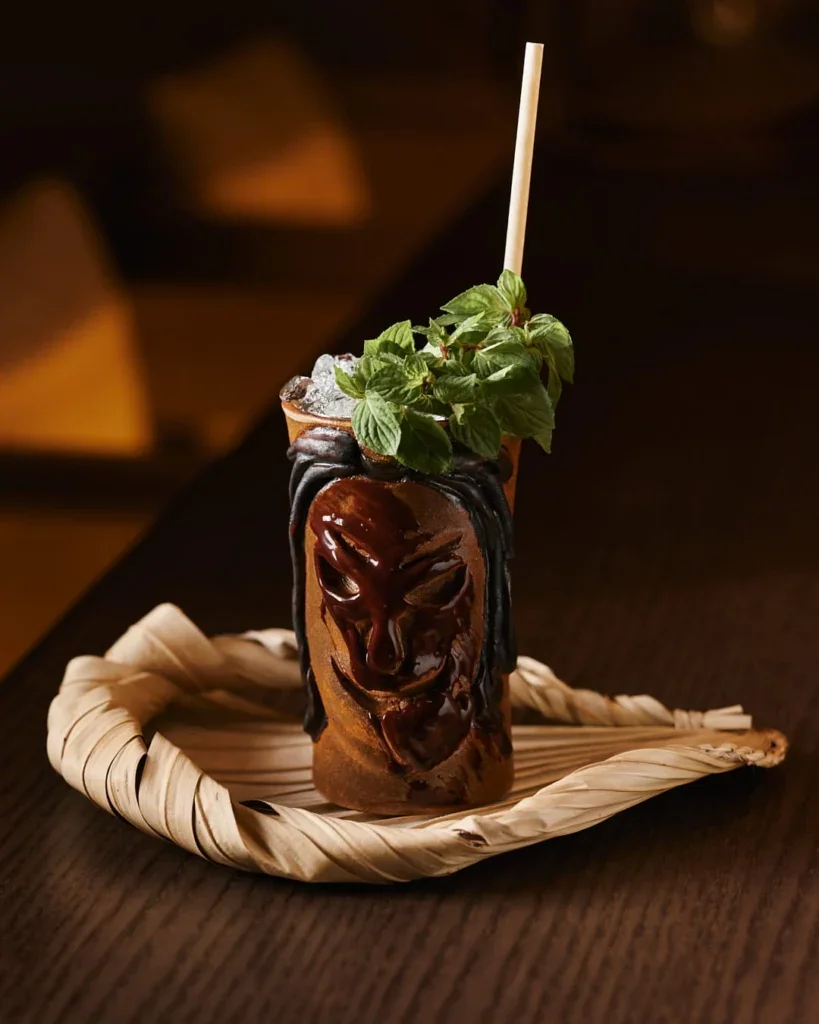
“At Choma, guests increasingly ask about the stories behind local ingredients and their connection to Miyakojima’s culture,” according to Izaki. “Three to five years ago, guests often ordered well-known labels such as Yamazaki, Hibiki, Hakushu, or The Macallan, or classic cocktails they already knew.
“While those requests remain popular, more guests are now looking for drinks they can only experience in a particular destination. And international visitors are showing growing interest not only in Japanese whisky, but also in awamori, sake, shochu, and craft spirits.”
Land of Sake
Back in the heart of Tokyo, the Ritz-Carlton is wooing its international visitors by amplifying the stature of sake. The elevated pedestal of Hinokizaka – an elegant 45th-floor kaiseki restaurant peering out over Roppongi – certainly helps with the lift. But not nearly as much as a dedicated team of sake sommeliers. They’re meeting more and more guests inquisitive about that most traditional of Japanese alcoholic beverages, even as the overarching trend is less alcoholic consumption altogether.
“Today’s luxury traveler is often looking for authentic experiences and products that cannot easily be found elsewhere,” says Shinji Sato, restaurant manager at Hinokizaka. “In terms of sake-producing regions, I always recommend Kochi Prefecture on the island of Shikoku.
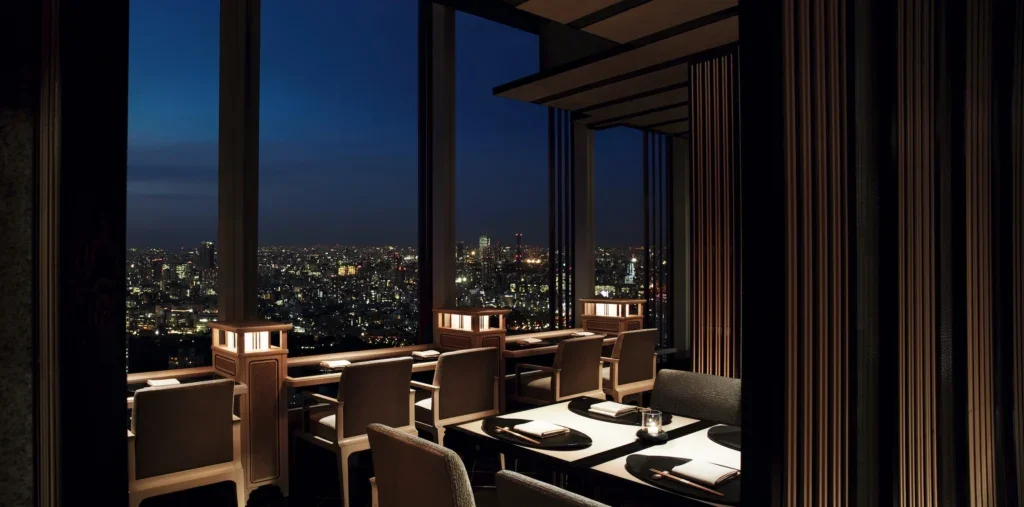
“Among the breweries there, I believe Tsukasabotan and Tosa Shuzo – which produces the Keigetsu brand – deserve more attention. One of the key appeals of sake from Kochi is its distinctive dry style and crisp, refreshing character. It can complement a wide range of dishes without overpowering the delicate flavors of the ingredients, which is particularly appealing in a fine-dining setting.”
Despite the five-star setting, these sorts of pours rarely qualify as exorbitant in cost. Guests here, as in a growing band of marquee Japanese destinations, gravitate toward exposure more than exclusivity.
Izaki sees the same at Choma. “We have also seen a shift from guests simply seeking rare bottles to evaluating whether the overall experience justifies the price,” he says. And while those revered expressions of age-statement whisky may remain allocated forevermore, Japan will never be short on overall experience.