My journey of Chartreuse discovery had taken me to the monastery in the mountains, where monks grind combinations of 130 botanicals into the recipe.
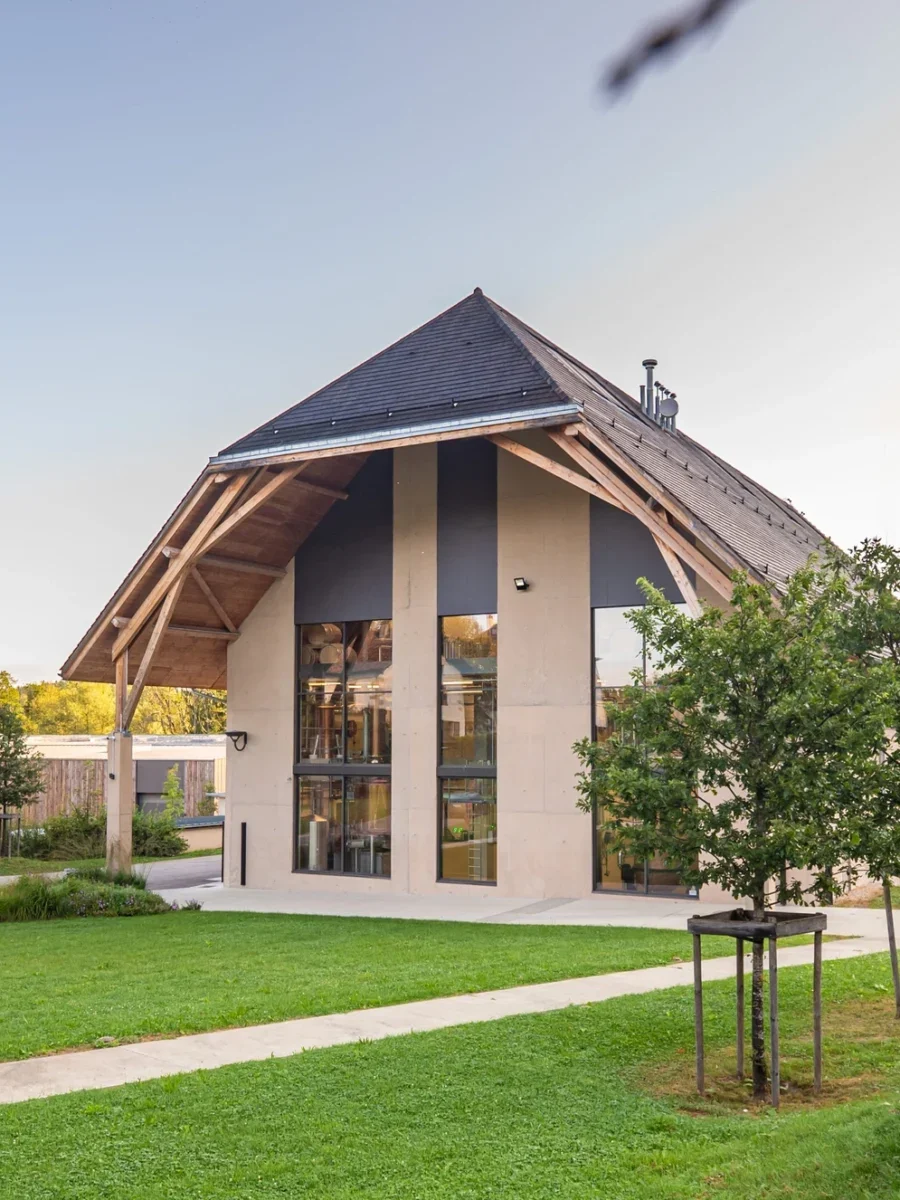
It had led me to several former distillery sites (read Part 1 here). Now, I was passing through the gates of the operational distillery in Aiguenoire, a remote spot in the Isère département of the Western Alps. My head rang with warnings against posting pictures on social media and an emphasis on how few people were allowed this access.
As rare an opportunity as this was, however, I’d be disappointed if I’d hoped to uncover the secret recipe. The omertà I’d found in the mountain villages extends to the distillery itself. And even the distillery director, physically distilling the liqueurs and elixir, doesn’t know exactly what he’s distilling.
Chartreuse Diffusion was set up in 1970 to handle commercial and production operations. After their monastery was seized by secular governments twice, the growing revolutionary mood around May 1968 probably spooked them. As ever, control over the recipe was the priority. Chartreuse Diffusion has a lay staff, but it is majority-owned by the monks. The CEO signs off on the invoices to pay suppliers, but the merchants’ names are redacted.
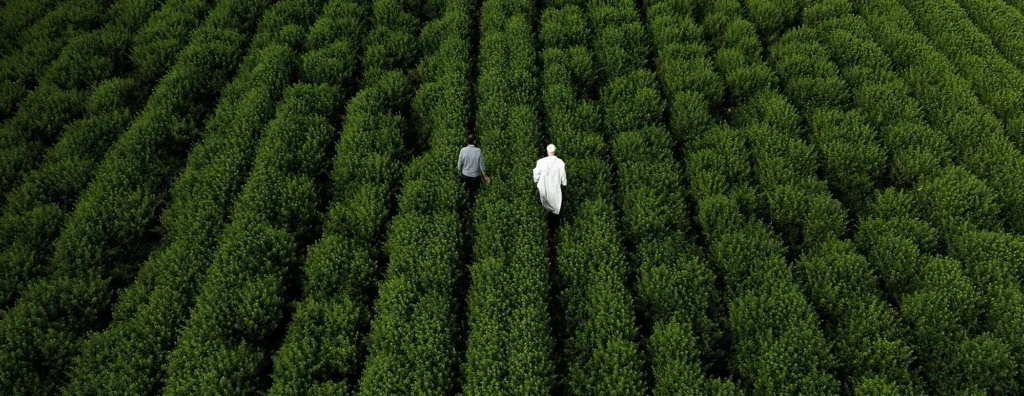
The distillery director, Bertrand de Nève, receives hopper bags of a broyage (a batch of botanical grindings) with instructions. He is one of the few people who ever see inside these, and he confessed a natural curiosity. He noses them and identifies ingredients, but never out loud. I passed one hopper and was hurried along when I lingered.
“For each broyage,” de Nève explained, “there are three factors: the temperature of the still; the length of distillation; and the precise percentage of alcohol to water. We use neutral alcohol from beets [for green Chartreuse] or grapes [for yellow]. We are not looking for a character in the alcohol; it is only a vehicle to transport the aromas.”
The history of all distillation – not just the long-life elixir the Carthusians began researching in the 17th century – is based in medicine. Around 800 CE, Arabic chemists discovered they could capture plants’ health benefits more completely in stronger alcohol, produced by distilling flavored wine in an alembic. That technology spread across Europe in the following centuries, often through monastery apothecaries.
The Chartreuse Stills
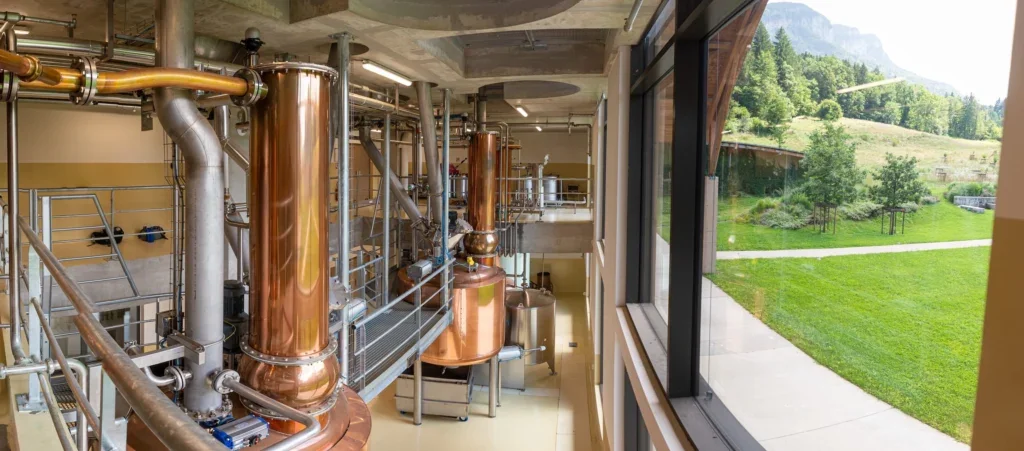
After being pulled away from the ingredients, I immediately tried to identify the stills. I have read that stainless steel pot stills replaced the old copper alembics. That’s not strictly true – there is still one shiny copper still, new in 2018 when distillation moved here, and an old, small alembic.
De Nève told me that the stills are made in Cognac, but they are not the same as the Charentais alembic used to make that region’s brandy. “The big point of difference is that it contains an agitator, a piece that turns, moving the plants. If they stay in contact with the copper too long, they will burn.”
That applies only to some broyages, though, as de Nève explained. Or, rather, he attempted to. “Sometimes a broyage is macerated; sometimes it is distilled with the plants in the still; sometimes botanicals are macerated then, after filtering, are distilled; and sometimes they are distilled to create an alcoholate in which another broyage is macerated.”
I love the technical details of distilling as much as the next nerd, but my baffled expression made him chuckle: “This is why, even if you knew all 130 plants and had an idea of the dosage of each, you still could not replicate Chartreuse!”
The monks – currently Frère Jean-Jacques and Frère Marie – are less hands-on than they were in the past, but, from their mountain perch, they still see and control all (although they would certainly not assign omniscience or omnipotence). Networked distillery management software means they monitor still runs from the monastery and alert de Nève to any issues.
A distillery manager usually has a bigger role in deciding a spirit’s style. To many, de Nève’s role might appear frustrating. But he rejects that notion: “There is only one distillery director for the Chartreuse liqueur. We sometimes use the phrase ‘guardian of the temple’. I’m proud to work for the monks.”
That pride may not be in the form of creative achievement, but it is certainly found in the satisfaction of running an extremely complex operation smoothly.
Into the Barrel
Each 42,000-liter batch takes three weeks, from the arrival of the botanicals, through macerations and distillations, a resting period, blending, partial filtering (there is some organic residue in each bottle, which is why the flavor develops over time) and, finally, the addition of sugar, before the cuvée goes into oak casks for a self-imposed minimum of three years.
This is why the distillery moved out of town. The warehouses contain millions of liters of flammable, sticky green liquid, and more were being built when I visited. That is despite the monks, facing up to rapidly rising demand, capped production and distribution in 2021. In a letter sent to distributors, they said: “Making millions of cases does not make sense in today’s environmental context and will have a negative impact on the planet in the very short term.”
What they have not done is cut back on production, and the construction of new warehouses suggests a level of stockpiling.
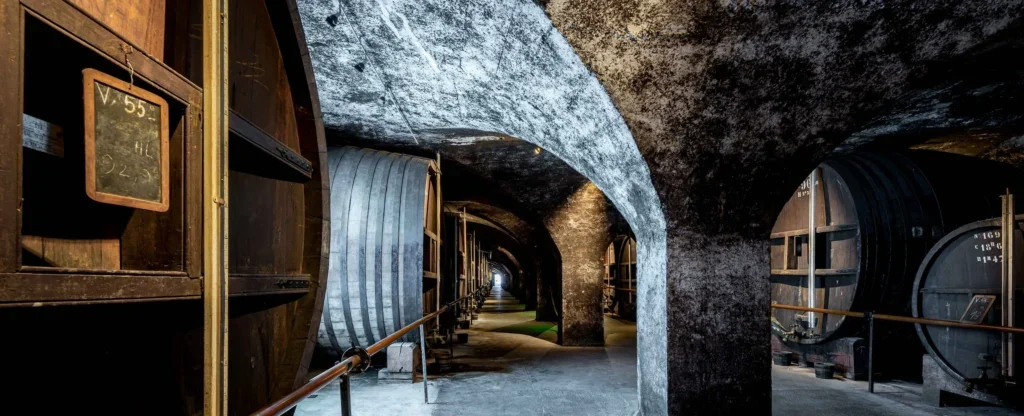
The functional warehouses lack the historical atmosphere of those beneath the town, but I still found a sense of both place and time here. Through windows set in the structure, I could see the mountains rise behind. The floor is wet with water running off the slopes, collecting in rills that drain into a pond outside.
Some casks have been aging far longer than the required three years… a lot longer, in some cases. One cask was made to celebrate Queen Elizabeth II’s coronation in 1953 but never accepted as a gift; and there are some pre-1935 casks from the old distillery at Fourvoirie.
Taransaud built the more recent casks in Cognac, because of its revered ability to build 50,000-liter tonneaux. Both the large vats and smaller casks are as neutral as possible, de Nève explained, because they don’t want wood influence like a Cognac maison, only a breathable vessel in which the liqueur can develop. “The cooperage soaks the barrels with both pure alcohol and brine to extract tannins, and the toasting is very light compared to cognac or whisky.”
One of the smaller casks was standing upright, with an encouraging number of glasses set on top – the sure sign of an imminent warehouse tasting…
Tasting Chartreuse
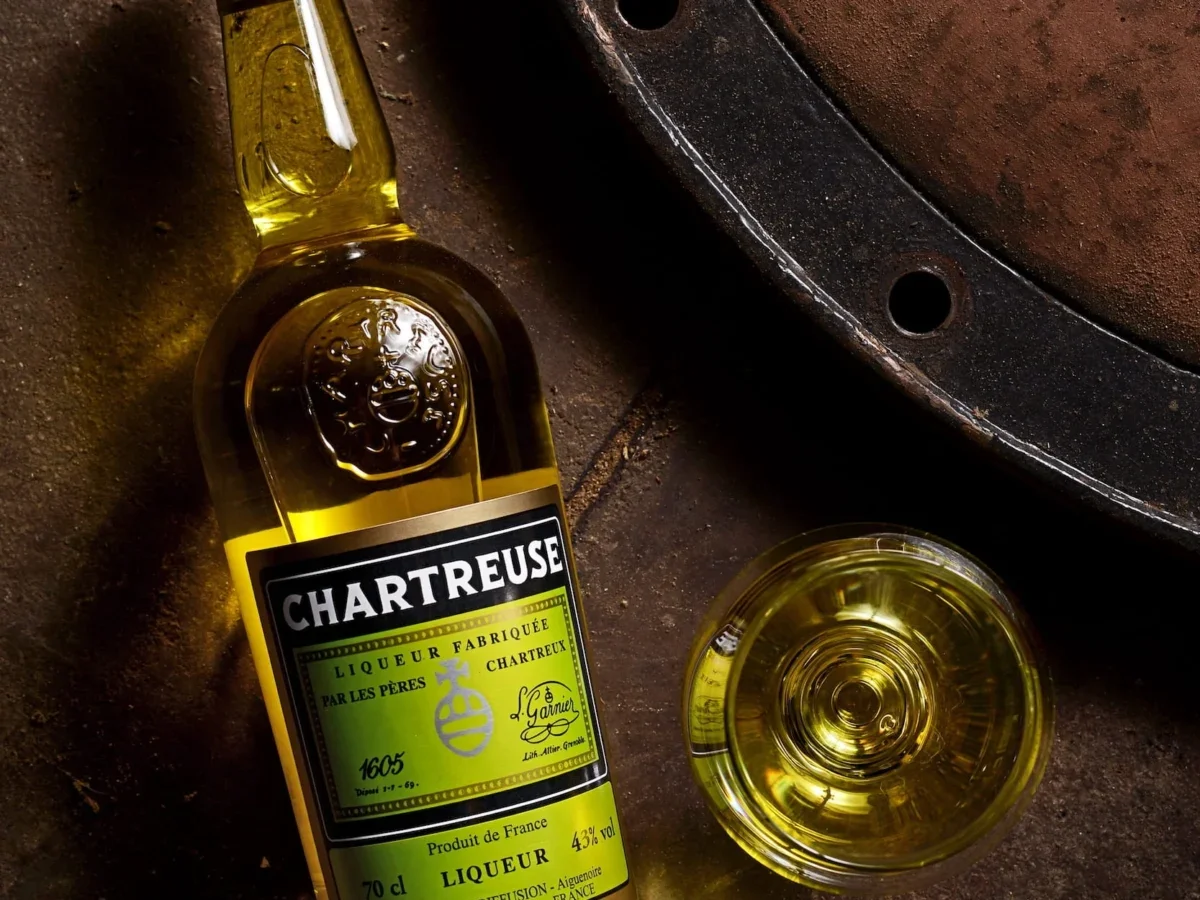
I tasted several Chartreuse cuvées, including green and yellow varieties. These are made with the same 130 plants but obviously in different proportions, resulting in a different color and flavor. Yellow tastes sweeter, and may well be (the distillery won’t reveal the sugar levels), but its lower ABV (43% versus 55%) also makes the sweetening syrup more apparent.
One of my hosts put it most succinctly when she said: “Drinking the green one, I feel I am in the forests of the Chartreuse Mountains; with the yellow one, I feel I am in the south of France or Spain.”
There are fans of the yellow Chartreuse, with its emphasis on curry spices – turmeric, saffron, cinnamon, star anise – and orchard-blossom aroma, and I enjoy it in a cocktail, but on its own, it is cloying.
For me, green is the grail. I too felt the influence of the surrounding mountains. In the past, in the Alps, I’d heard Chartreuse described as “génépi, but made by monks”. That is like saying a farmer’s moonshine is “like” Johnnie Walker Blue Label.
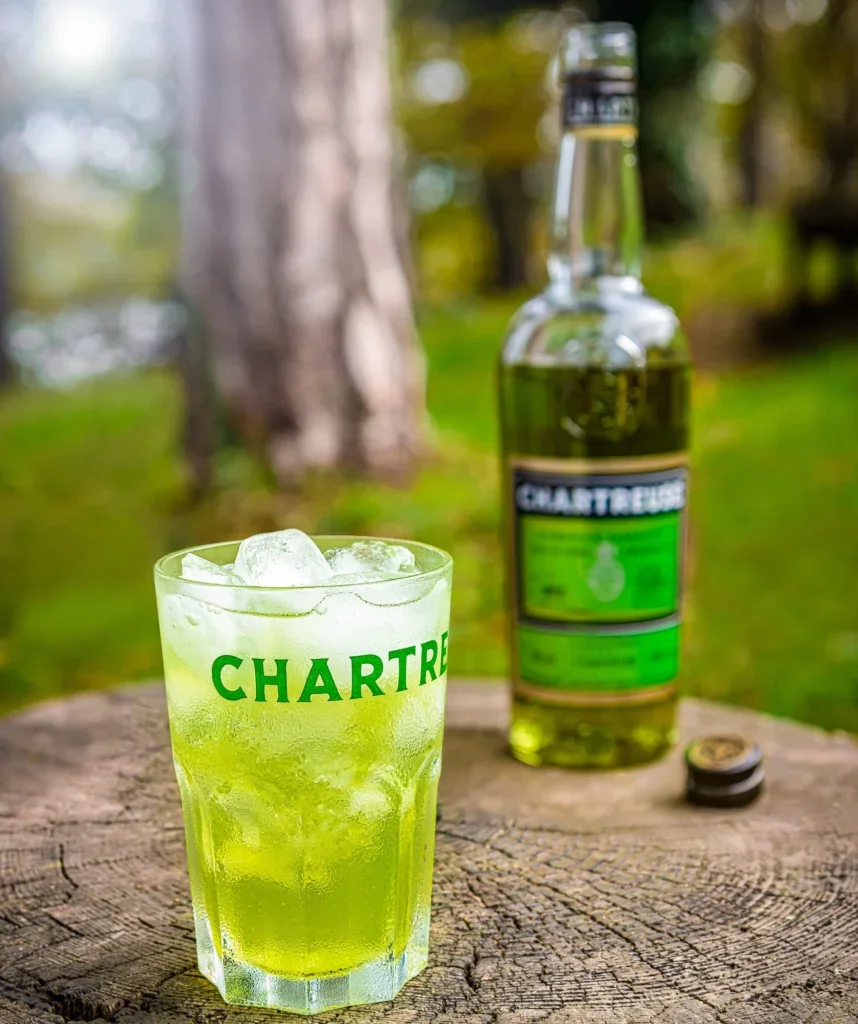
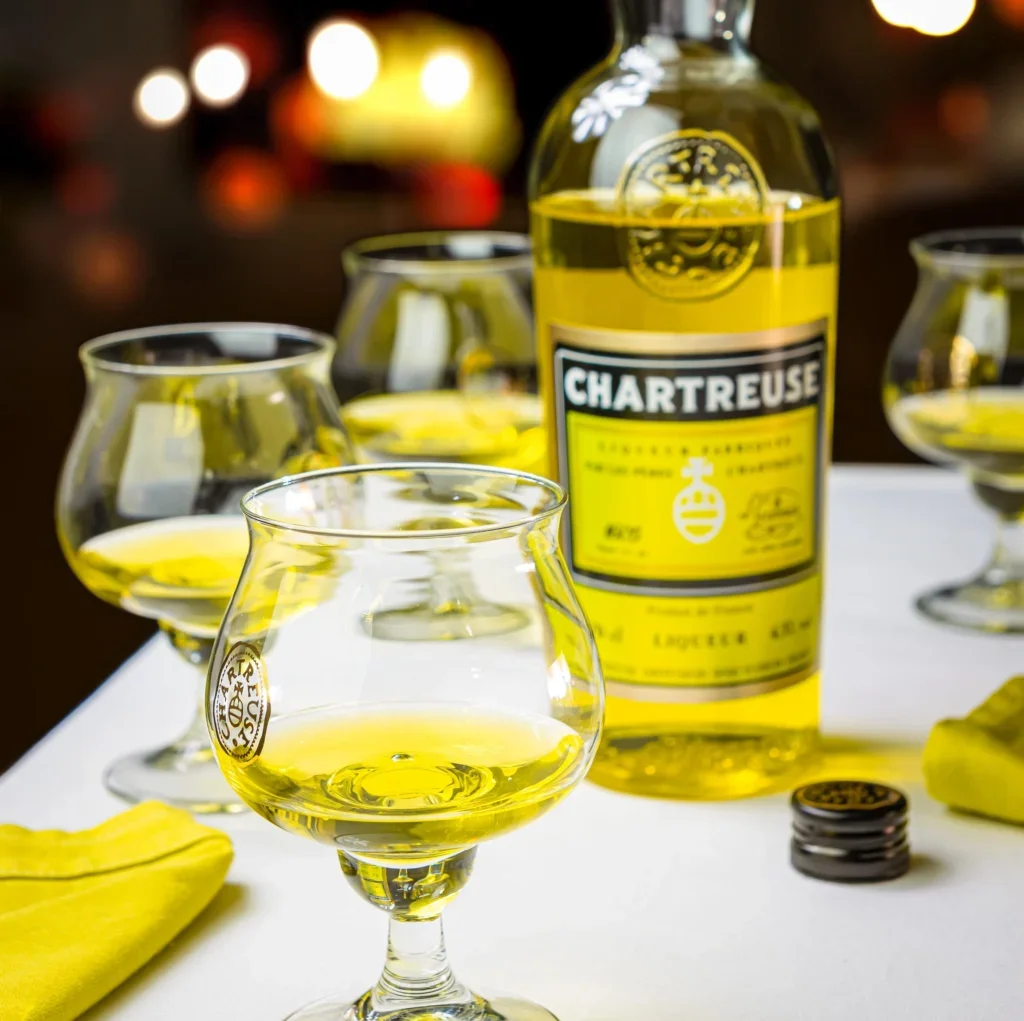
Green Chartreuse is far more complex than other Alpine liqueurs, whether it’s the herbal and evergreen notes flicking from mint to eucalyptus to pine needles to juniper berries; or elusive hints of pepper, spice, roots, and flowers that appear and fade; or even the sweeter flavors manifesting as honey, muscovado, licorice, and cola.
Recently, I asked several bartenders about Chartreuse’s popularity as a tool of their trade. Maroje Milosevic, head bartender of The Sidecar at Dublin’s Westbury Hotel, described the elusive profile that makes it undefinable: “The interesting thing about green Chartreuse is that different flavors seem to reveal themselves. You can find mint, alpine herbs, citrus, flowers, spice, anise, but it is difficult to isolate one particular flavor.”
There is consistency but never complete similitude between batches. According to de Nève: “Sometimes you taste pepper, as a tingling sensation, sometimes not – it depends on the fabrication. The typicité [roughly, character] of Chartreuse is found in its seasonality and aging.”
Both factors, including the fact that aging is both in oak and further in glass, mean there are subtle differences between bottles. That is even more evident in the Vieillissement Exceptionnellement Prolongé (VEP) editions of both green and yellow. Bottled at one liter and in a double magnum (3 liters), they are aged for eight years instead of three, and in demi-muids (the 600-liter casks best known from Rhône wines).
“The interesting thing about green Chartreuse is that different flavors seem to reveal themselves. You can find mint, alpine herbs, citrus, flowers, spice, anise, but it is difficult to isolate one particular flavor.”
Maroje Milosevic
As you’d expect, there is more integration. That hopping from leaf to leaf in the younger green is less sprightly. Instead, its complexity is more rounded and combined. Extra aging really benefits the yellow. Instead of sweetness leading, the spice layers dominate, with hints of greener notes weaving through. Both finishes are exceptionally long.
I also had the opportunity to taste some of the special editions. The 1605 Liqueur d’Elixir is an earthier version of the green, with more root and bark bitterness along with the herb and pine notes. There is a 9e Centenaire cuvée, first released in 1984 to celebrate 900 years since St Bruno founded the Carthusian order. A blend of yellow and green, it meets at a point of huge aromas: the Mediterranean garden in bloom at the same time as the Alpine forest after the rain.
And, with Cuvée MOF (a 2008 collaboration with 10 Meilleur Ouvrier de France-winning sommeliers, who sent notes to the monks about their preferences), too many somms did not spoil the broth – it’s a drier, stronger, more culinary version of the yellow, with a longer finish.
I left Aiguenoire with a heightened respect for the craft and flavor of Chartreuse liqueurs, as well as their history and mystique. Yet there are other great regional drinks with wonderful heritage and great taste that haven’t impacted the wider world like this has.
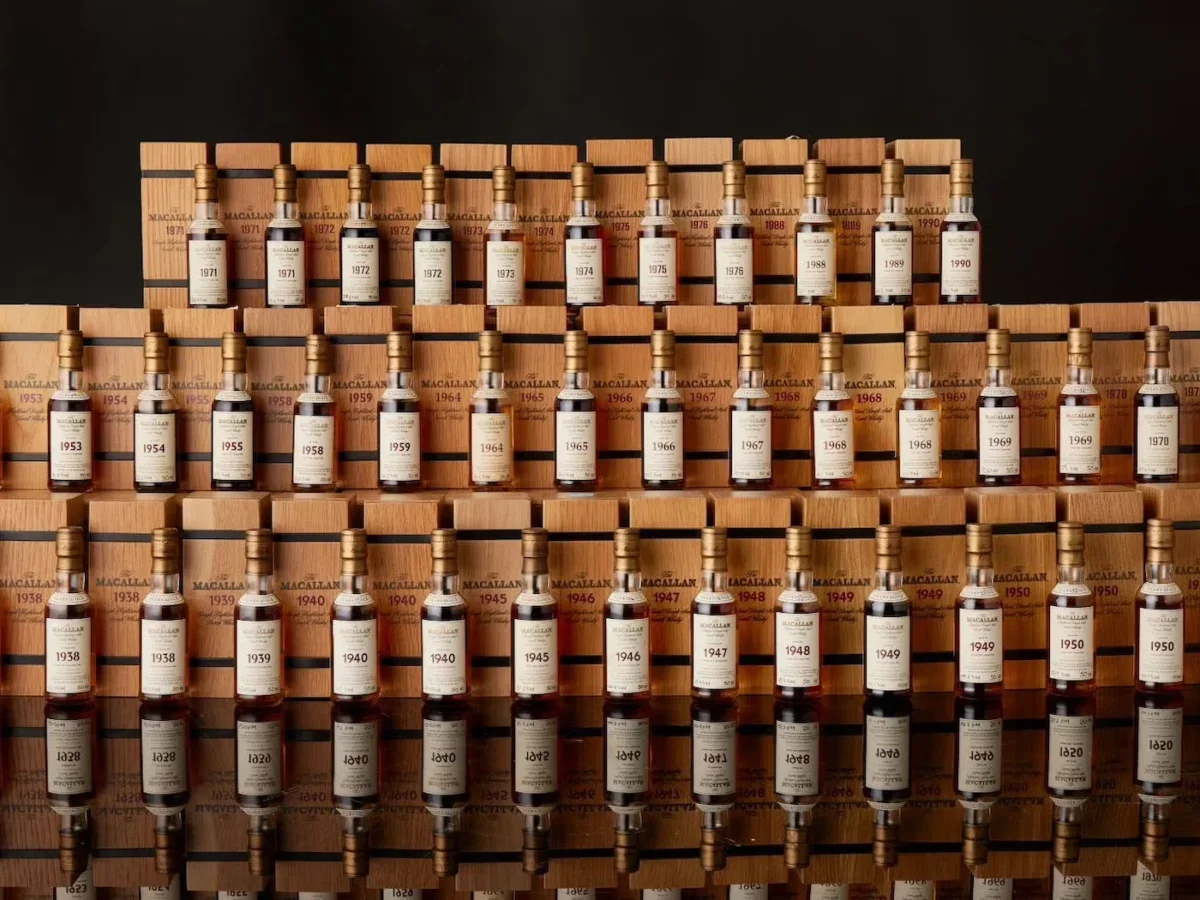
I wanted to explore just how Chartreuse became a beloved ingredient of bartenders and a collectible as prized as the best single malts.
Stay tuned for Part 3.