As a lifelong skier, I have been plied with many a glass of something punchy and pungent after a cheesy meal in the Alps.
Usually a homemade génépi, made with sprigs of mugwort (a type of wormwood or Artemisia); often an orchard fruit-based schnapps; sometimes a pine liqueur; once even an eau-de-vie with a drowned viper in the bottle. However, when I skied near Grenoble, in the département of Isère, they brought out one bottle to accompany the bill and, for once, it was branded: Chartreuse.
In this part of the Western Alps, people make their own herbal liqueurs, but no one claims theirs is better than this commercial product made in the Chartreuse massif from a 130-herb recipe, closely guarded by just two living monks.
In 2022, after a few glasses of this complex, aromatic, delicious liqueur, I decided to delay my return home and find the place where it was made. That turned out to be more complicated than expected.
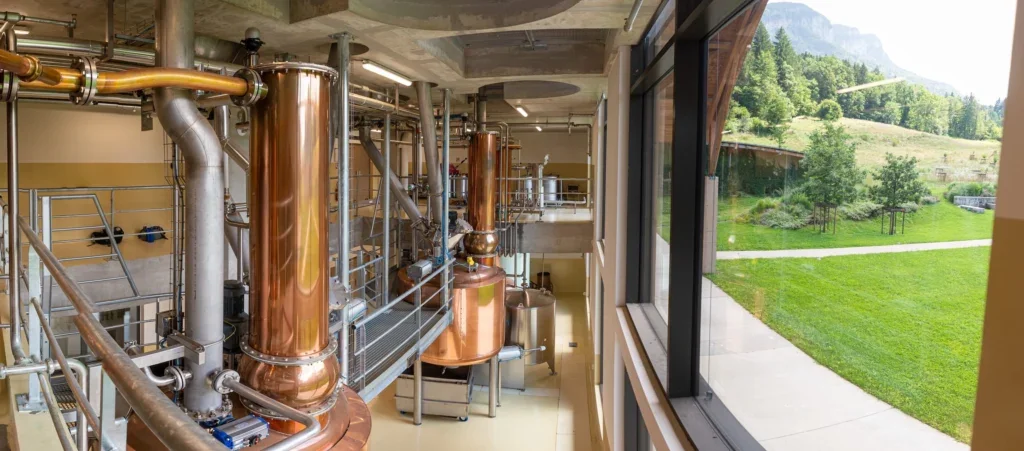
I took a 15-minute train ride from Grenoble to Voiron. Meters from the station was a large building with big green letters, and a huge copper pot still visible through an equally giant window. The home of Chartreuse… except it was not. That’s because, in 2017, the distillery that produces the green (or yellow) liqueur was forced to leave town, just the latest in a series of expulsions in a history that mixes rejection with envious desire.
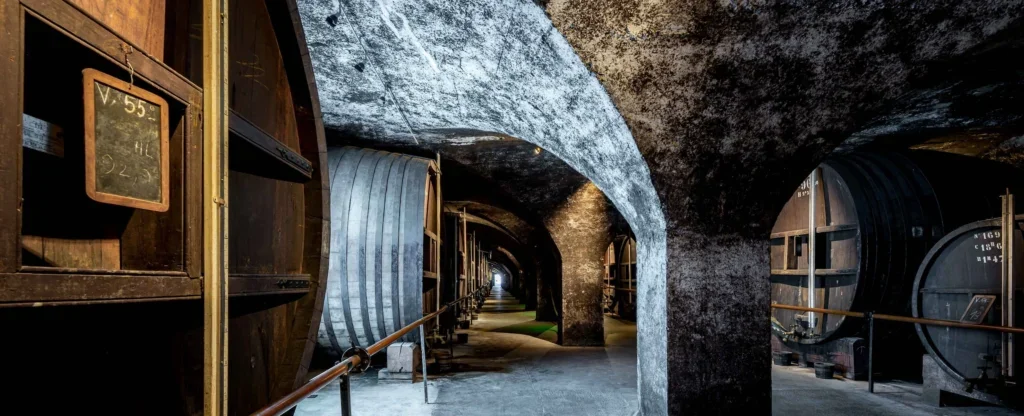
This time, at least, the decision to leave town was mutual between the monks and the urban authorities. The cellars spread under a significant area of the town center and contained several million liters of high-proof alcohol. One spark and Voiron would be vaporized.
So, it was for good reason the casks and stills were moved out of town. The one I saw was left for the building’s future role as a visitor center: Les Caves de la Chartreuse. It’s now a brand home, with a role as an ex-distillery site. But it is far from the only ex, and it is not the spiritual home… To visit that, I jumped into a car with Éléana Zappia, the communications director of Chartreuse Diffusion, the company that sells the drink (more on that later).
A Long and Winding Road
In 1084, Saint Bruno of Cologne, seeking a site for a hermitage, was offered a site on Le Désert d’Entremont, a remote plateau part-shadowed by cliffs. There, the Monastery of Chartreuse was established, along with the Carthusian order of monks and (later) nuns. Charterhouses (as they are known in English) were gradually established around the world – including one in London where the school of the same name was originally located. In the 12th century, the original wooden settlement was destroyed by an avalanche, killing seven monks. But the Carthusians rebuilt – and not for the last time.
The story of how Chartreuse turned green actually began in Paris. The French capital’s charterhouse, known as Vauvert, was located on today’s Boulevard Saint Germain and is currently another visitor-experience-brand-home. The monks were respected and connected. In 1605, a leading courtier to successive Bourbon kings, François-Annibal d’Estrées, gave the Carthusian monks of Paris a document, which included a long list of plants that, when combined, would create an “elixir of long life”. No one quite knows where it came from – but d´Estrées himself lived to almost 100.
The Carthusians set up an apothecary in the monastery and sent monks in search of plants. But, after more than a century, they had no success. Research was transferred to the motherhouse in the mountains. In the mid-18th century, they were nearly there, but the elixir was red. Successive apprentices became masters in the Grande Chartreuse apothecary, until, finally, in 1764, Brother Antoine Dupuy perfected the recipe and began distillation for distribution of this medicine.
After nearly 200 years of struggle – product development amid more avalanches, fires, and their own pandemic, known as the bubonic plague – things were looking up for the Carthusian monks… briefly. The French Revolution did not only mean the decapitation of nobility. The power of religious institutes meant monasteries were seized and monks expelled from the country. They would be back, though.
Into the Mountains
Even with modern roads and motor vehicles, the Grande Chartreuse monastery is hard to reach, particularly in winter. Appropriately, the last kilometers are made on foot up an avenue of hornbeam trees – unless you are delivering to or collecting from the monastery. Even then, you will not be allowed inside.
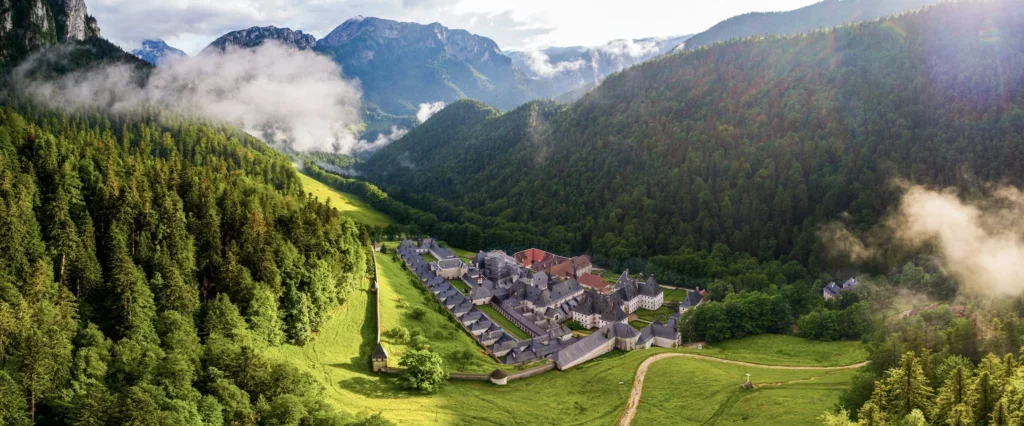
You have to climb beyond the walls to a spot in the meadow marked by a large cross to see inside. The Carthusian motherhouse is no longer a collection of wooden huts; that is for sure. It is a walled village of Renaissance architecture – reminiscent of Fontainebleau Palace – huge in scale when you realize how few people live there full time (but necessarily large for the biennial General Chapter, when Carthusians from around the world gather).
From that peaceful spot, I could hear the bell for prayer, its echo suppressed by snow, but I could see no movement. Carthusians take monastic life seriously. They are not strictly silent but live a contemplative life, almost completely separated from the world. There is a house nearby where a monk’s immediate relatives can stay to visit him for a maximum of two days a year. Outsiders are only allowed through the main gate if necessary – I saw a van delivering wood-burning stoves parked outside.
The main entrance, however, isn’t the important one. A battered side door marked “Écuries” (stables) also leads to the apothecary, and that is where ingredients arrive. It’s also where large blended bundles of botanicals are collected and delivered to the distillery in the valley below – bundles that are unmarked except for the instructions for length and type of maceration, temperature of the still, etc.
After walking around the exterior of the monastery, I stopped at a nearby restaurant, Restaurant Safranière at the Ferme de Brévardière, which grows crocuses. Only 10% of the plants in the liqueurs are sourced from the Chartreuse Massif and although the color of Yellow Chartreuse obviously comes from saffron, no one would confirm or deny that theirs is one of the trucks that pulls up at that humble side door. This really is the Alpine esprit de clocher.
In Search of Stills
So, if vans are collecting bags of ingredients from la Grande Chartreuse, it is not distilled or aged there. So, back down the mountain we went. On the way, as we passed through a steep and forbiddingly enclosed valley, Éléana stopped near a hairpin bend wrapped around a dilapidated building.
Seeing my confusion, she explained: “This was the old distillery. The monks returned to Chartreuse in 1816, after the restoration of the constitutional monarchy, and in the 1840s began to produce the green and yellow liqueurs. So, three products became too noisy for the solitude and prayers of the monks, and the pharmacy of the monastery was too small for the production required. They built this distillery at Fourvoirie in 1864. It operated for many years until, sadly, a landslide destroyed it in 1935.”
Well, of course it did. But that’s not the whole story. Because Chartreuse’s peripatetic existence had a couple of additional stops between 1864 and 1935… The French Third Republic of the turn of the 20th century was decidedly anti-clerical, so the Carthusians anticipated another expulsion (and, more specifically, feared nationalization of their distillery and loss of the secret recipe).
So, in 1901, production was halted at Fourvoirie and began again in Tarragona, Spain, in 1904. Even though production returned to France, the Tarragona facility continued producing until 1989 (albeit with a pause due to bombing during the 1938 Catalonia Offensive of the Spanish Civil War, because Chartreuse is that lucky).
Chartreuse production returned to France in 1921, in Marseille, before Fourvoirie was reestablished in 1933 – for two years before the landslide. That’s when production moved to the valley, first in Voiron in 1935 (with the monks only fully returning in 1945, thanks to the war), then, in 2018, at Aiguenoire – on land previously confiscated from the monastery during the French Revolution.
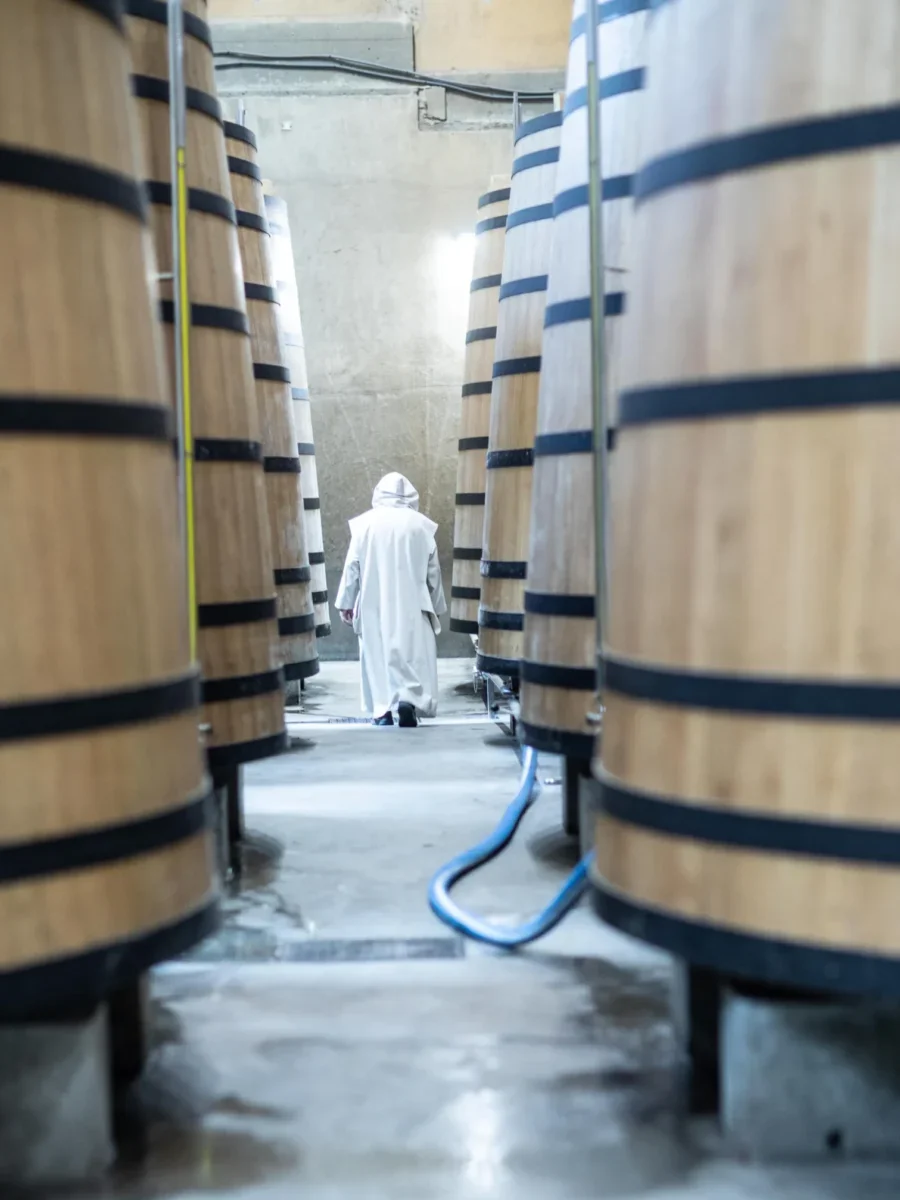
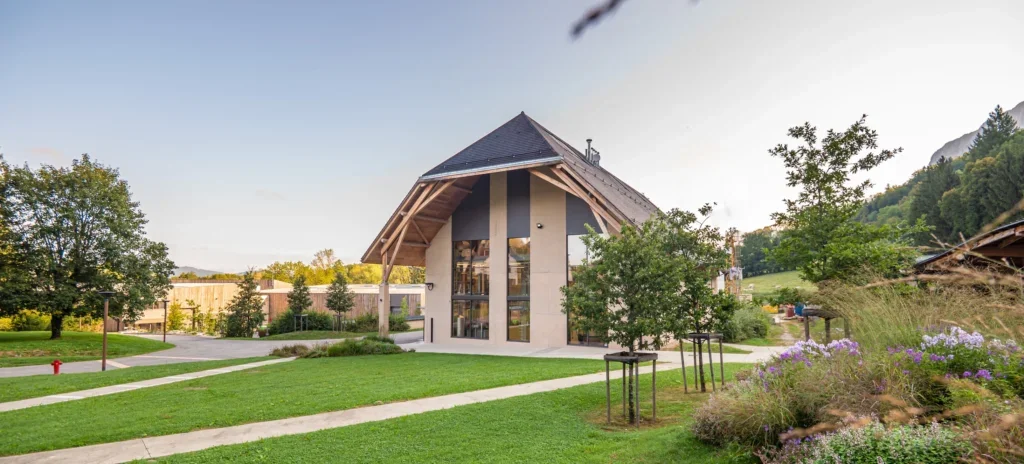
This, the current location of a very eco-contemporary distillery design, was my final stop. There is no visitor center here – the wide Corten steel gate is usually firmly shut. But the UK distributor of Chartreuse, Cask Liquid Marketing, had made calls and got me in.
I was about to discover how Chartreuse is actually made.
The Complete Story of Chartreuse, Part 2 will be out next week