It’s a sun-glittering-off-the-water kind of day as I prepare for a very secretive whisky tasting in Edinburgh’s northern suburb of Leith.
Most of my visits to this part of Auld Reekie in recent years have involved eating and drinking in some of the best restaurants and bars in the city. A Tennant’s, Martini, or both, at neighborhood bar Nauticus; a dram and a bowl of mussels at Teuchters Landing; or last-minute table nabbing at the Nordic-style Little Chartroom.
Having operated as a port since the Middle Ages, Leith has borne witness to a tide of change over the last few centuries, from royal arrivals such as the return of Mary Queen of Scots in 1561, becoming famous for glassmaking in the 18th century, and the final mooring place of The Royal Yacht Britannia (the former royal yacht of the British monarchy).
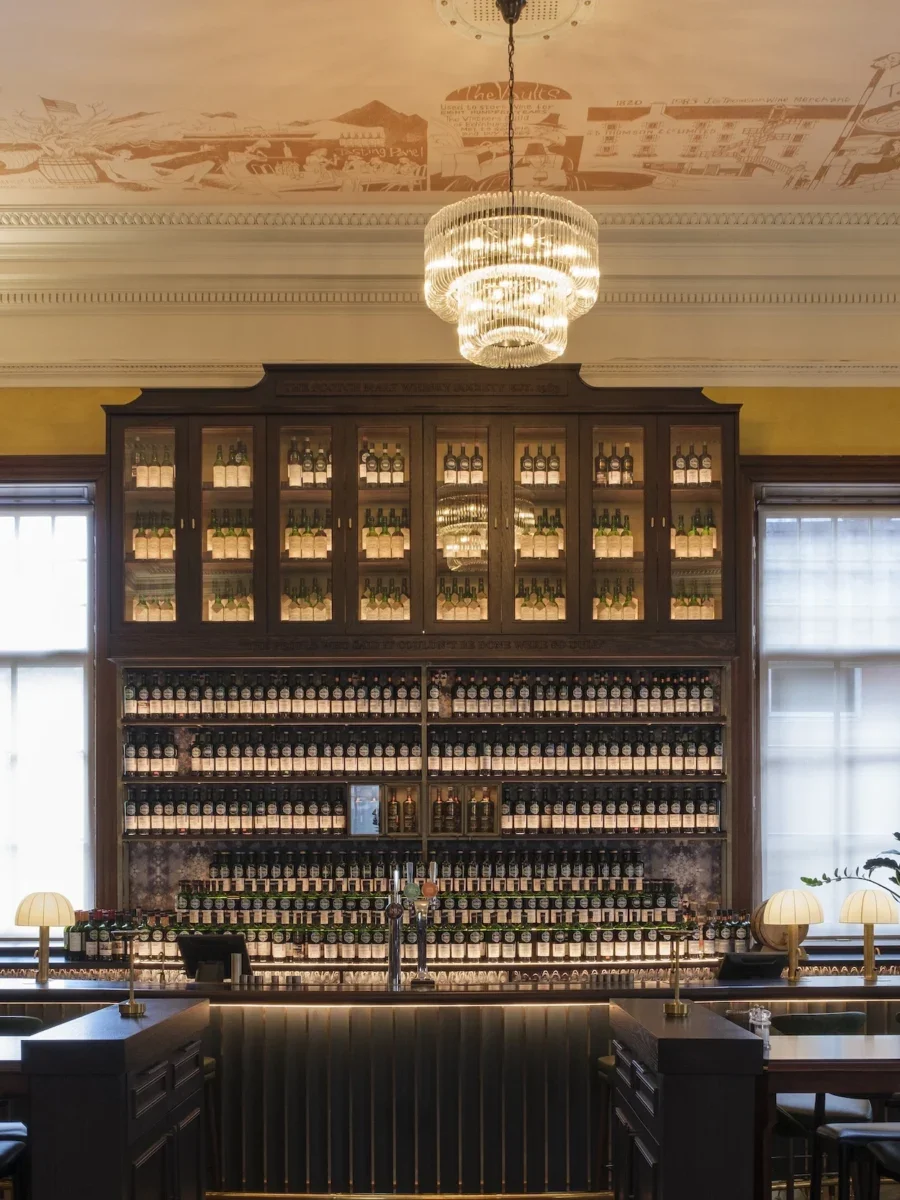
It has also been putting down some whisky roots. The UK’s first vertical distillery, Port of Leith, opened in 2023, and it’s been the playground of cult-loved blending house Woven Whisky for the last few years as well. It’s also been home to the Scotch Malt Whisky Society (SMWS) – the reason for my visit. I’m not just here as a tourist. I’m about to become the first journalist to sit in on its clandestine Tasting Panel.
A brief history
For anyone unaccustomed to the Society, it was founded in 1983 by Pip Hills at The Vaults, a former wine merchants’ bonded warehouse with a history dating back to the 12th century. A truck driver, docker, tunneler-turned-accountant with a penchant for climbing and scuba diving, Hills discovered a love for single cask whiskies in the 1970s – a time when blends were king – and set about starting a club where like-palated folk could try spirits in their purest form, straight from the cask.
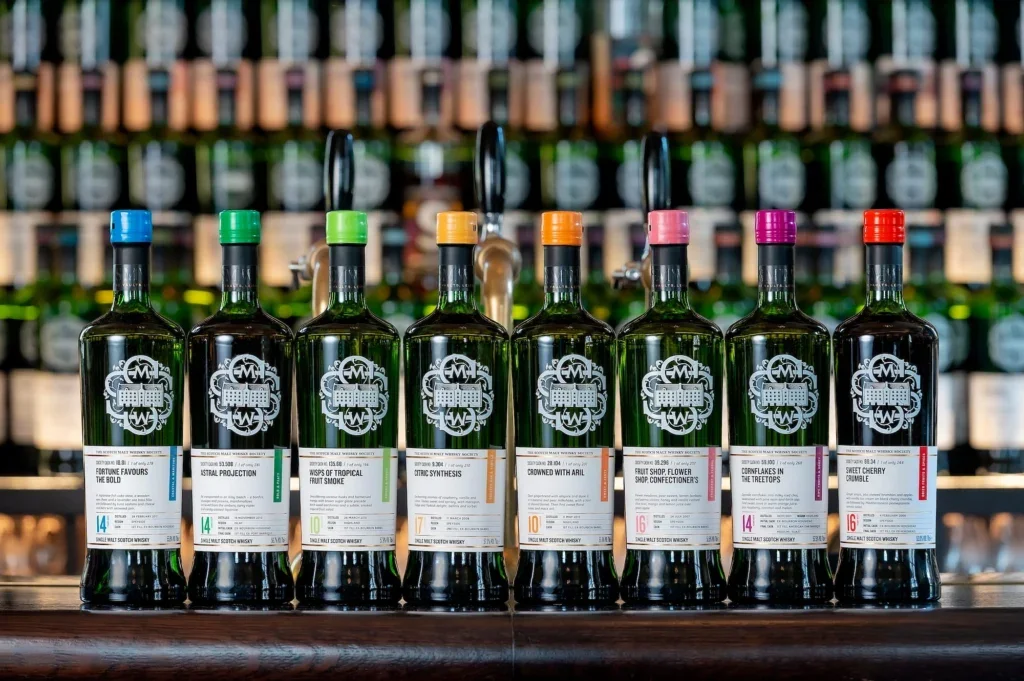
What started as a group of friends is now an international club with over 40,000 members around the world, from Denmark to Spain, Sweden to Malaysia, and Mexico to Vietnam.
Since its inception, while the industry, market and drinkers’ tastes have waned and soared, one thing has always steered the ship: its reliance on a small but important group of people who determine what does (and doesn’t) go into the signature green bottles released exclusively to members every single month – its Tasting Panel.
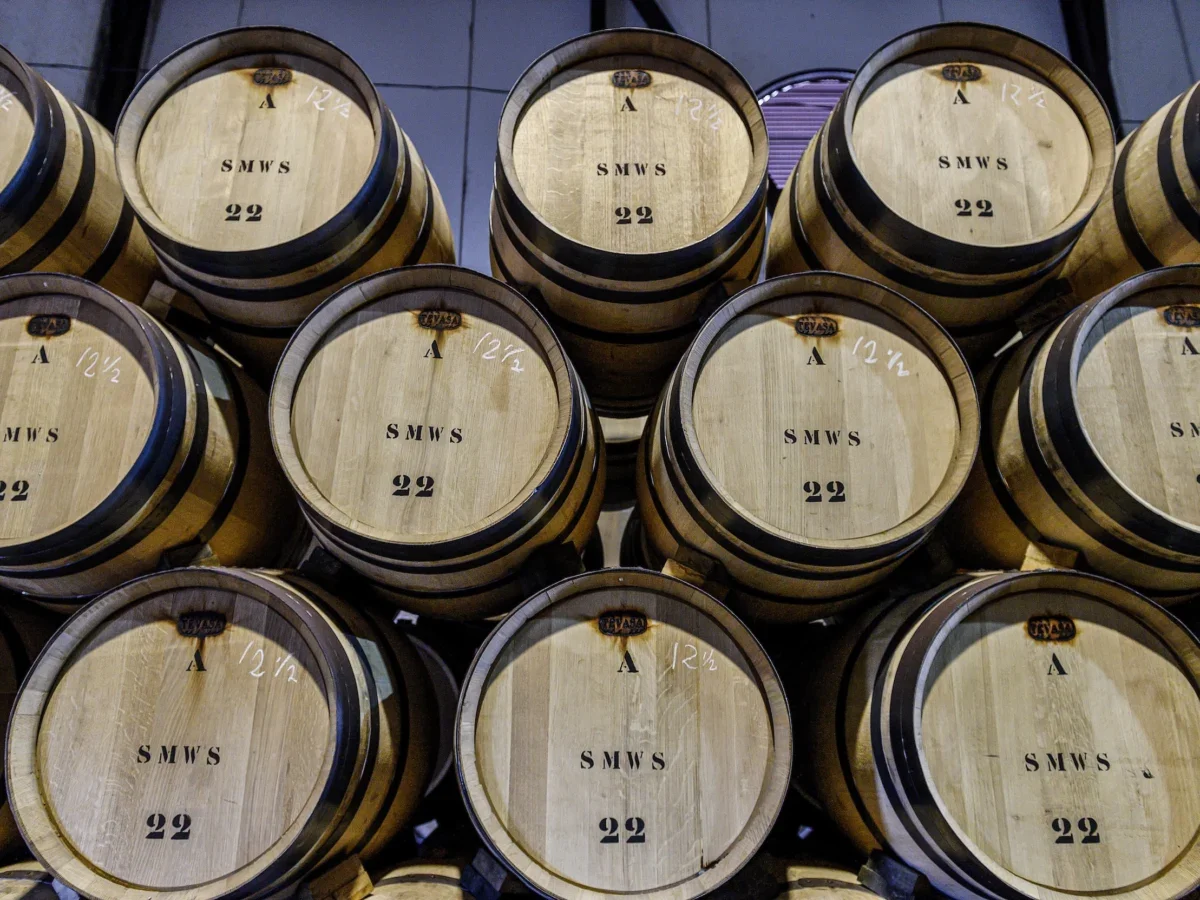
Staunchly secret and made up of discerning palates from all over the world and professions spanning musicians to perfumers, chemists to authors, a selection of two or three made by Julien Willems, whisky quality manager in charge of the Tasting Panel, join Tasting Panel chair, Olaf Meier, 100 times a year to taste through some of the 18,000 casks at its disposal.
Setting the scene
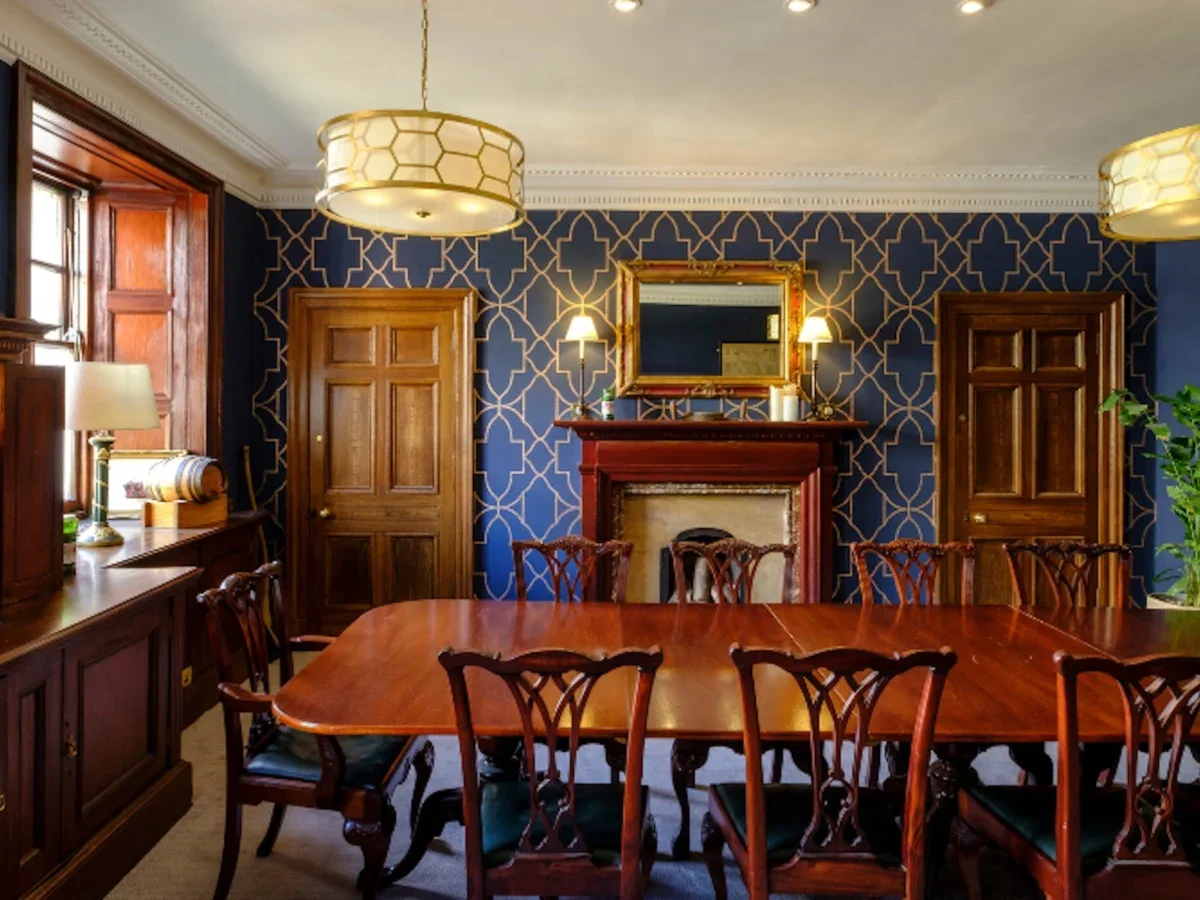
One morning in April, I’m one of them. As I reach the top of the ascent of the external stairs into 87 Giles Street, I immediately turn left into a rather unassuming room, where Olaf Meier and my fellow panelists are settling in around the large central wooden table for the next few hours of tasting.
Having been on the panel for 23 years (15 as its chair), Meier is responsible for running sessions, writing tasting notes, and giving each release its sometimes humorous, sometimes practical, but always striking names: Flex the Glove, Motoring Down Memory Lane, A Wizard (of Oz) Balancing Act, and Chewy Textured Meanderings to name a few. “I must have tried over 8,000 samples,” he says, “and written 3,500 tasting notes.”
The setup, on the surface, is remarkably simple. Each member has a laptop where they have the Society’s purpose-built app fired up ready for taking notes, with spittoons and water jugs dotted around the table, and five tasting glasses lined up ready for pouring. At each of their fingertips, though, is the whisky. It’s the result of a team that has skillfully been nurturing tens of thousands of casks from some of the most revered whisky distilleries in Scotland.


“There’s a bit of a myth going around that we do everything blind – we don’t,” says Willems, turning his laptop to face me. “There are a select few things we need to know, and for good reason: Make, cask, and age.” While assessment of spirit quality is first and foremost the panel’s objective, they must also give members something true to the whisky’s age and origin. He says: “Say you have a MacDuff and when we taste it, we realize it’s peated, and it says it isn’t, we need to take note of that. Similarly, if you have a 27-year-old which tastes nice for a 10-year-old, you might have disgruntled members down the line.”
Drams are flighted to battle palate fatigue of the panel, starting with bourbon casks and moving into sherry, wine, rum and then peated whiskies, with no more than 10 on any given day to get through. Panel members (who apply to be part of the program) go through training with the Scotch Whisky Research Institute to identify what might be wrong with a sample, with members chosen from Willems’ pool of 27 for each panel to make them as diverse as possible, bearing things like sensitivity to sulphur and background in mind.
Today, I’m joined by two other women on the panel (it’s nearly at a 50:50 parity). The first, originally from Sweden, came to Edinburgh to study gastronomy and fell in love with whisky during her master’s thesis. The other, from France, spent time working in restaurants before moving to Scotland to work in whisky with no English or knowledge of the industry.
Willems himself is trained in cell biology and physiology and was working in translation and interpretation when he discovered his love of whisky. And Meier? After falling in love with whisky on a trip to Scotland from his home country of Germany 43 years ago (a dram of 21-year-old Springbank did it), he learned of the Society in a newspaper in 1992, surreptitiously became a member, and on returning to Scotland later that year became one of its panelists.
Pull up a chair
Today’s drams cover some serious ground: Glen Elgin, Strathmill, Glen Grant, Craigellachie, Balblair, and Fettercairn. They’ve been aged in everything from second-fill, recharred brandy casks, to first-fill hogsheads and José y Miguel Martin sherry. There are heavy toasts, medium chars, and low peating levels to contend with, too.
We start each whisky the same way: by determining its color on a light-to-dark sliding scale. Then, we get to the tasting, with each sample tried neat and then diluted with water (how it interacts with water is an important factor, with Meier noting in the official bottle notes that drinkers should be careful when adding it or whether a dram benefits from a bit of dilution).
Each whisky is then marked on a very specific scoring system – one which I’m not allowed to divulge – before panelists share their scores and tasting notes and pick a category from the Society’s flavor camps (sometimes a source of lighthearted contention): fragrant & floral, ripe fruits & honey, dried fruits & spices, sweet & zesty, toasted oak & vanilla, coastal & maritime, smoky & fruity, and bold & peaty.
“In the old days, panels started in this room around 6pm. A different cheeseboard would come out each time, and people weren’t spitting. I’ve even had people falling asleep”
Olof Meier
Tasting notes span the vocabulary gamut: Woodland, honey, ripe fruits, pencil tips, chips in newspaper, banana preserved in cold-pressed rapeseed oil, fizziness, vanilla marshmallow, Bramley apple skins, porcini mushrooms, rhubarb, laundry detergent, cork. The panel is also keen to stretch their members’ minds – with only 300 bottles available per release worldwide, they want their members to be pleasantly surprised. “We hate the word ‘nice’,” Meier qualifies.
If any notes of burnt rubber or unexpected sulfur pop up, the dram is put by Willems on standby and a review sample is ordered to be tasted and ascertain if those notes come up again. Stock manager Ed Evans is also an important part of the process – cask swaps, re-fillings, and volume of bottles all need to be balanced based on what spirits he has access to. Some whiskies just aren’t ready yet, which are left and pulled later to see what a few more years in wood can do.
Sea change
How the panel has changed over the years is more in keeping with how the industry has changed in the last few decades. While its core purpose and value remain the same, Meier has seen it evolve over his 20 years.
Forty years ago, even the idea of a tasting panel was an alien concept. When Meier began learning about whisky, even finding a book about the category was near impossible, let alone building a format in which people tasted and described what was in the glass: “Pip wanted tasting notes for these new single cask whiskies so people would know what to expect,” he explains, “but this was unheard of in 1983 in whisky – [the attitude was that] wine people do that stuff.” Hill even recruited Scottish poet Hamish Henderson onto an early panel to help build a vocabulary around this elusive spirit – “good” is as descriptive as he could muster.
How the panel has been run has changed dramatically, too: “In the old days, panels started in this room around 6pm,” explains Meier. “A different cheeseboard would come out each time, people weren’t spitting – I’ve even had people falling asleep,” he laughs, also noting how it got increasingly difficult to decipher notes as the session went on.

The order in which people sat around the table mattered, too – the most experienced pouring from the bottle first, with the least experienced ending up with the char at the bottom (pours were heavier in those days). Whose voice was listened to was often based on hierarchy: “Twenty years ago, people would say ‘You’re wrong!’,” says Meier, who thankfully notes that this attitude has changed in recent years.
The quality of the whiskies making it through to members is also a reflection of how much the industry has changed even in the last 20 years, with as little as 50% making it through to the final stage back then, to an average of 90% today. The Society’s influence on the whiskies with its investment in casks and wood management programs also means they have more say in how these spirits are nurtured through the process, with Meier using the analogy of the Roman thumb down being more the case in the old days of tasting, whereas now, that thumb can be tilted on its side.
What has really struck me during my time with the team, though, is how much we’ve laughed. Being responsible for choosing hotly anticipated releases for members around the world can be a daunting task. But in the closed confines of this boardroom in Leith, a photo of Hills and his merry gang watching over us, it is a reminder that behind this seemingly behemoth international machine are human beings who, on a sunny April morning in Leith, are simply sharing moments over whisky.