Texture comes in many forms.
You only have to listen to Sigur Rós’s ‘Untitled #9 – Smáskífa 1’ to experience sonic tactility; ponder Vincent Van Gogh’s The Starry Night to be tricked into movement on canvas; or watch Wes Anderson’s The Grand Budapest Hotel to bask in cinematic depth.
It is also synonymous with food. The snap of chocolate layered between creamy ice cream in a Viennetta is one of my earliest sensory childhood memories. Something as simple as an apple’s variety can change how it presents texturally, while a smattering of something toasted can add a much-needed crunch to a plate of something soft and sloppy.
Texture in spirits, however, is criminally underplayed. While tasters, producers and bottle labels wax lyrical about what a spirit looks, smells and tastes like, what a spirit feels like is often a one-word afterthought. Waxy, chalky, silken, viscous, dusty, oily, creamy, tannic, spiky: all of these descriptors and more can tell us so much about the drinking experience we’re about to have.
Of all the drinks books on my office shelf, only one addresses texture in depth: “Texture is the product of several distinct factors, including alcohol levels, glycerol and sugar content, and the presence of tannins and phenols as well as trace elements such as polysaccharides, sterols and other compounds,” so says The Oxford Companion to Spirits & Cocktails.
Yet some of my favorite spirits have their walls scaffolded by how they feel when I drink them, aka, their mouthfeel: the nutty and resinous wax of a Damson eau de vie from Capreolus Distillery, the cooling finish of Arquitecto blanco tequila, and the mouth-coating warmth of Star Hill Farm’s 2026 wheat whiskey. Not only does texture add complexity to spirits, but it can also carry, transform, and evolve flavors. “I think texture is one of the most magical things about spirits,” agrees spirits educator and fellow texture junkie, Hannah Lanfear. Time, then, to uncover how it can cast its spell.
Tactile talking
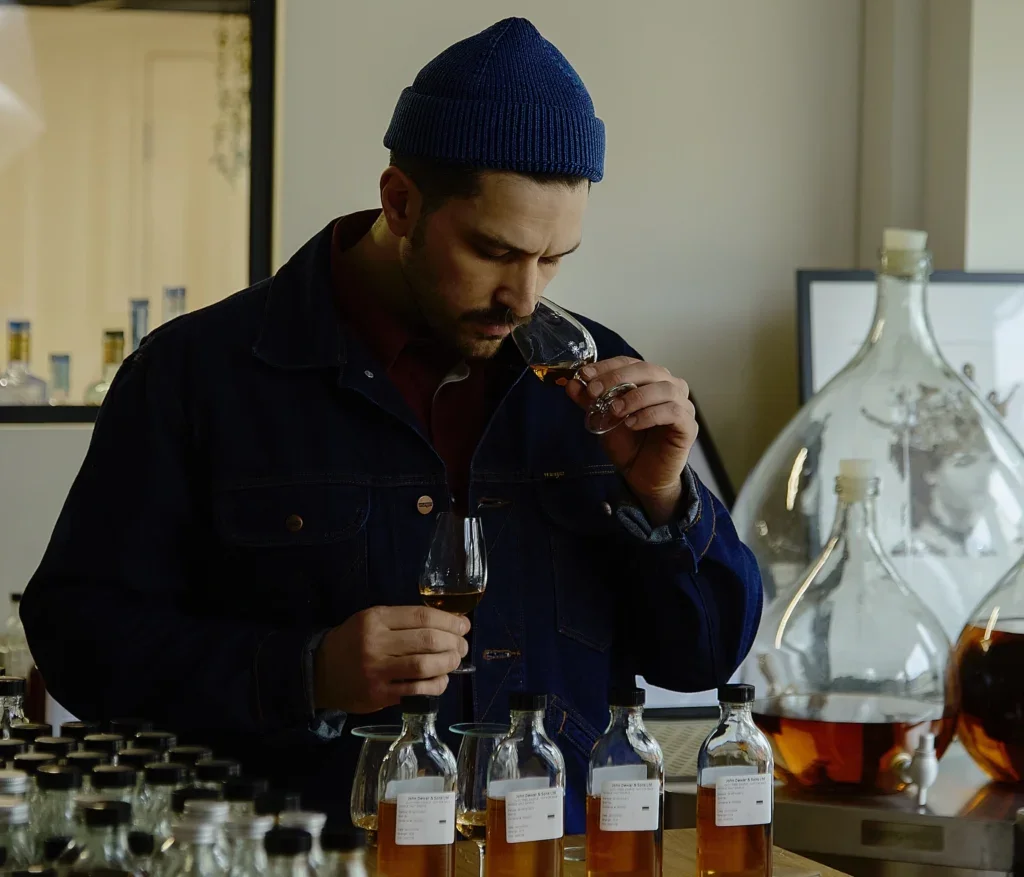
“When we speak about flavor, what people are often talking about is texture,” explains Compass Box whisky maker Samuel Travers, who keeps his palate honed on texture when it comes to constructing the whiskies coming out of the pioneering blending house. “Often, though, people lack the vocabulary to actually describe what they’re experiencing as tactility or a touch rather than aroma or taste.”
Articulating what we’re sensing when we drink a spirit requires building a library of terms that are easy to attribute at the start, middle and end of the tasting experience. It’s something that comes much more naturally when we talk about food. “I think when it comes to culinary experiences, it’s easier to talk about texture: crunchy and crumbly, or soft and smooth,” says Mandy Naglich, journalist and educator, and author of How to Taste: A Guide to Discovering Flavor and Savoring Life. “But because spirits sit at one end of the spectrum – liquid – people think it is one thing…making it hard to qualify texture.”
Where we experience texture can help us identify what we’re experiencing. Richer spirits will sit on the bottom of your palate, while oily spirits might be described as ‘mouth coating’ and tannic ones will grip the inside of your cheeks.
But how do we experience texture? “Just like you have taste buds, you also have texture nerves,” explains Naglich, who specializes in sensory science. “You have the same sensors in your fingertips. These are the things that feel heat, spiciness, coolness. A lot of what we experience has to do with coding: how long it stays on that nerve point and how it sticks on your palate translates to your brain as creaminess, or weightiness.”
There is also some trickery afoot, both natural and artificial, when it comes to texture. Some proteins can be tricked into giving us what are called ‘physiochemical responses’ which can bamboozle us perceptually.
Capsaicin, for example, can indicate a temperature rise which might make us think something is warming or spiky; while menthol can make us think that something is cooling and therefore lighter and crisper in texture. Vanillins from wood can read sweet, which can lead to us thinking something is richer than it is. Beware of added sugar and glycerin, too – these are clever, albeit legitimate, additives that producers use to create their desired textures.
Tempering texture
Diversity of texture is a gift for blenders. When building the whiskies coming out of Compass Box, Travers is sure to maximize the numerous styles of spirit texture at his disposal from the chocolate box of distilleries at his disposal, while also balancing the resulting flavors. Tannic, dry, oily, astringent: there is an exciting array of combinations he can balance to construct the resulting whiskies.
“I think about texture and clarity [of flavor]: two things you often have to choose between,” he says of the balancing act he performs when blending. “You can have something very light and high-res, but that often comes at the cost of a platform on which it can express itself.” Where something like the creamy, sweet Brulee Royale might be texture first, clarity second; Orchard House is bang on flavor, delivered by more subliminal textures.
“In spirits, flavor is the words, but texture is the charisma”
Sam Travers
Layering textures is a deft skill that Travers knows well, and how the textures of the spirits in each of their blends interact will also have an impact on the delivery of flavor.
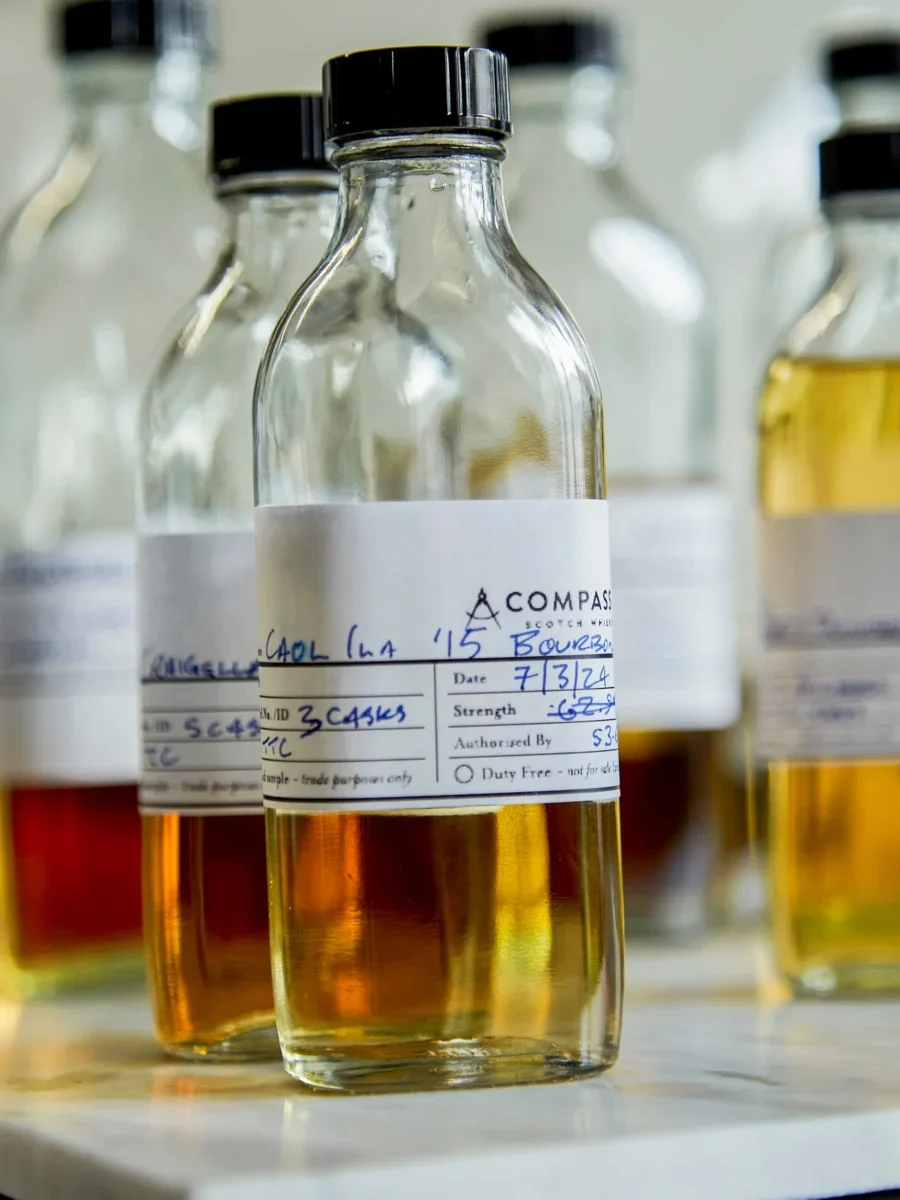
While some whiskies like Linkwood might be more direct and sit on the center of the tongue, a Clynelish (a classic Compass Box lever) “spreads flavors across the mouth, which gives the sensation of an apple bursting as opposed to going directly down the tongue.” Craigellachie adds gravity; Caol Ila, a subliminal oiliness. And while all these whiskies are selected for their predictability of texture, how each interacts with another is where a blender’s genius is mined.
It’s this combination of character that can really make a spirit shine. “Everything comes together in a matrix,” says Naglich. “It’s a showcase of how, when textures all layer on top of each other in a spirit, the whole is the sum of its parts.”
Pulling the levers
Texture can come from choices made in the production process, although what has the most impact varies. There is some rather serious – and dense, very dense – science behind each aspect, but even in layman’s terms there are myriad factors to consider.
Raw materials can have some impact on texture and are often chosen specifically for their textural impact. Oats used in spirits like single pot still Irish whiskey or vodka will give it a more pronounced creaminess, while potatoes add weight and viscosity to vodkas. Botanicals in gin add certain textural accents; ground almonds present as creamy, or citrus can add distinct oiliness.
How some raw materials are processed can also impact texture. In tequila distilleries, how agave pinas are crushed can impact texture based on the breakdown of their fibers: those made using tahona-crushed agave pinas are often rich and viscous in texture versus those that use a roller mill, which have a crispness about them.
When it comes to fermentation, some spirits makers are looking to wine to build more structure around their spirit and deliver more flavor. One such distillery is France’s Maison Lineti, which uses malolactic fermentation (turning malic acid into lactic acid) rather than traditional yeast-driven fermentation to create a texture that will carry the spirit on the palate more characterfully. Looking to the Caribbean, rum makers in Jamaica can use processes like adding muck or dunder to their tanks to optimize acids and esters to enrich texture.
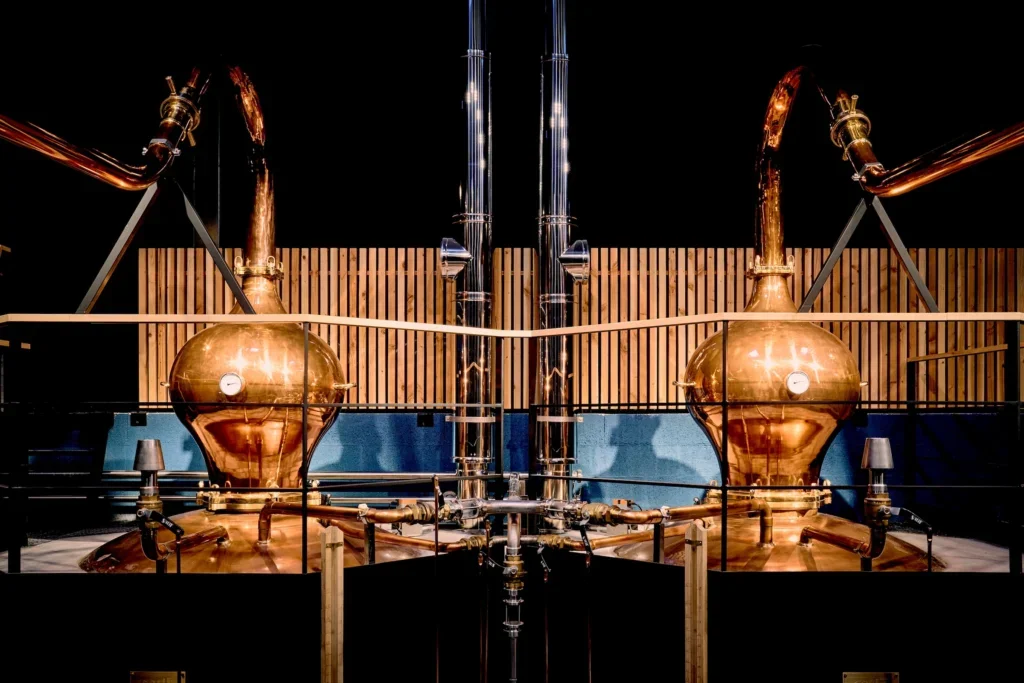
Distillation is undoubtedly the most complex process when it comes to texture, though. From cuts, points, and stills to distillation strength, there are plenty of literal and proverbial levers that a distiller can pull to change up texture in their final spirit. “One of the ways you could get an oilier product is batch distillation rather than continuous column,” explains Jamie Baxter, an experienced master distiller who has installed over 100 distilleries. He also notes that a later cut on the heart will add some fusel oils to your spirit – but go too far and you run the risk of off-flavors. How many times you distill will impact texture: triple distillation will likely lead to a lighter spirit.
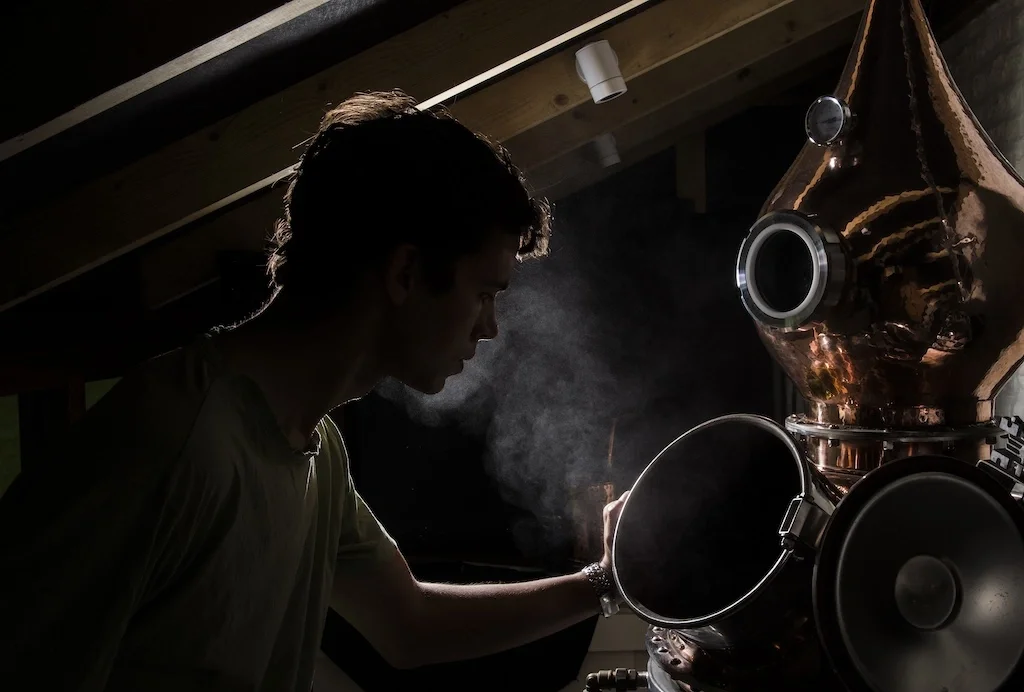
Lanfear argues that still type and distilling strength are in fact the greatest deciders of texture in a spirit.
She says: “Pot stills are archaic for distilling and inefficient, but the reason certain categories favor them is because of the texture of the spirit it makes and its composition, which you just can’t mimic on a column still.” How that still is heated will also change texture, with direct fire creating a ‘Maillard’ effect which adds weight to spirits. Deanston Distillery in Glasgow uses its feints receiver to build up an oily and viscous reserve which, when distilled, gives its single malt its distinctly waxy texture.
The final flourish
And then there’s wood. Tannins, phenols, furans, lactones and more compounds from wood can have a transformative impact on a spirit’s mouthfeel. “Nobody really understands what happens in the barrel,” says Baxter, “but we know that vanillins, for example, can go into sweetness, which gives the perception of texture, while tannins that come out bring astringency.”
Lanfear also points out that the longer a spirit matures, the more textural it can become: “There is something magical that old spirits do that young spirits cannot. With the angels’ share you’re losing water, but what is left behind is becoming denser and richer.” She does caveat this, however, with the adverse impact climate can have. “In cool climates, you will find the composition of the angels’ share is more ethanol than water, so at a certain point you might lose so much ethanol that the structure becomes weaker, and they just don’t have that much oompf anymore.”
Water is also an unlikely component in this discussion. With a spirit like vodka, which has to be distilled (in Europe) to a minimum of 96% ABV, the water used to bring it down to bottling strength will have a huge impact on that vodka’s texture based on its mineral content.
“The amount of water added after distillation, and how and when it is added – and what happens next,” are all factors to bear in mind, says Speciality Brands’ agave ambassador Gabriela Moncada, as well as where it is sourced from.
“Don Fulano sources water from the Tequila valley’s natural wells, which has a denser and creamier side compared to Tequila Tapatio, where the water comes from the natural wells in Arandas, well known for its high minerality,” she explains. “Tapatio also adds water while aging, so when they bottle the final aged tequila, they are as close as possible to their desired ABV, making the texture oilier or thicker as less water is added [at the end]. Don Fulano Fuerte is an unaged tequila, so water is added after distillation, but as it has a high ABV, it is less diluted – the texture is incredible.”
Not one to often conflate spirits and politics, I was struck by Travers’s analogy when thinking about how flavor and texture are balanced in spirits: “When you think about politicians, it can often be the charisma of the speaker – not always what they’re saying – that can have a bigger impact on us. In spirits, flavor is the words, but texture is the charisma.”