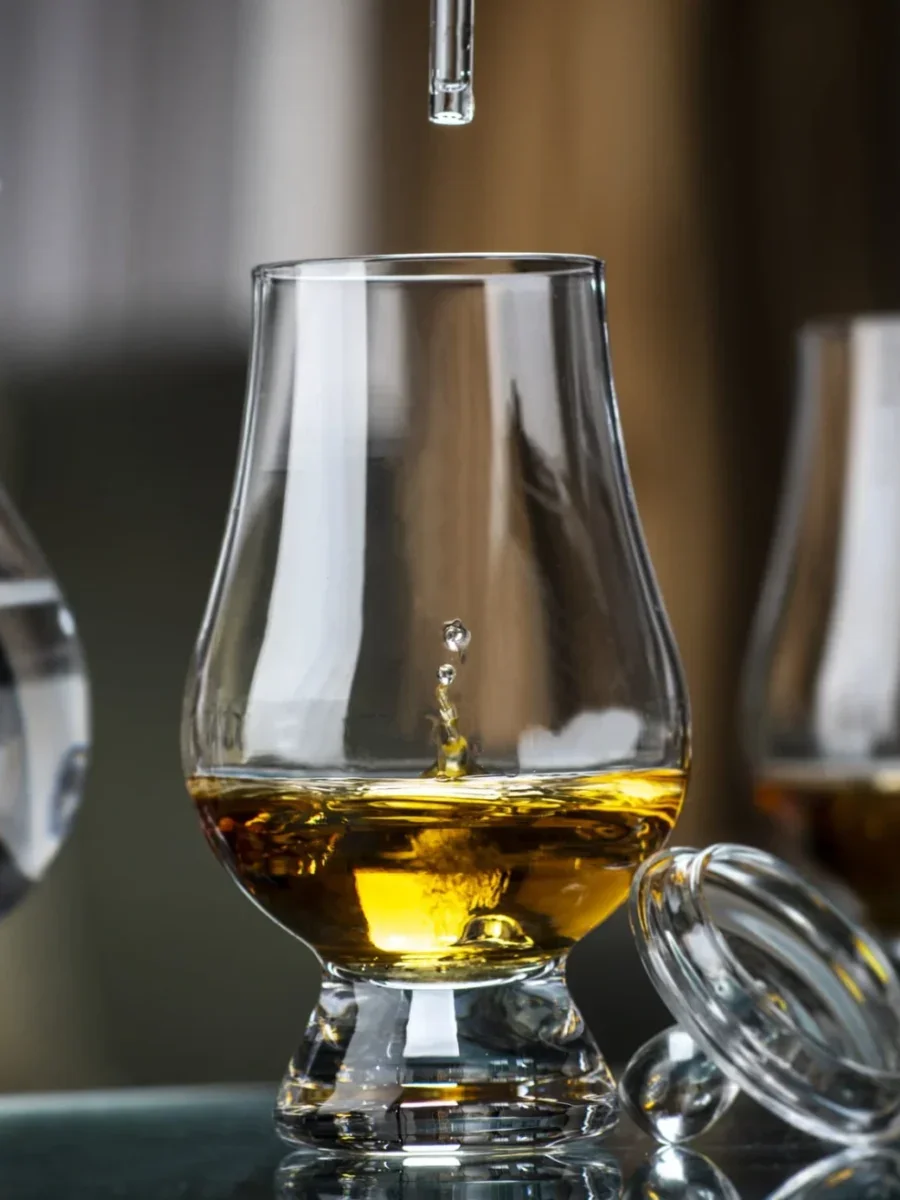
Most spirits drinkers have some knowledge of how glassware can influence their drink.
But the experts say we should be paying more attention to what we serve our spirits in, as we could be missing out on flavor and enjoyment.
In spirits production, there are numerous opportunities to create and hone aromatic complexity, whether from the raw materials or through processes such as fermentation or maturation. When selecting a glass, maximizing access to that complexity is foremost in the minds of many aficionados and appreciators.
For Darren McGinn, sales manager at Glencairn Crystal, glassware choice is about respecting the labor of producing a fine spirit, not only its fruits. “[It’s] one of the most important decisions you make as the consumer to help you appreciate that spirit, and the time that it’s taken to make it,” he says.
What is Important in Spirits Glassware?
Much like producing a spirit, good glassware is part art and part science, with key design features that fit it better for its task.
Kurt Josef Zalto, co-founder and chief designer of European glassware company Josephinenhütte, says: “The central challenge, for me, is to reveal the true character of a spirit without allowing the alcohol to dominate the experience. Every part of the glass has to contribute to that balance.”

The primary feature that fits glasses for spirits tasting is their shape. A larger bowl helps release volatile aromas, a narrower neck concentrates them as they rise, and a flared lip gives more control over the size of your sip. However, shape must work in tandem with proportion — too narrow a neck risks over-concentrating ethanol vapors, while too great a surface area in the bowl will swallow up more delicate aromas.
Next, stem or no stem? The answer depends on variables including the spirit’s aromatic intensity and ideal service temperature.
Typically, spirits with more complex aromatics (think wood-aged spirits such as cognac or Scotch) will give up more aromas as they warm; if served in a cooler setting, a vessel which can be cupped assists in attaining the optimal temperature. Conversely, if the drink is best served cooler or is already suitably warmed, a glass with a stem will help ensure it doesn’t overheat.
A stem also creates distance between your nose and hands, which can prevent any ‘hand-based’ aromas, for example skincare products, from accosting you during a sniff. This is especially important if sampling spirits with a more delicate aroma.
Studious design counts for naught without quality materials. McGinn believes the type of glass used is “important to the conversatio,” explaining that the classic Glencairn Glass is made from lead-free crystal while the hand-blown, hand-cut variant usesf super-premium (and super-clear) lead crystal.
When is Glassware Important?
While we should always seek glassware that will present our chosen spirit at its best, not every glass suits every moment.
“A friend from the music industry once compared a spirit to an album and the glass to the sound system through which you hear it,” Zalto says. “Sometimes you want to examine every layer and detail; at other times, you simply want the music to accompany the moment.”
If the spirit will be your foreground activity, pick a glass which puts it in sharper focus and facilitates deeper analysis. Look for a wider bowl combined with a cinched neck and flared lip.

When the drink is part of the experience (rather than the experience), it’s important to consider how it will be used or held as well as its potential for aromatic enhancement. Some vessels work hard for your drink while asking little from you as the drinker; lithe highball glasses or an elegantly tapered tumbler will similarly concentrate aromas but look and feel more effortless.
Sipping moments come with different environmental considerations, too. Think about what you’re serving, the overall atmosphere you want to achieve, and what will suit your audience, and find glassware that meets you there (Zalto calls this responding to the “ritual” as well as the liquid).
How to Care For Your Glassware
If you’re investing in quality glassware, it’s worth putting equal effort into good upkeep.
Always handwash your glasses. Not only do dishwashers pose a greater risk of scratches and breakages, but harsh detergents, rinse aids, and salts can taint glassware and affect its performance. Wash gently with warm water and mild detergent, rinse thoroughly with clean water, and dry with a glass cloth (these are made from materials that shed fewer fibers, such as linen or microfiber — premium glassware brands including Josephinenhütte and Riedel sell their own). For storage, opt for cupboards over open shelves to prevent dust accumulations.
Clean your glass again before use and, if it’s a “tasting occasion”, rinse it with the spirit you’ll be tasting; this light coating will give your nose a head start on aroma detection and identification.

Our Spirits Glassware Buying Guide
Best Glasses for Tasting
Developed by Glencairn Crystal founder (and whisky drinker) Raymond Davidson, this glass is designed to give a clean and clear display of a spirit’s flavors. There’s a reason Glencairn sells 5 million of them annually: they’re purpose-built, user-friendly and durable, not to mention customizable.
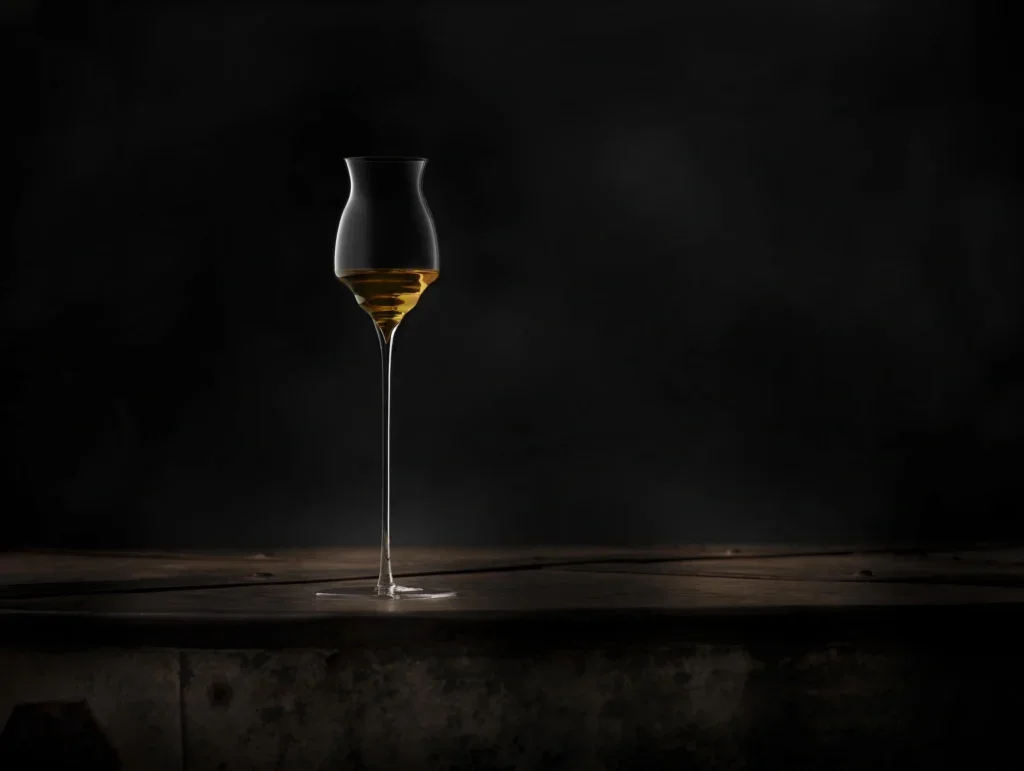
Josephine No10 Eau de Vie glass
Despite the name, this elegant tasting glass is not suited solely to fruit brandies. With its narrow, flaring shape and increased surface area in the bowl, it’s built to tease out aromatic complexity and clarity. It would work well for any clear spirit with a purer aromatic profile, for example vodka or mezcal.
Riedel Sommeliers Cognac XO Glass
The curvature and gently flared lip on this glass offer aromatic concentration in tandem with ethanol dissipation. Its stem is roughly equal in length to the bowl, offering the benefits of a stemmed glass with reduced precarity. While branded for Cognac, it would serve any wood-aged spirit well.
Bormioli Rocco Riserva Grappa Glass
Tested by members of the Italian Sommelier Association, this glass is purpose-built for the country’s ubiquitous pomace brandy. However, its long neck and relatively wide bowl make it a superb fit for tasting any spirit with a purer or simpler aromatic profile including vodka, tequila, or other fruit brandies such as pisco.
The island of Ireland’s answer to the Glencairn Glass. Its elongated conical shape is well suited to the triple-distilled and pot still whiskeys Ireland is known for, which tend to be lighter in profile, but it would also be capable of handling a meatier malt whiskey.
Favored by drinks professionals globally, found in many a tasting room and blending lab. Its tulip shape concentrates aromas very effectively, and the shorter stem makes it easier and more forgiving to handle. Fun fact: the copita’s design was influenced heavily by Dalmore master blender Richard Paterson.
Best Glasses for Sipping
Riedel All American Bourbon Glass
The relaxed shape of this tumbler — one that’ll sit comfortably in your hand — lends it to the sipping category, but its tulip shape would make it an effective tasting glass too. Styled for bourbon, but more widely applicable.
Made from fine lead-free crystal, these tumblers would work for spirits served neat or on the rocks, or highball-style mixed drinks. The wide base and sharp curve help concentrate aromatics, and the small flat base ensures both elegance and stability.
A versatile crystal vessel that could handle neat liquid, a spirit with ice, or a short cocktail served on the rocks such as an Old Fashioned. As for the Glencairn Glass, there’s also a classy cut-glass variant.
With a capacity of 14oz (420ml), this tumbler is made for long ice-filled cocktails. It’s simple on the surface, but little touches make the difference: the glass is mouth-blown, the rims are fire-polished, and the slim silhouette and weighty base make it comfortable to hold.
Riedel Bar Rituals Highball Glass
This attractively ribbed crystal glass features a 2oz (60ml) interior pour line, for more accurate measuring in mixed drinks. With an interlocking stackable design, it’s well suited to on-premise or home use.
This copa-style glass mirrors the original Glencairn Glass’s wide bowl and flared lip for enhanced aromatics, making it ideal for spirits with simpler, clearer profiles. At its best when filled with ice, gin and tonic.