There is something wonderfully contradictory about the whisky Highball.
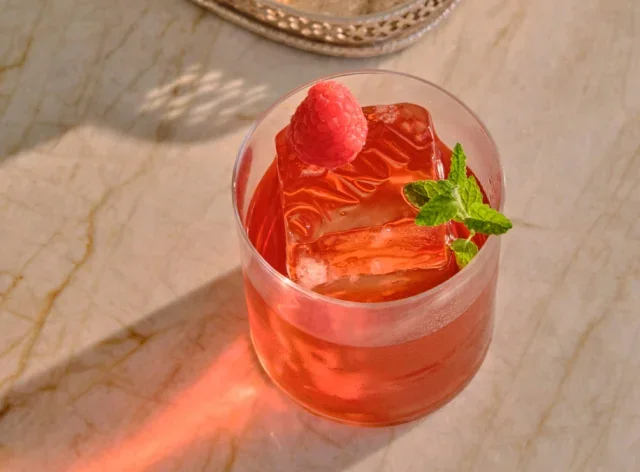
Whisky. Ice. Soda. A tall glass. That’s it. Three ingredients. All individual, yet all as one, the Holy Trinity of refreshment. And yet, an entire philosophy has sprung up around the Highball: the temperature of the glass, the quality and shape of the ice, the strength of the carbonation… even how many times you stir it and, increasingly, exactly which whisky you choose.
All this fuss over what is, essentially, a whisky and soda. But that is the point.
The Highball has endured because it manages to be both incredibly simple and endlessly interesting. It can be knocked together at home while dinner is in the oven, dispensed from a tap in a Tokyo izakaya, or constructed with intense concentration in one of the world’s best bars.
And whisky and soda is hardly a new romance. P.G. Wodehouse was already regularly lubricating Bertie Wooster with the stuff more than a century ago. In his 1916 story Jeeves and the Unbidden Guest, Wooster is supplied with his “nightly whisky-and-soda”, while throughout Wodehouse’s writing the combination appears with pleasing regularity. Exact measurements are conspicuously absent. Instead, Wodehouse often describes Wooster’s serve simply as “stiffish”, which seems a far more useful unit of measurement anyway.
The idea that whisky and soda should not be governed by laboratory precision goes back even further. Chris F Lawlor’s wonderfully named 1895 book The Mixicologist, or How to Mix All Kinds of Fancy Drinks, contains a drink called the Splificator. Its recipe is gloriously laissez-faire: one piece of ice, followed by an instruction to let the customer help themselves to whisky before topping the whole thing with Apollinaris, a naturally sparkling German mineral water fashionable at the time.
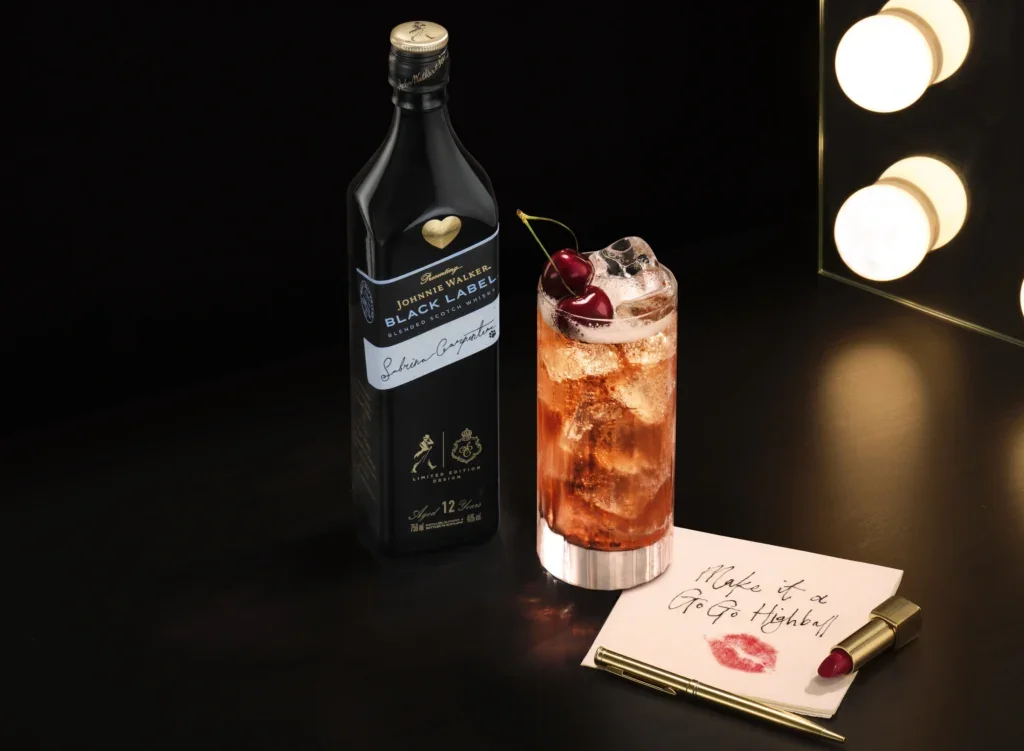
Frankly, I’m amazed the “help yourself” school of bartending didn’t catch on. It lives rent-free in my house most weekends.
What we now call the Highball emerged from this habit of lengthening spirits with sparkling water. Brandy came first, with Scotch gaining ground in the wake of phylloxera’s devastation of European vineyards. Early versions were often little more than spirit and a splash of soda served in a tumbler. By the turn of the 20th century, however, American whisky advertising increasingly showed the drink migrating into the taller, narrower glass from which it would eventually take its modern identity.
And there is something about a tall glass that changes whisky.
Making a Good Highball
A Highball doesn’t merely dilute whisky; it stretches it out. Aromas that might sit densely together in a neat dram are pulled apart. Smoke becomes a wisp rather than a bonfire. Fruit becomes brighter. Vanilla gets lighter on its feet. Grain character, occasionally ignored when tasting whisky neat, can suddenly become one of the most attractive parts of the drink.
Which raises an interesting question: what actually makes a whisky good for a Highball?
It is a question worth putting to Dr Emma Walker, master blender for Johnnie Walker and someone who spends her working life thinking about the architecture of flavor in blended Scotch.

“When we’re creating a new whisky, whether a blend or a single malt, part of the creative process is thinking about when, where, and how the consumer will enjoy the drink,” she tells me.
“Therefore, we’re creating whiskies that can work as a dram, a Highball, and in a cocktail, so we need to think about the flavors at different dilutions and how they’ll work with the addition of other ingredients.”
So how about for a Highball specifically? “For a Highball. we’re crafting a whisky with balance that has desirable flavors and is refreshing when diluted – vanilla sweetness and creamy fruity notes are always a key lookout, and understanding how the smoke accentuates the overall serve is very important.”
And for Dr Walker, the architecture of the blend is vital when it comes to thinking about lengthening the whisky with soda water. “The creamy vanilla grain notes really help in the longer serve, providing texture and sweetness, with the fruit notes coming to the forefront, and the smoke either accentuates the other whisky flavors and the serve or brings almost a subtle smoky chocolate note to the end serve,” she explains.
Perhaps the Highball’s greatest trick therefore is that dilution doesn’t necessarily mean less flavor. Done properly, it can mean different flavor.
That makes the drink particularly interesting for modern blenders such as Woven, the Leith-based whisky maker that has enthusiastically challenged the notion that blended whisky should merely be the dependable tartan cardigan of the Scotch world. Woven even has a dedicated Highball section on its website, with whiskies constructed with this serve in mind.

Woven’s director of whisky, Pete Allison, thinks the question of “does this whisky make a good Highball?” is moot. He prefers to ask, “can we actually make a whisky that builds through a Highball?” as his starting point.
“I do think we can (and we do at Woven) blend for carbonation. When doing so, I think of the Highball as the final format, rather than blending a whisky and hoping it will work in one. We play with ABV, dilution, and carbonation as part of the development,” he explains.
Yet for all its British and American history, nowhere has taken ownership of the whisky Highball quite like Japan.
There, whisky and soda has escaped the cocktail bar and become something closer to a cultural institution. You find Highballs in whisky bars, restaurants, and Japan’s version of a pub or dive bar, the izakaya, where you can even find them on tap.
Whisky has spent decades being told to sit still and behave itself. We have been encouraged to nose it, contemplate it, discuss the provenance of its distillation, and the complexity of flavor.
Yet the Highball says: drink your whisky.
Japan has turned the construction of this drink into something approaching ritual. Good ice, a properly chilled glass, whisky, fiercely carbonated water, and careful stirring can transform three extremely ordinary-looking components into something almost absurdly refreshing. Much like this country’s dedication to the tea ceremony, the making of a Highball is all about precision deployed in pursuit of something that ultimately feels effortless.
Levels to This Game
Of course, anyone who has spent time drinking in Japan knows that the Highball exists at several levels simultaneously. There is the meticulously prepared bar version, but also the everyday Highball: cold, fizzy, democratic, and extremely capable of turning one drink into four.
Which is where James Bowker comes in. Bowker spends much of his professional life in Japan as the global brand ambassador for the House of Suntory, the company that spearheaded the Highball revolution.
“The Highball is the ultimate expression of Japan in a drink: it’s something ingeniously simple that works perfectly in any moment – and can be just as special in either its most slapdash or sophisticated expressions,” Bowker observes.
“These izakaya Highballs… well, really, that’s all about having fun with something light and delicious. It’s the drink that washes troubles away, invariably with friends”
James Bowker
And the Japanese are obsessive about this drink, with bars in the famed Ginza district of Tokyo developing their own rituals towards discovering the perfect serve. “The Ginza-style Highball is about achieving absolute balance and harmony between whisky and ourselves. It’s not about diluting flavors, but rather allowing the bubbles to lighten their delivery on the palate.”
This is in stark contrast to the more fast-moving version served in an izakaya. “These izakaya Highballs… well, really, that’s all about having fun with something light and delicious. It’s the drink that washes troubles away, invariably with friends. Bright yet boozy, [these] Highballs taste like a much-needed giggle.”
And this ability to move between worlds is surely the secret of the Highball’s longevity. Yet whether it is being thrown together in an izakaya or assembled ceremonially in Ginza, there remains one constant: temperature matters.
The view from behind the bar is emphatic. In their mixed drinks tome, The Madrusan Cocktail Companion, lauded bartenders and bar operators Michael and Zara Madrusan dedicate an entire chapter to the Highball; such is its importance in the canon of drinks.

Their chapter on the drink advises the reader that “we strongly suggest chilling your base alcoholic ingredient(s) before preparation.” Why so?
“The name of the game is always control with a Highball,” Michael tells me. “Control is important because the drink is at its absolute best as soon as it’s made, so if you care, and you should, you control every aspect of the drink you can. Chilled glassware, dry (colder) ice, and chilled liquor and sodas are key.”
Breaking Barriers
And this is the thing about the Highball: it can be precise without being pompous. It allows whisky to show another side of itself. It works before dinner, during dinner and, depending on your constitution, some considerable time after dinner.
Most importantly, it removes whisky from the pedestal.
There is a tendency around fine spirits to assume that seriousness is somehow proportional to concentration: the rarer the whisky, the smaller the measure, the quieter the room. The Highball cheerfully rejects this. It takes whisky, adds a large quantity of fizzy water and ice, and somehow makes the entire category feel more alive.
Wodehouse understood that. In a 1915 comic piece for Vanity Fair, his protagonist triumphantly announces that he has finally escaped an addiction to ice-cream sundaes by acquiring a taste for alcohol instead: “I drink high-balls for breakfast. I am saved.”
More than a century later, the drink itself needs no saving at all. In an era of increasingly elaborate cocktails, whisky and soda remains defiantly straightforward.
And, should anyone ask for an exact ratio, I think Bertie Wooster still has the best answer:
Make mine stiffish.