Among the spirit world’s mega distilleries, there remains a minority of mavericks pushing boundaries, embracing the weird and wonderful.
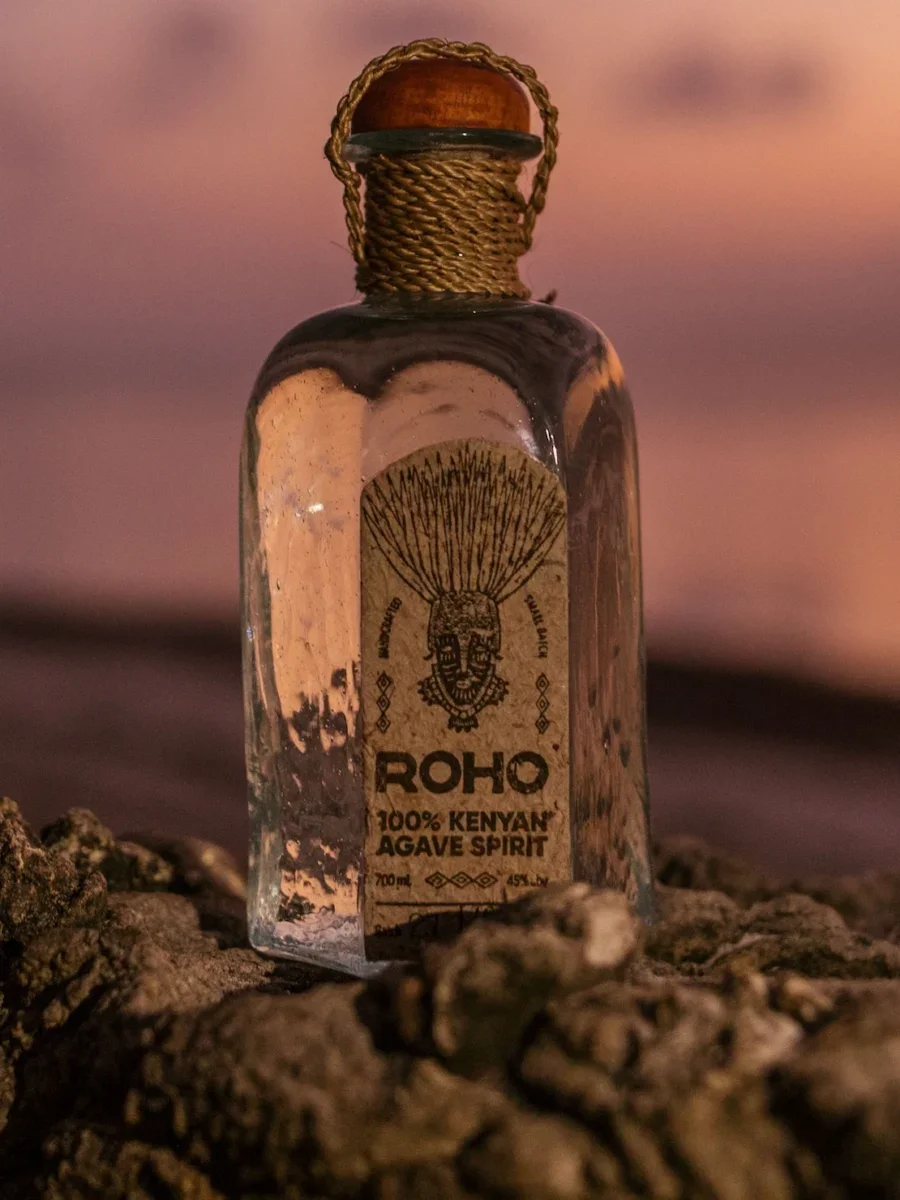
ROHO is one of these outliers: an award-winning, artisanal agave spirit from a boutique distillery in coastal Kenya.
Agave sisalana, commonly known as sisal, was introduced to modern-day Tanzania in 1893 by German botanist Dr Richard Hindorf. As the main source of fibre for rope production, sisal was planted all over East Africa and remains integral to the region’s fibre industry today. The leaf-producing phase is around nine to ten years; the farmers then write the plant off and leave it in the field for two or three years to die. The heart, meanwhile, reaches maturity 12 to 18 months after leafing ceases.
Phil Lowe, an Englishman who grew up in Kenya’s laid-back coastal town, Kilifi, saw an opportunity to turn sisal ‘waste’ into East Africa’s first agave spirit, ROHO. His connection to Kilifi is deep: his parents moved to the town for tropical disease research when he was two, and he spent most of his childhood there. He set up a system: after harvesting the heart, the whole plant is removed and a proportion returned to the farmer for composting, letting them replant one to two years earlier than they otherwise could.
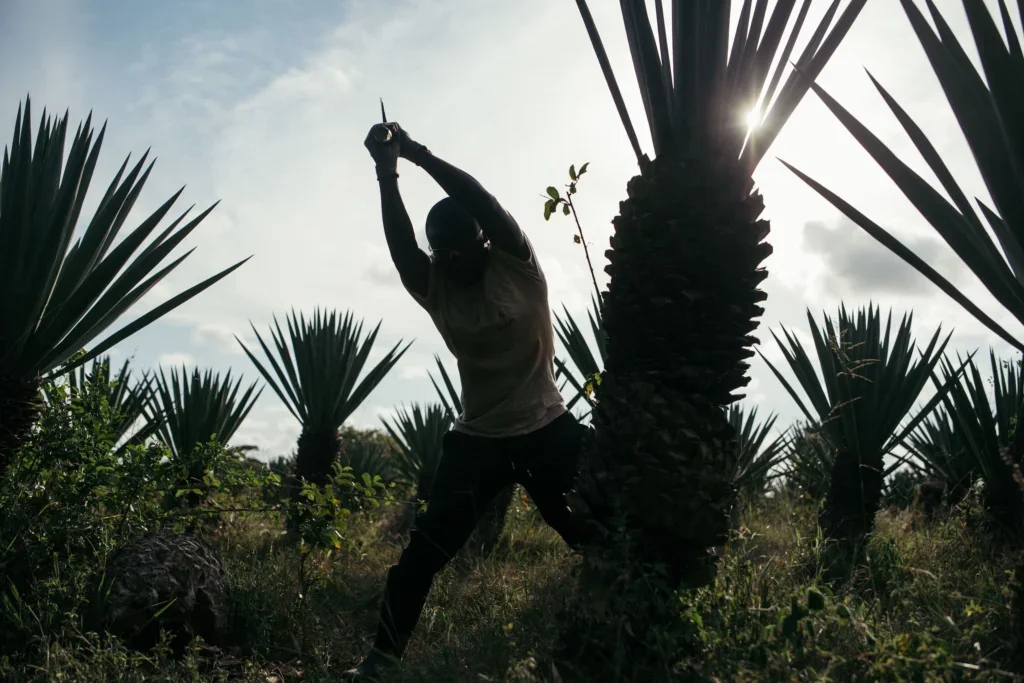
I spent a day with Callum Palmer, head of operations at ROHO, while his team was cooking batch No. 35. Palmer has been in place since batch No. 6, bringing 15 years in brewing, distillation, and wine import from Adnams, in his hometown of Southwold. His own Kilifi roots run back to 2003.
During his time at Adnams, Palmer had often wondered if Kenya’s extensive sisal plantations could be used for premium spirits production, but he’s happy Lowe took the plunge before he did: “If it had been the other way around, and I had started before Phil, I don’t think I would have got this far this quickly.”
Lowe’s background in data led to success where earlier attempts by others had failed. The first official cook, in his father’s garden, followed countless micro-cooks and experiments. With Palmer came distillation knowledge, practicality, and an understanding of place, complementing the data-led approach.
ROHO is not a Kenyan copycat of mezcal. Although Palmer and Lowe draw inspiration and distillation methods from Mexico, they want to forge ROHO’s own local identity and direction. Partly, this is down to necessity.
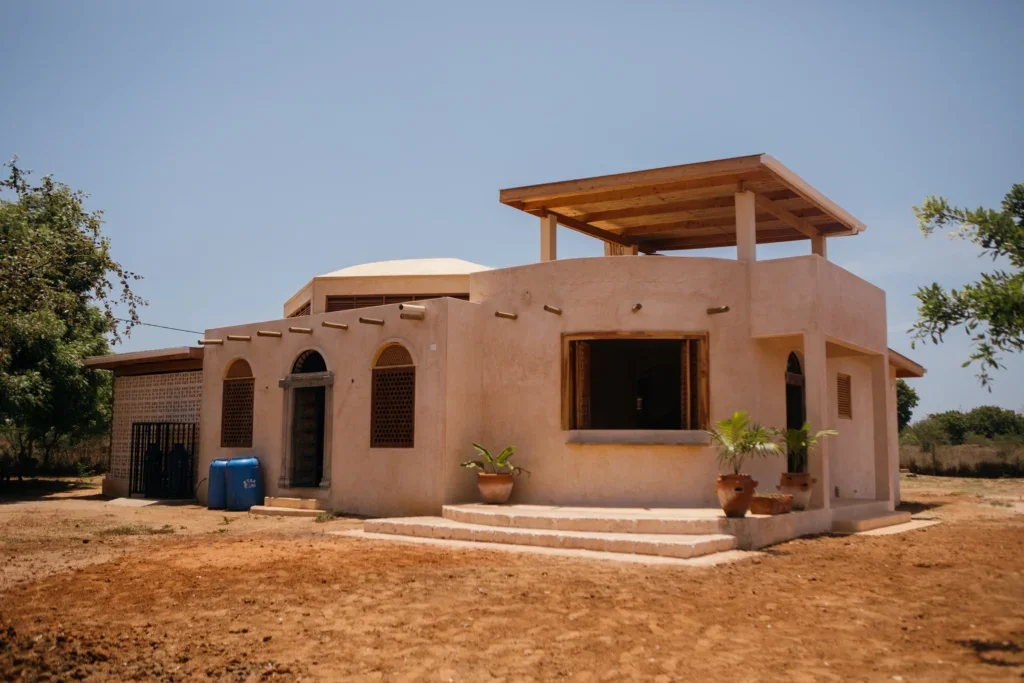
As agave production in Africa was non-existent before they started, they had to build much of the industry from scratch: volcanic rock from Mount Kilimanjaro’s lava flow for the oven pit; handwoven Kenyan mats – ‘mikeka’ – to seal the oven; wooden mortars used for milling maize – ‘kinu’ (unique to East Africa) – repurposed for crushing roasted agave hearts; paper labels made of waste agave fibres from their cooking process.
The glass bottles themselves are fascinating – recycled bottles and windowpanes, collected by women cleaning the streets in Nairobi, made by a company called Greenthing. The bottles are hexagonal and, being hand-crafted, all slightly different and imperfect.
Above all, their respect for Kenya translates into an unwavering commitment to ROHO as a product of Kilifi’s environment and community. For Palmer, the terroir element – the imprint of the local natural environment on a product – is paramount: “Every book I read on mezcal production was about varietal over location, where the different varietals were more important than the environment they were growing in. We’ve only got one varietal, so it has to be terroir for me. I have no choice in the matter.”
“It’s all about creating what I believe tastes the best. The unique thing we have here is our environment.”
Callum Palmer
Tasting ROHO is an undeniably coastal Kenyan experience. It’s an assertive, fiery combination of sweetness and spice, with a viscous texture and punchy local flavors reminiscent of Swahili street snacks: cardamom, cinnamon, bitter baobab, green chilli, green mango skin.
The pit’s fire, from local neem wood, appears as a subtle helping hand, lending a savory, earthy tone. This style of agave is not for everyone. If you prefer a refined, mineral mezcal with minimal alcohol burn, ROHO is not your bottle. It’s big, it’s bold, it’s bordering on brash.
Such uncompromising intensity runs the risk of tiring the palate, but a saline, sea spray edge brings freshness and vitality, in apparent homage to Kilifi’s ocean location and coral-rag soils. In Palmer’s own words, it’s “the best representation of Kilifi, in a bottle.”
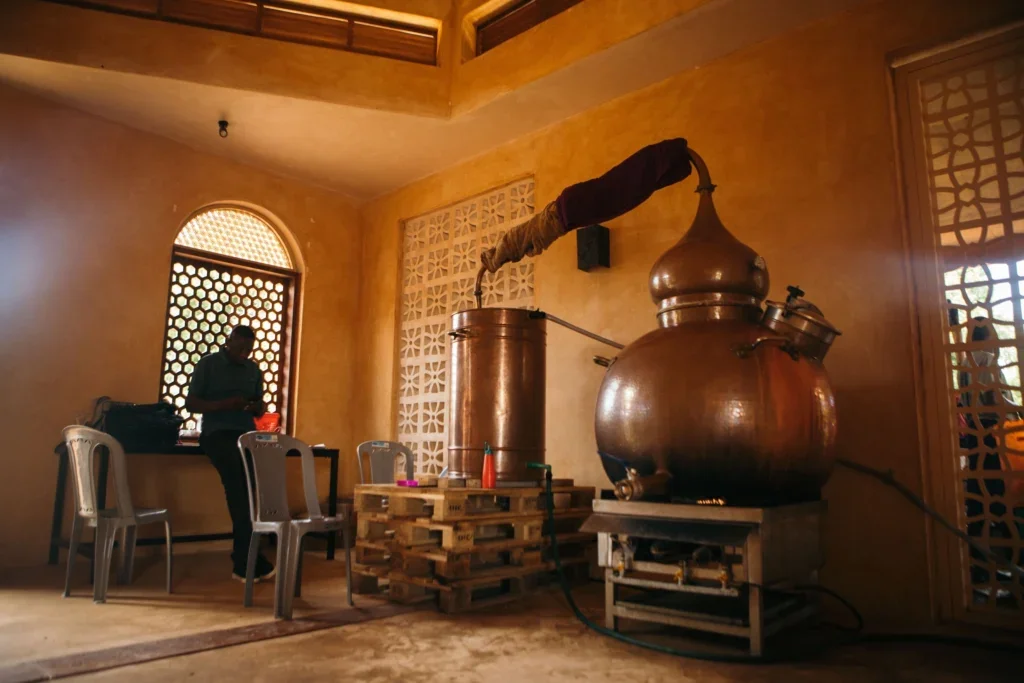
As we start tasting, Palmer reveals a surprising detail: “It’s probably controversial, but I’ve only tasted around ten mezcals.” He credits this with helping him avoid leading with a preconceived notion of what the finished product should taste like, instead focusing on his experience with a breadth of alcoholic beverages from his time at Adnams. “It’s all about creating what I believe tastes the best. The unique thing we have here is our environment.”
As a point of comparison, we tried an experimental bottling using sisal from a high-altitude inland site, part of a national park on nutrient-rich volcanic soil. Production was identical to the standard bottling – spontaneous fermentation, double distillation in copper pot stills, blending from five cuts – isolating the effect of terroir. The flavor profile was akin to a traditional mezcal: herbaceous, savory, mineral. A quieter contrast to ROHO’s resonance, linked only by outstanding quality.
ROHO’s presence in Kilifi runs deeper than the liquid in the bottle. In a region that suffers from severe unemployment, the distillery serves as a steady source of income for a growing workforce of 21 local men and women.
“What would be a living wage here in Kenya, we pay two and a half times more. That’s then structured where pay is increased over time, in a tiered system, as the workers gain more experience,” explains Palmer. Some of the workers are minor equity holders in the company, with the goal to eventually turn ROHO into a majority employee-owned organization.
The distillery manager, Sam Maina, is a local man who has been with ROHO since the first cook. “It was tough at first,” he says. “We’ve been through a lot of challenges. After the first few cooks, we realized we’d been using the wrong rocks,” referencing Phil’s initial backyard experiments before the new pit was constructed with volcanic bricks. In those early days, they were using five pieces per cook in a garden; now, they are using 150 pieces per cook in a new, custom-built distillery.
Spirit production is nothing new to East Africa. According to Maina, “the local people drink more spirits than beer.” But these are cheap, local spirits mainly made from sugarcane – a far cry from quality agave production.
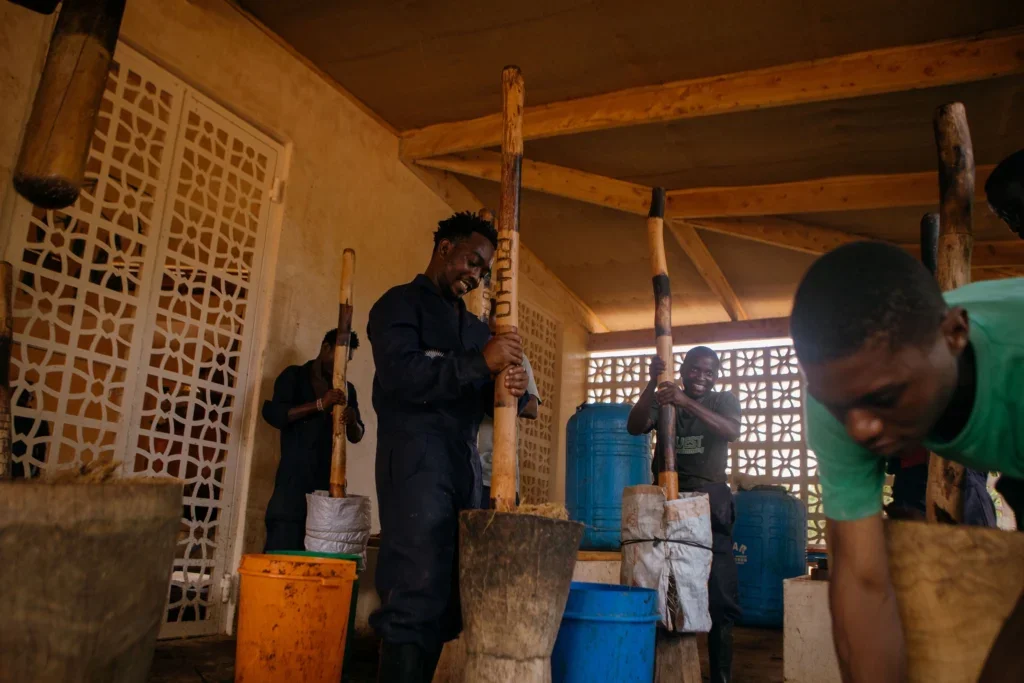
I asked him how he first got involved: “I was jobless,” he says. “My ex-boss’s dad got me in touch with Phil, who was looking for someone to help with his first cook. I was very curious.
“In our community, sisal is believed to be poisonous; you can’t eat it. But if you tell them the story [of ROHO], they like to know more about it. I’ve brought some small [cooked] pieces to my family for them to have a bite, and they can’t believe it. They find it interesting.”
On site at the distillery, the vibe is upbeat and collaborative. “We are a community,” says Maina. And it’s a community he’s been integral in building. He personally recruited every one of his 20 colleagues, most of whom were jobless before ROHO.
The foundations have been established; there’s a long way to go, but the future looks bright for ROHO. A new export licence has opened doors in the UK, with the first shipment due to arrive in September 2026. Stockists will be limited but deliberate – agave specialists such as East London’s Sorbito.
On the production side, Palmer will continue to test out sisal from sites across Kenya. He is also experimenting with a small volume of ROHO aged in local Meruoak, with a light-medium char; potentially the first spirit on the market aged in Kenyan oak.
“For me, it’s a bit of a no-brainer,” he says. “Being able to use an indigenous oak from this part of the world, something that has never been used [before in spirits]. And barrel-aged spirits are something that’s always going to be interesting to people.”