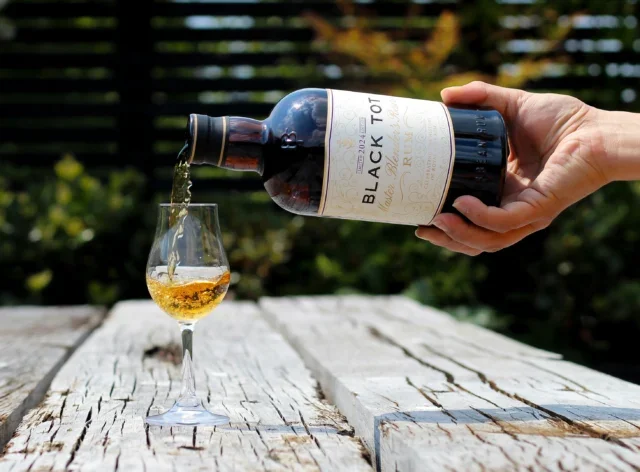
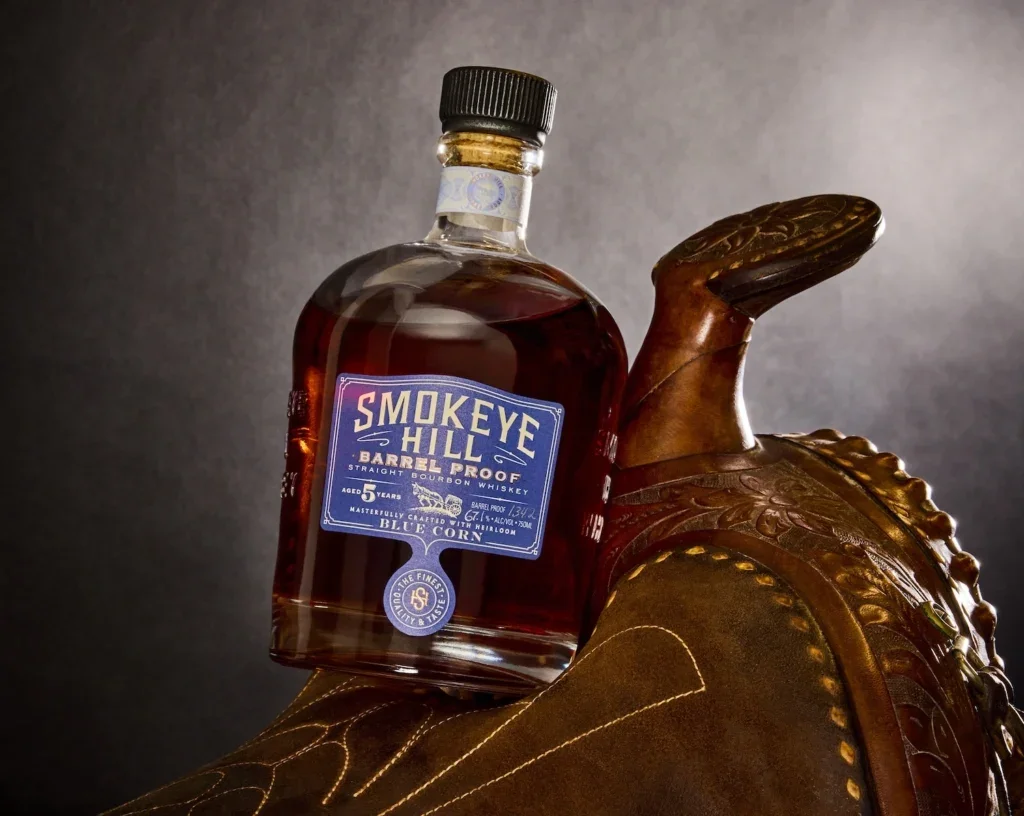
In the summer of 2024 Smokeye Hill stunned the whiskey world.
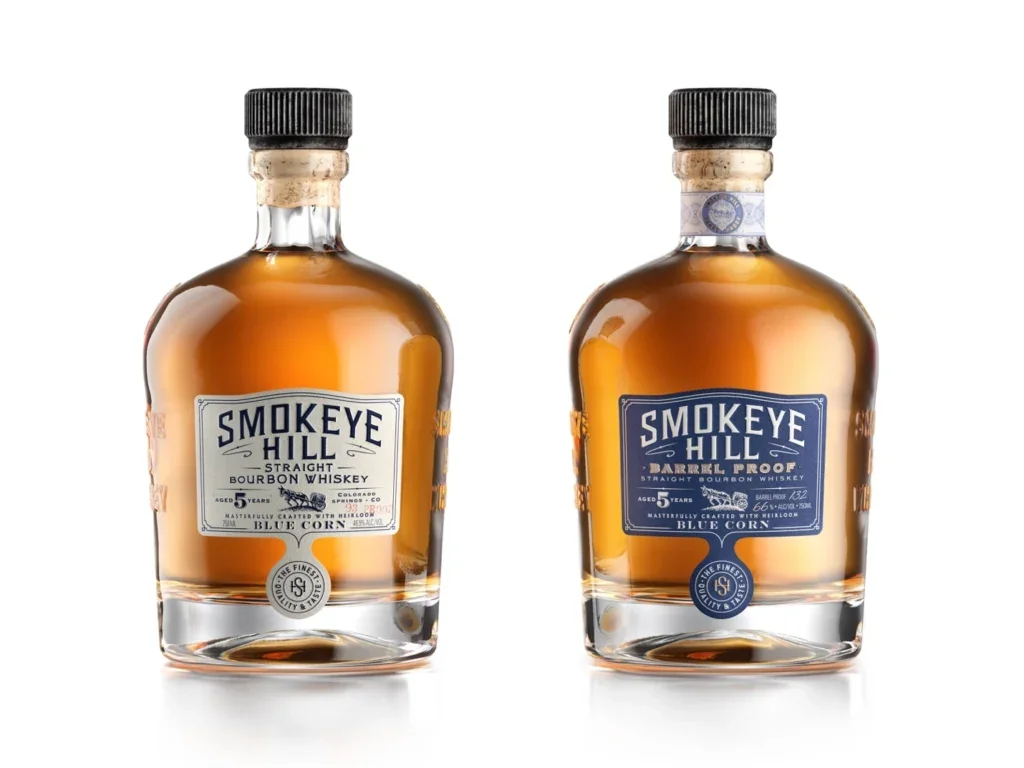
The craft producer out of Colorado Springs, Colorado, had entered its Barrel Proof Bourbon into the ASCOT Awards, an annual blind judging led by whiskey writer, Fred Minnick. The robust 132-proof (66% ABV) sipping spirit bested the field. In earning “Best in Show” status, it outperformed George T. Stagg, a supremely allocated liquid with cultish appeal amongst connoisseurs and collectors.
While Stagg is generally aged for close to two decades and holds a pedigree from Buffalo Trace — one of the most venerated distilleries in all of Kentucky — the Smokeye Hill juice matured for roughly a quarter of that time; it was sourced and sculpted at an obscure operation, a thousand miles removed from the traditional epicenter of bourbon excellence. What it lacked in Bluegrass, it made up for in blue corn. More specifically, an heirloom variety of that off-color base ingredient that had never been seen or tasted in American whiskey.
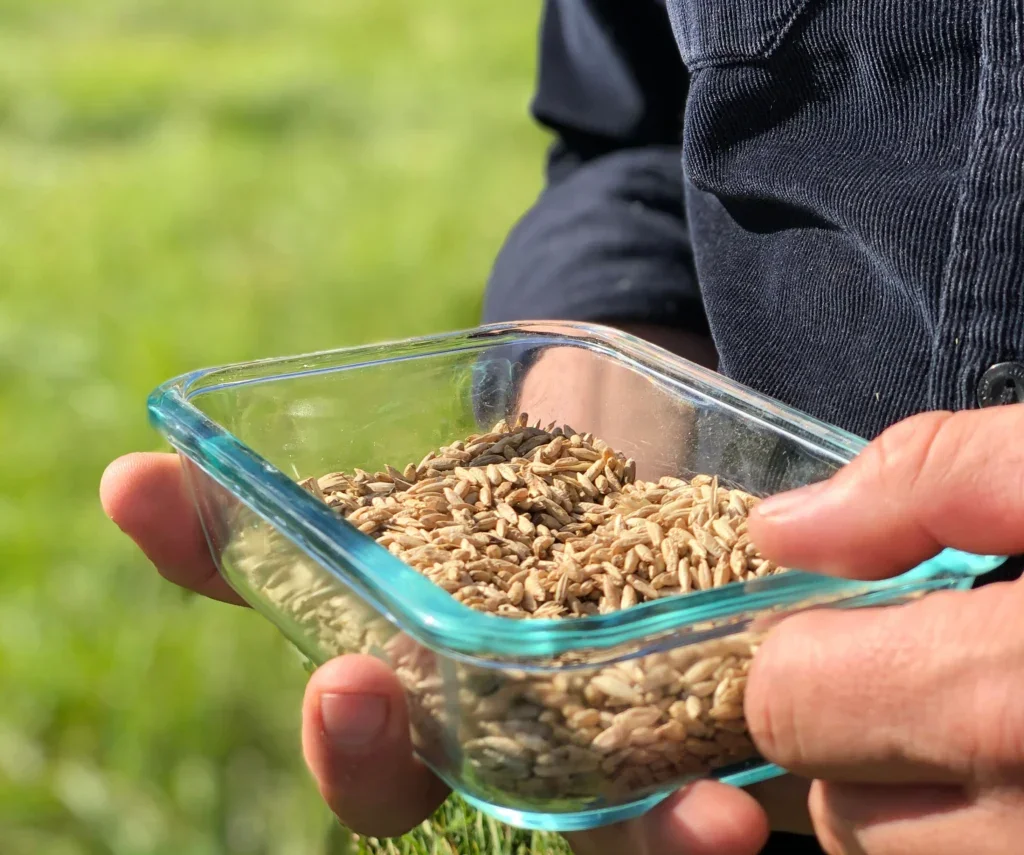
The achievement served as a coronation for heirloom grain-based whiskey. Across the US, intrepid distillers had already been working with these sorts of cereals for the better part of a decade. It involves the cultivation of any type of seed owning more than 50 years of heritage, or — more loosely — any sort of grain that avoids modern breeding techniques such as genetic modification.
In 2021, New Riff released a limited-run bourbon incorporating an heirloom variety of wheat called Red Turkey. Two years later, New York Distilling Company unveiled Jaywalk Heirloom Rye to measured fanfare. The widespread reporting of Smokeye Hill’s ASCOT win signaled to the industry that a once-esoteric subcategory was ready for primetime. And why shouldn’t it be?
“Heirloom grains offer a level of flavor complexity, texture, and nuance that commodity grains often do not,” says Blake Johns, founder and CEO of Smokeye Hill Whiskey. “You notice it in the aroma, the palate, and especially the viscosity and mouthfeel. That’s what drew me to explore them in the first place — the ability to create a truly distinctive whiskey built around a very intentional flavor profile.”
For modern whiskey drinkers, the potential to taste something novel is exciting enough. But for modern whiskey makers, who often tend to be students of history, it affords a rare opportunity to reanimate the past. That Jaywalk bottling, for example, was built from an initial gift of ten seeds of 17th-century Horton rye. It was donated to the distillery by the agriculture department of an Ivy League university and took five years of experimentation to cultivate enough for adequate fermentation.
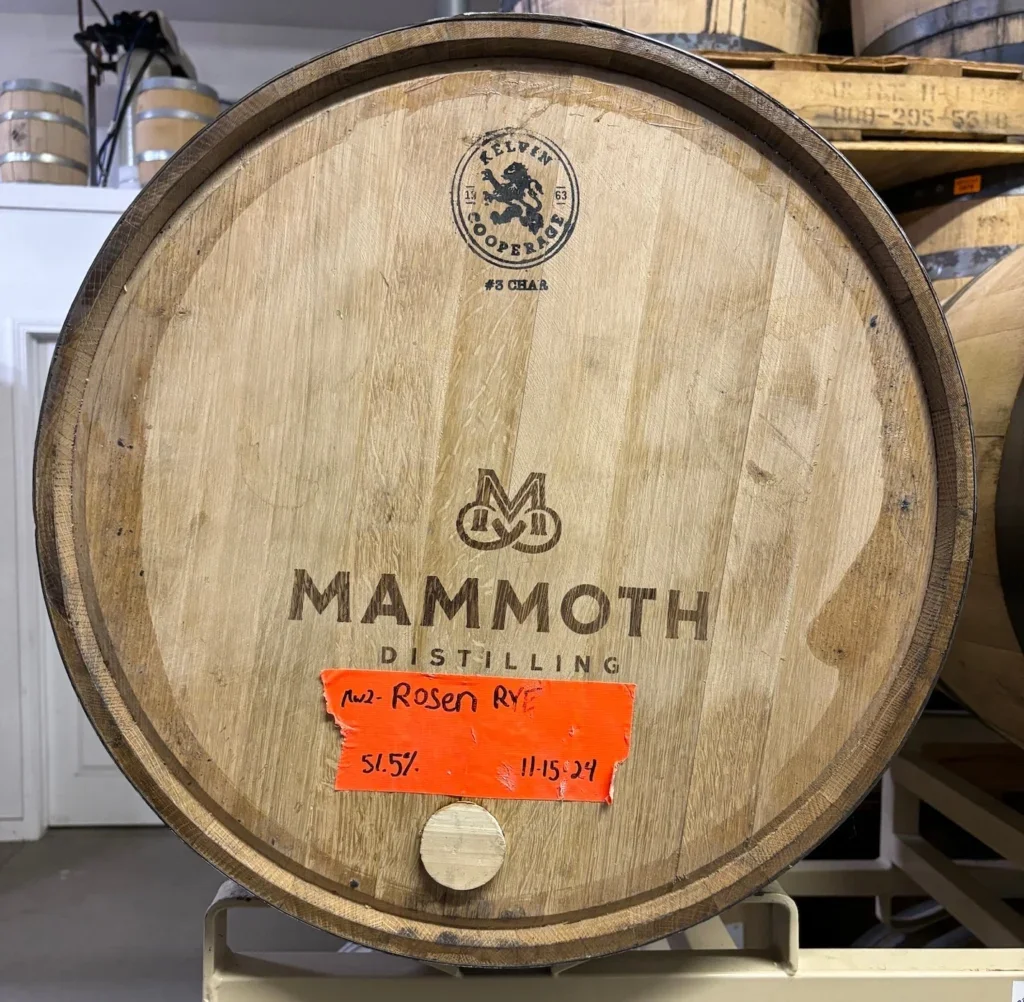
At Mammoth Distilling, along the shores of Lake Michigan, master distiller Chad Munger has spent even longer trying to faithfully recreate Rosen Rye. Although it was the preferred variety for American rye production throughout the earlier parts of the 20th century, it all but disappeared during Prohibition. Believing it to be far more flavorful than the commodity rye used by big brands today, he sourced the forgotten grain from the USDA’s seed bank and is currently aging whiskey that uses the heirloom grain as the base of its mashbill.
“We believe whiskey makers should think about and treat rye grain the same way wine makers think about grapes,” says Munger. “As excited about Rosen as we are, we believe there may be an even more compelling varietal out there in the world, or if not, we believe we may be able to create one, and we will leave no stone unturned to either discover it or breed it.”
The next step in that mission was to recover some 36,000 bushels of rye preserved in the hull of the Bentley — a legendary sunken ship which has rested 165 feet below the surface of Lake Michigan since 1878. In late September of 2024, a team of agricultural scientists from Michigan State University recovered two small tubes worth of that treasure and have been working to sequence its unique genome in a lab setting ever since.
“Recovering the Bentley Shipwreck rye is only one small part of our mission,” Munger explains. “It’s not so much to recreate a specific historic style of rye but an attempt to identify the very best variety of rye to create the best possible whiskey.”
When it comes to Rosen, specifically, Stoll & Wolfe has already delivered a compelling proof of concept. The Pennsylvania-based distillery released its Rosen Rye in 2024. It is characterized by a full, creamy body, with a lengthy finish that splits the difference between savory sourdough and over-ripened stone fruit. A gem of a bottling that’ll set you back $120.
“I’ve heard several master distillers say that mash bills don’t matter much. I believe the differences are noticeable, but consumers need more education around how much grain variety and quality impact flavor.”
Colby Frey
That sort of pricing hinders widespread marketability, of course. And all that experimentation— not to mention the increased cost of the grain itself—cuts into margins. For these reasons, the big brands have been reluctant to enter the arena. Especially when grain quality remains a distant afterthought for casual consumers, compared to distillation provenance and age statement.
It’s up to craft producers to educate them otherwise. Colby Frey of Frey Ranch is uniquely equipped to make the case. His family has been tilling the land of western Nevada for over 165 years. But the fifth-generation farmer only started distilling here in 2014—releasing a first bottling some five years later, to far-reaching critical acclaim.
“There’s a saying in the wine industry: ‘You can’t make good wine from bad grapes, but you can make bad wine from good grapes,’” he says. “The same is true for whiskey. That’s why we place so much emphasis on the grain at the start of the process. I’ve heard several master distillers say that mash bills don’t matter much. I believe the differences are noticeable, but consumers need more education around how much grain variety and quality impact flavor.”
Turn to any of the half-dozen expressions from Frey Ranch’s Single Grain Series for an effective lesson. 100% Malted Corn, 100% Wheat Whiskey, 100% Oat Whiskey—each are especially expressive of the estate-grown cereal at their respective heart, while also delivering a tannic earthiness that Frey attributes to the terroir of the Northern Nevada desert.
“Without grain, there is no whiskey, so I don’t know why the conversation hasn’t focused more on it,” he adds. “But that mindset is beginning to change. There is a growing movement around estate whiskey and grain provenance, highlighted by the University of Kentucky’s creation of the Estate Whiskey Alliance, which already includes several legacy distilleries among its members.”
The nascent organization consists of seven founding members, including Maker’s Mark, which just last year launched its Star Hill Farm label. It debuted with a wheat whiskey, using grain derived primarily from its eponymous Kentucky grange. It marked the first significant mashbill variation in the distillery’s 73-year history.
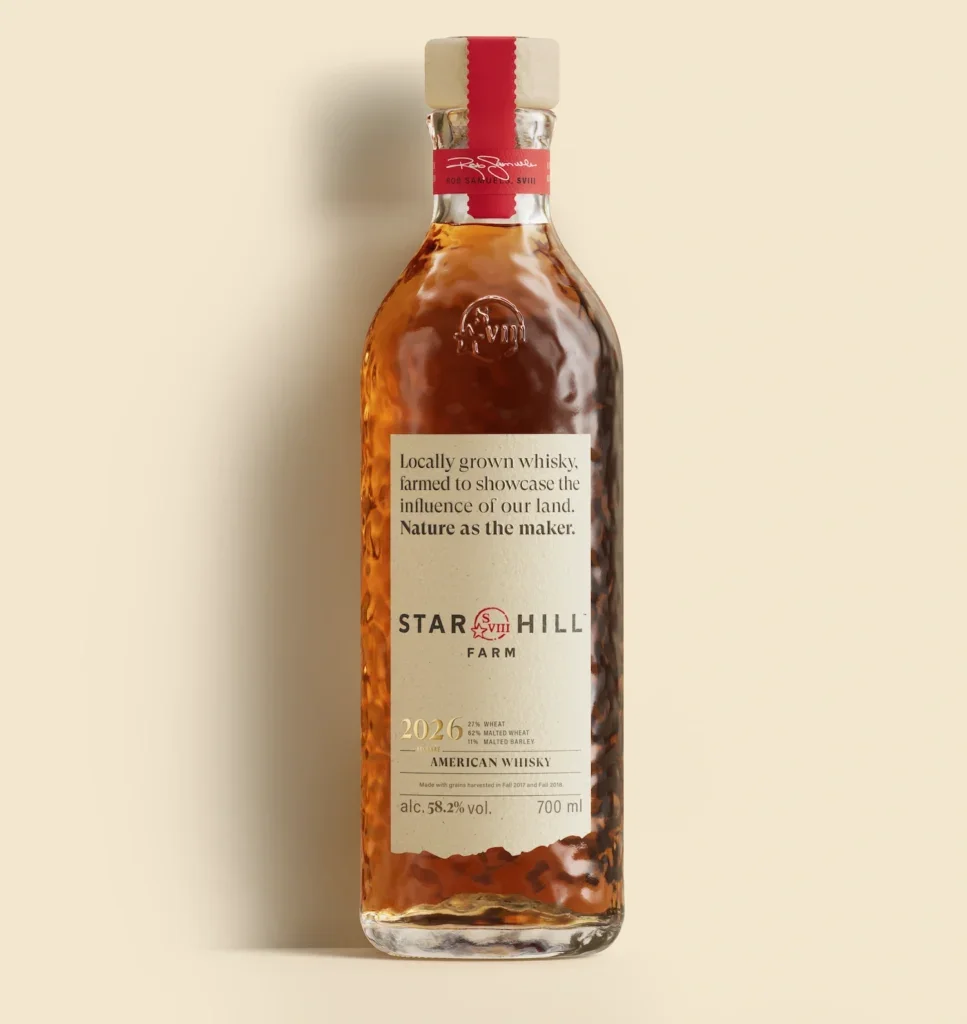
“By diversifying the grain, we are discovering exactly how different seed types influence the texture and ‘spice’ of the whisky,” explains Dr. Blake Layfield, Maker’s Mark master distiller. “Expanding our grain palette for the 2026 release allowed us to treat wheat types as a primary driver of complexity and really illustrate and articulate the clear differences of estate-grown wheat varieties, which primarily show up in the glass, impacting overall richness, complexity, and depth as well as texture of the flavor profile.”
New varietals of Soft Red Wheat, as well as a Hard White Wheat, dial up the mouthfeel of the $100 bottling, introducing pastry-like elements, including buttery shortbread and brioche. Although neither of these are heirloom in the traditional sense, they were born of practices that lift them lightyears beyond the bland uniformity of commodified grains.
“A tremendous amount of a whisky’s final flavor is determined before the grain ever leaves the field,” Layfield confirms. “At Star Hill Farm, we view grain variety, terroir, regenerative farming practices, and soil health as foundational drivers of flavor long before distillation begins.”

Not to be outdone, Buffalo Trace — the distillery that was beat out by Smokeye Hill in that 2024 ASCOT tasting – now offers Daniel Weller, its own line of prestige whiskies influenced by ancient grains… retailing for over $500 a bottle. The second edition arrived this March in the form of Spelt Wheat Bourbon. Its namesake cereal has been cultivated in Europe for thousands of years. In whiskey form, it lends delicate rose petal aromatics, while unfurling generous servings of clove, nutmeg, and peach cobbler upon the palate.
The fact that the 94-proof (47% ABV) whiskey holds a 10-year age statement proves that the folks at Buffalo Trace have been dabbling with heirloom grain for at least a decade. They were just waiting for the right time to unleash it. That time is now, as a growing number of whiskey fans are waking up to a long-forgotten truth: To be best in field, you’ve got to harvest the best from the field.