


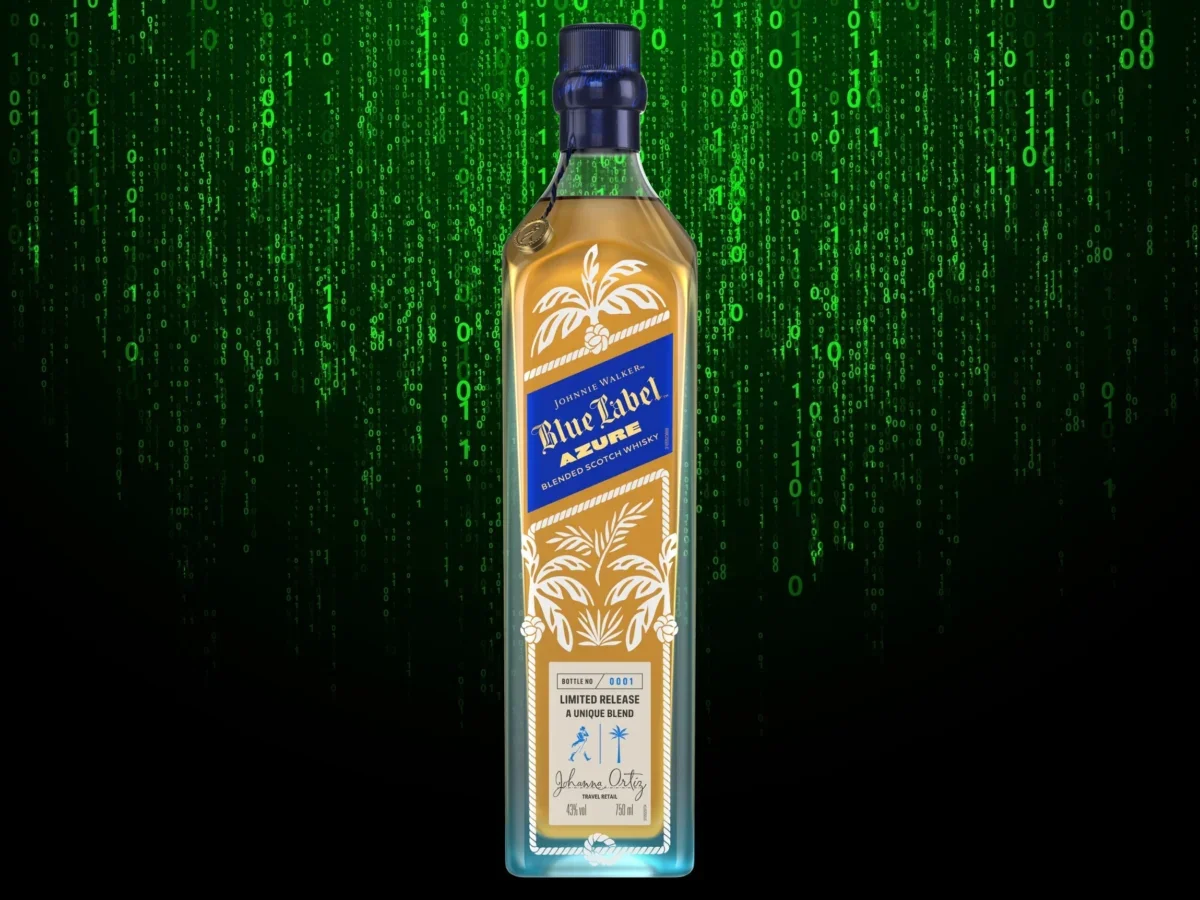
The Scotch whisky industry as we know it today began in life in 1823 with the introduction of the Excise Act.
This established a level playing field for distillers and farmers across Scotland by formalising the licensing of whisky distilleries, and it’s no coincidence that many of the distilleries operating today can trace their (legal) routes back to the 1820s.
It’s almost certain that many were operating before the introduction of the Act, with distillers continuing a multi-generational family trade. After all, whisky production was first recorded in Scotland in the 1400s.
Today’s whisky drinkers would not be able to recognize the spirit served to customers in the 1700s and 1800s, which has undergone several hundred years of refinement and corporate research with billions spent on development. In the 1700s, whisky drinkers had no qualms about drinking new-make spirit, and sherry casks were only used to store the alcohol when an excess turned up in the port of Leith – the drink we know today emerged after this happy accident.
Scotch whisky has changed a lot since then, and the next 200 years will certainly see even more change. Today, the production process is heavily reliant on human beings’ taste, smell, and judgment. That is already starting to change.
AI’s arrival
The world’s first artificial intelligence whisky was created in 2019 with Finnish tech company Fourkind and Microsoft. AI analyzed 70 million flavor combinations to create the best ones, and the Mackmyra distillery did the rest. A combination of first-fill ex-bourbon, freshly saturated ex-oloroso, virgin American oak, and virgin Swedish oak casks is used in the V2 version, AI:02 Intelligens.
Then, in early 2020, Johnnie Walker’s parent company, Diageo, made a splash when it announced it had developed an artificial intelligence (AI) whisky selector, ‘What’s Your Whisky’.
The tool was designed to help users select their whisky based on answers to 11 questions, which generated an outcome backed by 500 flavour points. Towards the end of 2024, researchers took another step forward by training an AI tool to distinguish between Scotch and US whiskey. This might seem like a small, almost insignificant step for the seasoned whisky drinker, but once trained, the AI is both more consistent and accurate than expert tasting panels.
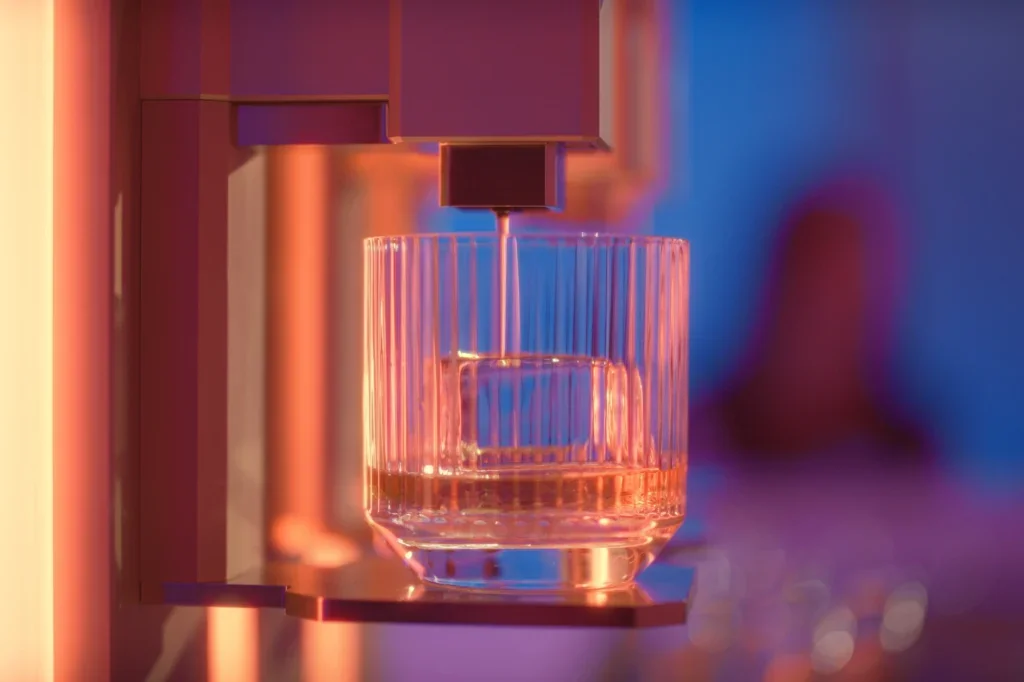
AI’s skill is pattern recognition and, at the base level, is what whisky is all about. Researchers have trained models to identify whisky by its molecular makeup – enthol and citronellol for US whiskeys, and methyl decanoate and heptanoic acid for Scotch.
Diageo is also utilizing AI in cooperages to evaluate the charring levels of oak casks, ensuring consistency and deciding which barrels are ready for maturation. Meanwhile, at the National Manufacturing Institute Scotland (NMIS), a ‘digital twin’ system has been designed to calibrate liquid levels during cask filling.
It goes without saying that AI and robotics will also play a heavy role in the processes of distilleries that have already adopted automation. Processes such as mashing and cutting have been automated for years; AI will continue to enhance them. Elsewhere, robots are making inroads into repetitive tasks. John Dewar & Sons has deployed a robot dog to monitor warehouse conditions, and it won’t be long before we see humanoid robots, which are currently common in China, helping with general warehouse activities.
Tailored approach
In the next 20 years, it’s not inconceivable to think we’ll see a world where anyone can order a whisky online, tailored to their own flavor profile, and have it delivered, with the whole process managed by AI and robots. From the harvesting of wheat or barley to transportation, distillation, blending, and maturation, the entire process could be managed without human hands.
Does this mean the industry is about to undergo a period of reversible change? The answer to that is likely no. Automation over the past 30 years has brought significant efficiency gains, primarily in cost, safety, and resource use. The changes have reduced costs and opened the market at all price points. That’s not a bad thing.
Today, consumers want choice, and the ability to tailor a spirit to their perfect flavor profile could open the market to a whole range of new drinkers. That’s good for whisky in general, but not necessarily for inflexible Scotch.
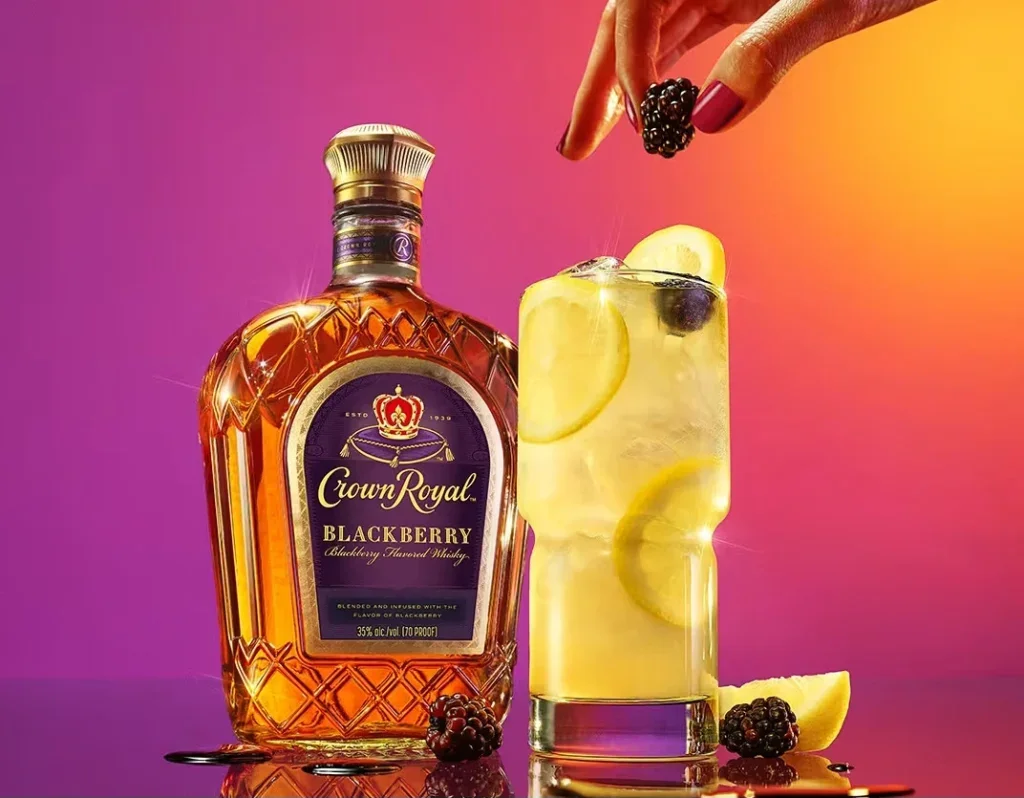
To legally be called Scotch, the spirit must be mashed, fermented, distilled, and matured in Scotland, aged for at least three years in oak casks, bottled at a minimum of 40% ABV, and contain no additives other than water and plain caramel coloring. That doesn’t allow consumers the flexibility they desire. Indeed, today Diageo’s fastest-growing whisky is Canadian whisky, Crown Royal Blackberry, as Scotch shrinks.
For some whisky lovers, mixing the spirit with blackberry might sound like sacrilege, but ‘Scotch’ drinkers from the 1700s might have said the same when traders started storing their white, new-make spirit in casks.
That being said, there will always be a place for human-driven decisions within the industry; bespoke, human-powered distilleries will likely remain, and for those whisky collectors and aficionados who want something a little special, there will be more bespoke offerings. That’s where Scotch may find it has the edge.
Rupert Hargreaves is the chief operating officer at City AM, and editor of Whisky Business, the publication’s monthly look at the world of whisky.





