In an age obsessed with the new, a quiet counter-movement has been gathering momentum behind the world’s best bars.
Welcome to the curious and captivating world of vintage spirit cocktails.
It’s not about innovation in the traditional sense. Instead, it’s about rediscovery: the unearthing of bottles that have sat quietly on dusty shelves, in forgotten cellars, or at the back of long-closed liquor stores for decades. These are the spirits of another era: time capsules of flavor from the 1950s, 60s and 70s – sometimes even earlier.
For bartenders and drinks obsessives, vintage spirits and liquers offer something that modern-day drinks brands can’t accurately recreate. Production methods have evolved, and ingredients have changed (sometimes even been banned!). Vermouths once made with richer wine bases, bitters blended with now-restricted botanicals; liqueurs produced before recipe reformulations are only available through the few surviving vintage bottles.
Not only do they showcase how aromas and flavors have morphed over time, but texture and color too. And let’s not gloss over how beautiful (and sometimes not beautiful) these bottles can be. From floating corks and frayed Walgreens stickers to leaky lids and kitsch branding, the lives these bottles have lived – especially compared to their modern-day counterparts – are plain to see.
Vintage spirits remind us that drinks, like music or film, belong to their time. Every dusty bottle opened is a fleeting glimpse into the past and the people who owned them. And, for a brief moment in the glass, they offer the chance to taste history itself.
Lucky for us that some of London’s most ambitious bars have begun quietly chasing these relics. And the prize isn’t simply the bottle itself, but the possibility of recreating cocktails exactly as they might have tasted half a century ago.
To really get under the skin of some of these legendary beasts, we headed into town to try them for ourselves. We paired our vintage cocktails with their modern-day equivalents, ideally using the same spirit brands and ingredients where possible.
Why? To really allow the appreciation of how time and production can significantly change the dynamic of each drink and, ultimately, unlock why they are so special.


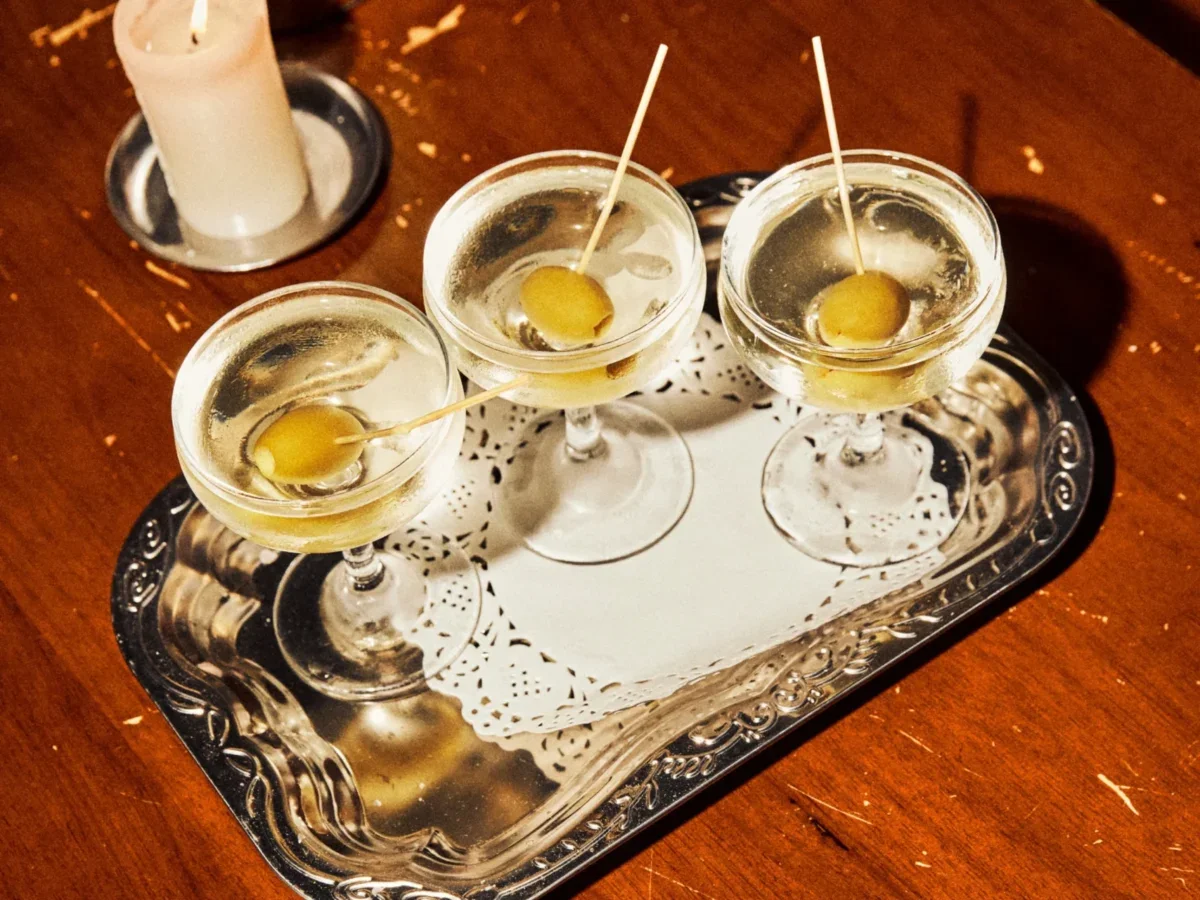
Vintage Vesper Martini

Where
Kwant Mayfair
Price
£500 / $670
When it comes to true unicorns of the spirits world, few inspire quite as much reverence as Kina Lillet, the long-lost aperitif wine once essential to the original Vesper cocktail, as created by Ian Fleming in the James Bond novel, Casino Royale, published in 1953. Discontinued decades ago and reformulated into the gentler Lillet Blanc, surviving bottles of Kina Lillet are vanishingly rare.
When one does surface, bartenders treat it like buried treasure – bartenders such as Erik Lorincz, who recreates the Vesper as close to how Fleming first intended it at Kwant in Mayfair. The recipe uses gin from the 1950s, vodka from the 1960s, and a Kina Lillet from 1956.
Kwant’s current vintage Vesper deviates slightly from the specific brands which Fleming calls out, the bar preferring to use a vintage Plymouth gin rather than Gordon’s, which carries a slightly higher ABV. It’s also worth noting the bar’s true-to-the-time treatment of the cocktail’s ‘star’ ingredient.
“Rather than Coravin the Kina Lillet [a process that removes the air from the bottle and replaces it with Argon, a more inert gas], we prefer to keep it as natural as we can in our drinks cabinet and not in a fridge, which allows it to oxidise naturally once it’s opened,” explains Lorincz. “It keeps the experience of drinking it as close to the 50s as possible, as bars wouldn’t have rarified the spirits and liqueurs back then. It’s the oxidation that we feel keeps everything authentic.”
Vintage version
45ml – 1950s Plymouth Gin (41.2% ABV)
15ml – 1960s Triumph Czechoslovakian vodka (40% ABV)
10ml – 1956 Kina Lillet (17% ABV)
Method: Shaken over ice and served without lemon peel (with the lemon zest expressed over the drink)
Taste: The vintage cocktail is soft and visually darker than its modern equivalent. A wonderful nutty aroma arrives first, with toasted almonds, butterscotch and popcorn. The botanicals in the gin are more muted, but the balance of the overall cocktail is deft and complex, with a subtle bitterness coming from the Kina Lillet, a departure from most styles of Martini.
Modern version
45ml – Tanqueray No. TEN gin (47.3% ABV)
15ml – Ketel One vodka (40% ABV)
10ml – Cocchi Americano aperitivo (16.5% ABV)
Method: Shaken over ice and served without lemon peel (with the lemon zest expressed over the drink)
Taste: Despite this being a different formulation to the vintage, it has distinct similarities to its older sibling: aromatic and nutty, but with a brighter, cleaner note and a more pronounced citrus element lifting the overall tone of the drink. Delicious, but nothing quite beats the original.


Vintage Negroni
Where
Sale E Pepe Mare, The Langham
Price
£75 / $100
The Negroni is a mastery of balance rebuilt from the past. This is the offering from the newly opened Sale E Pepe, at The Langham on Portland Place. The cocktail menu has been curated by beverage director Pietro Collina, who meticulously scoured Europe for vintage ingredients. “The Baltics are a surprisingly great place to find vintage bottles,” he explains.
The Campari used was bottled in the 1970s, when its bitterness carried a different shade of herbal richness. Its distinctive red hue comes from the Cochineal: a small insect that, when crushed, produces a vibrant crimson dye.
The Gordon’s gin from the same era is softer and more juniper-forward than many modern examples. Add in 1970s Martini Rosso vermouth, and the result is sensory archaeology.
Unlike Kwant, the air is extracted each time the Campari and vermouth are used, to ensure as much ‘bottle freshness’ as possible. The vintage Negroni is served tableside from a trolley, stirred and poured in front of each guest. “We also don’t alter the recipe at all,” continues Collina. “It has to be authentic to the original recipe.”
Vintage version
25ml – 1970s Gordon’s London Dry Gin American import (40% ABV)
25ml – 1970s Campari (25% ABV)
25ml – 1970s Martini Rosso vermouth (16-17% ABV)
Method: Stirred down over ice and served over a large ice cube with a wedge of freshly cut orange.
Taste: Incredibly complex, nutty and rich, with surprisingly bright, tangerine notes, and a very balanced palate. The gin is full and rounded, and the bitterness is delicate, working with the smoother herbaceous sweetness of the Martini Rosso, which doesn’t exhibit any profound oxidation. An ostensibly perfect Negroni.
Modern version
25ml – Bombay Sapphire Premier Cru Murcian Lemon Gin (47% ABV)
25ml – Campari (25% ABV)
25ml – Cinzano 1757 Vermouth Rosso (16% ABV)
Method: Stirred down over ice and served over a large ice cube with a wedge of freshly cut orange.
Taste: Slightly brighter and fresher than its vintage counterpart, but possessing all the complexity and balance. The bitterness is perhaps more pronounced and there’s a darker, chocolate-led richness—a completely contemporary Negroni, but no less delicious.


Vintage El Presidente
Location
Spy Bar, Raffles at The OWO
Price
£90 / $120
The El Presidente was made popular in the 1910s and often referred to as Cuba’s answer to the Manhattan. It combines white rum (traditionally Cuban), dry vermouth, orange curacao and grenadine. Said to be named after President Mario García Menocal, who ran the country from 1913 to 1921, it sadly paled in the shadow of its more popular distant cousins, the Daiquiri and Mojito, in the mid-century. But discerning bars and their tenders are making sure that more than a century later, this Cuban classic isn’t forgotten.
One such bar is the ‘secret’ Spy Bar in the basement of Raffles at The OWO in Whitehall, where James Bond might be the inspiration, but vintage cocktails span the gamut. Sat in the shadow wall-mounted Aston Martin DB5 above its back bar, we took its vintage version of the El Presidente for a spin.
“Because of how scarce they are, the vintage of a spirit we use can change, so we’re constantly keeping an eye on the recipe,” explains Lee Veira, bartender at Spy Bar.
So, it’s worth noting that, depending on what’s available, the type of rum and country of origin might change too. Check with your bartender for the exact recipe on the night, as it might differ from the menu.
Vintage version
40ml – 1970s Appleton 12 rum (43% ABV)
20ml – 1980s Martini Extra Dry vermouth (17% ABV)
10ml – 1980s Cointreau (40% ABV)
1 dash – Grenadine
Method: Stirred over ice and strained into a coupe with an orange zest expressed over the top, but not placed in the drink.
Taste: Despite being over half a century old, the presence of Jamaican rum in this version of the El Presidente is undeniable in its fortitude (perhaps more so than its unaged Cuban counterparts would be), and the Appleton 12 feels weightier and funkier than its modern version. Despite its age, the Cointreau provides a welcome tartness while the vermouth adds a herbaceous backbone, which also stops this serve from tipping into something too sweet. A real punch on the palate – and at that price, a veritable steal.
Modern version
40ml – Havana Club rum (40% ABV)
20ml – Noilly Prat dry vermouth (18% ABV)
10ml – Cointreau (40% ABV)
5ml – Grenadine syrup
Method: Stirred over ice and strained into a coupe with an orange coin garnish.
Taste: The freshness is the most significant difference here when enjoyed in tandem with the vintage recipe: it’s brighter, with a spicier palate, almost in HD by comparison. However, the DNA of flavor remains the same: a beautifully balanced cocktail with complex sophistication.


Vintage Margarita
Where
Archive & Myth
Price
£30 / $45
It might be a regular contender when it comes to being the UK’s most popular cocktail in recent years, but this was the first time either of us had seen a vintage Margarita on a cocktail menu in London (or anywhere, for that matter).
And it was at one of the funnest – and simultaneously high-caliber – bars in town, Archive & Myth, in Piccadilly’s Hippodrome Casino, no less, where head bartender Laurie Howells has included a 1980s homage to the modern classic on its 14-strong vintage cocktail list.
The contemporary classic cocktail originated in Tijuana in the 1930s, and is made up of tequila, orange liqueur, and lime juice. It may be ubiquitous by now, but with most guests unacquainted with old recipes of tequila, especially (which used to be made on a much smaller scale, with different equipment and for different drinking purposes), swapping in vintage versions of their favorite agave spirit adds a dimension of complexity that, until relatively recently, tequila hasn’t always been appreciated for. (Also bear in mind the prevalence of mixtos in older vintages versus 100% agave, which is the style de jour these days.)
“We wanted to include a vintage Margarita because it’s such a universally recognized cocktail, and using older tequila gives the drink a very different character,” explains Howell. “The flavors tend to be softer, rounder, and slightly more savory, which allows us to present something familiar but with a depth that most guests won’t have experienced before. The 1980s Olmeca in particular had a really beautiful balance, so it felt like the right choice to build the drink around.”
Vintage version
60ml – 1980s Olmeca Reposado tequila (38% ABV)
15ml – 1980s Cointreau (40% ABV)
10ml – Agave
30ml – Fresh lime
1 dash – Saline solution
Method: Shaken over ice and fine-strained into a coupe glass rimmed with mixed citrus salt (a blend of dehydrated lemon, lime, and orange peel).
Taste: Darker in color than its modern counterpart (due mainly to the use of reposado), this vintage version of the classic Margarita is tangibly fuller in mouthfeel too, proving yet again that texture in older spirits and liqueurs is one of their biggest advantages. The balance of acidic citrus, and the combined sweetness from the older Cointreau and the woodiness of the Olmeca is complemented perfectly with that dash of saline – a contemporary technique that lifts these old liquids.
Modern version:
60ml – Lost Explorer Blanco tequila (40% ABV)
30ml – Fresh lime juice
20ml – Alma Finca orange liqueur (40% ABV)
Method: Shaken over ice and fine-strained into a coupe glass rimmed with mixed citrus salt (a blend of dehydrated lemon, lime, and orange peel).
Taste: Super fresh, clean, and much more herbaceous than most modern-day Margaritas, this version is unwaveringly elevated when it comes to what most drinkers would expect, even without a vintage status. Using 100% agave, its tequila component adds to its herbaceous profile, as does its use of Alma Finca, which adds some spice too. It’s worth noting that neither version is served on the rocks.